
New Forest National Park 2026 Transit Guide: Navigating Hampshire's Ancient Woodlands and Coastline
Avoid UK overtourism in 2026 by utilizing the New Forest National Park's extensive network of rail, cycling tracks, and seasonal tour buses to explore Hampshire's coast and forests.
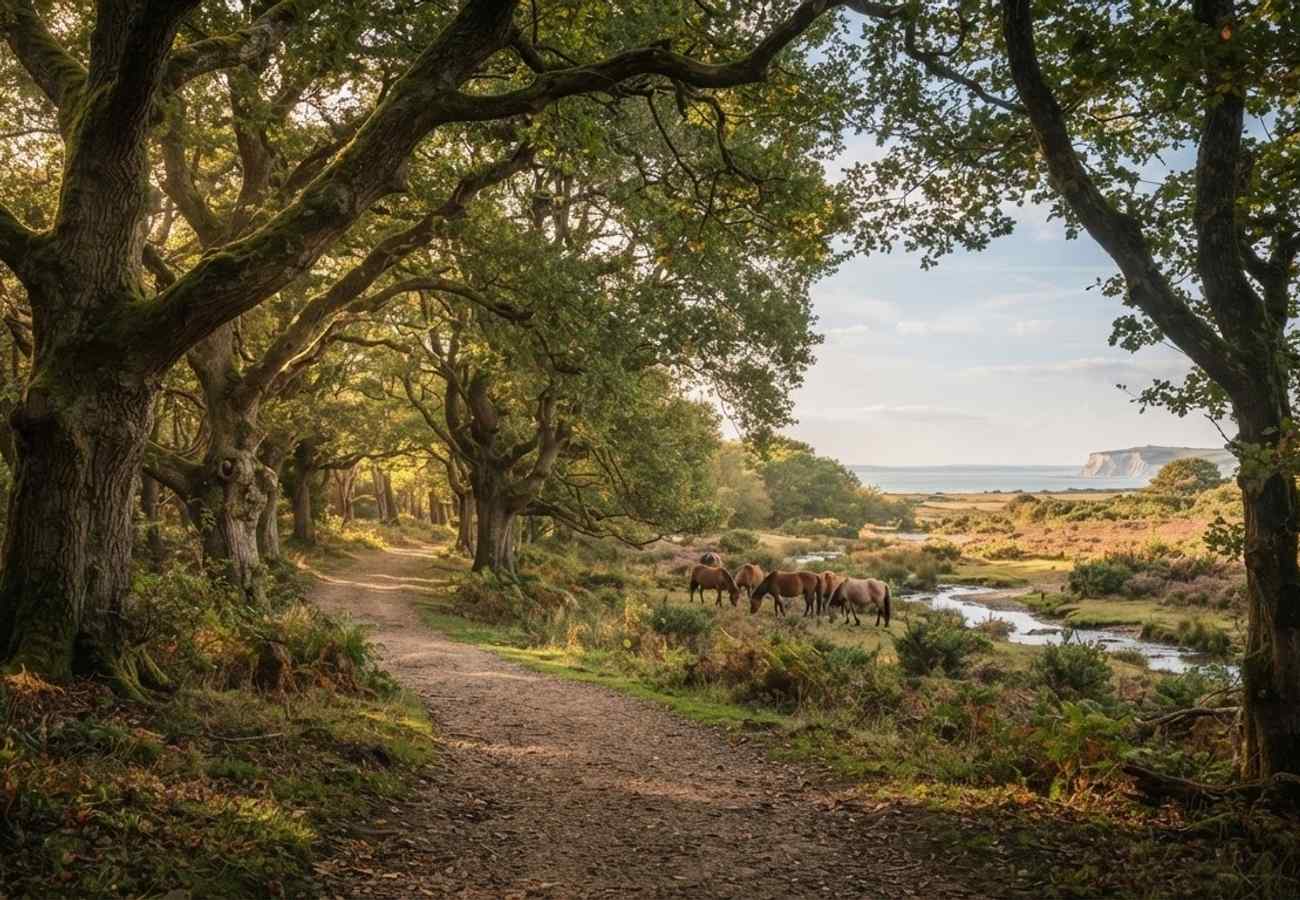
Image generated by AI
The New Forest National Park offers a strategic alternative to overcrowded UK hotspots, providing a decentralized tourism model across 40 miles of coastline and ancient woodland. By utilizing designated rail hubs and seasonal transit lines, visitors can navigate the region without relying on private vehicles.
Decentralized Tourism in Hampshire
The New Forest National Park in southern England is positioned as a high-capacity, low-density destination. Unlike singular attraction sites that suffer from congestion, the park distributes visitor traffic across a diverse geography of open heathland, historic villages, and the Solent coast. This layout allows for a fluid itinerary where travelers can transition from woodland trekking in the morning to coastal exploration in the afternoon.
The New Forest National Park Authority emphasizes a "leave no trace" approach, particularly during ground-nesting bird seasons, and mandates that visitors adhere to recognized footpaths to protect the ecological integrity of the nature reserve.
Regional Transit Hubs and Route Specifications
For those avoiding car rental, the park is integrated into the regional rail network. Major stations serve as the primary gateways for cycling and bus connections.
Primary Transit Access Points
| Gateway Hub | Primary Use | Key Connection/Route |
|---|---|---|
| Brockenhurst | Rail/Cycle Hub | Access to New Forest Tour (Blue Route) & Cycle Network |
| Lymington | Rail/Waterfront | Lymington Town Trail (2 miles) & Coastal Marshes (3.7 miles) |
| Ashurst | Rail/Cycle Hub | Entry point for marked cycling tracks |
| Sway | Rail/Cycle Hub | Entry point for marked cycling tracks |
| Lyndhurst | Administrative Hub | New Forest Heritage Centre & Green Line Bus Route |
Seasonal Transit: The New Forest Tour (July – August)
During the peak summer months, the park operates a dedicated tour bus system to reduce vehicular pressure on narrow forest roads.
- Blue Route: Connects Lymington and Brockenhurst to Burley, Barton-on-Sea, and Milford-on-Sea.
- Green Route: Connects Lyndhurst to Lymington, Beaulieu, and Hythe.
Traveler Logistics Guide
From a ground-level perspective, the most efficient way to navigate the New Forest is to utilize a "Hub and Spoke" model. Base your stay in a village like Lyndhurst or Lymington and use the designated transit lines to reach the periphery.
Navigating the Coastline The coastline spans approximately 40 miles. For those seeking accessible routes, the Hordle Cliffs provide a surfaced two-mile path with integrated seating overlooking the Solent and the Isle of Wight. For shorter excursions, the Hurst Beach trail starting from Keyhaven harbour is limited to 1.6 miles.
Cycling Logistics There are over 100 miles of marked tracks. It is a strict regulatory requirement that cyclists remain on waymarked paths; veering off-track is prohibited to protect the habitat and roaming livestock.
Livestock Interaction The park is unique for its commoners' rights, meaning ponies and cattle roam freely. From a logistics and safety standpoint, visitors must maintain distance and never feed livestock.
Infrastructure Impact Assessment
The shift toward promoting public transport and cycling in the New Forest reduces the carbon footprint of regional tourism and prevents the degradation of ancient woodland soil caused by illegal parking. By directing traffic through hubs like Brockenhurst and Lymington, the National Park Authority manages the flow of visitors, ensuring that smaller settlements are not overwhelmed during peak periods.
The integration of the New Forest Tour buses during July and August demonstrates a scalable model for seasonal crowd management that could be replicated in other UK National Parks.
Experience the freedom of the wild without the frustration of the queue.
Related Travel Guides
Disclaimer
This article is for informational and educational purposes only. It does not constitute legal, financial, or professional advice. While we strive to provide accurate and up-to-date information, travel policies, regulations, and conditions change rapidly. Always verify information with official sources before making travel decisions. Nomad Lawyer makes no representations about the accuracy, reliability, completeness, or suitability of the information provided. Readers should consult qualified professionals for advice specific to their circumstances. The views expressed in this article are those of the author and do not necessarily reflect the views of Nomad Lawyer.