
United Airlines Receives First Airbus A321XLR, Signaling Shift in Long-Range Narrowbody Fleet Strategy
Breaking airline news and aviation industry updates for 2026.

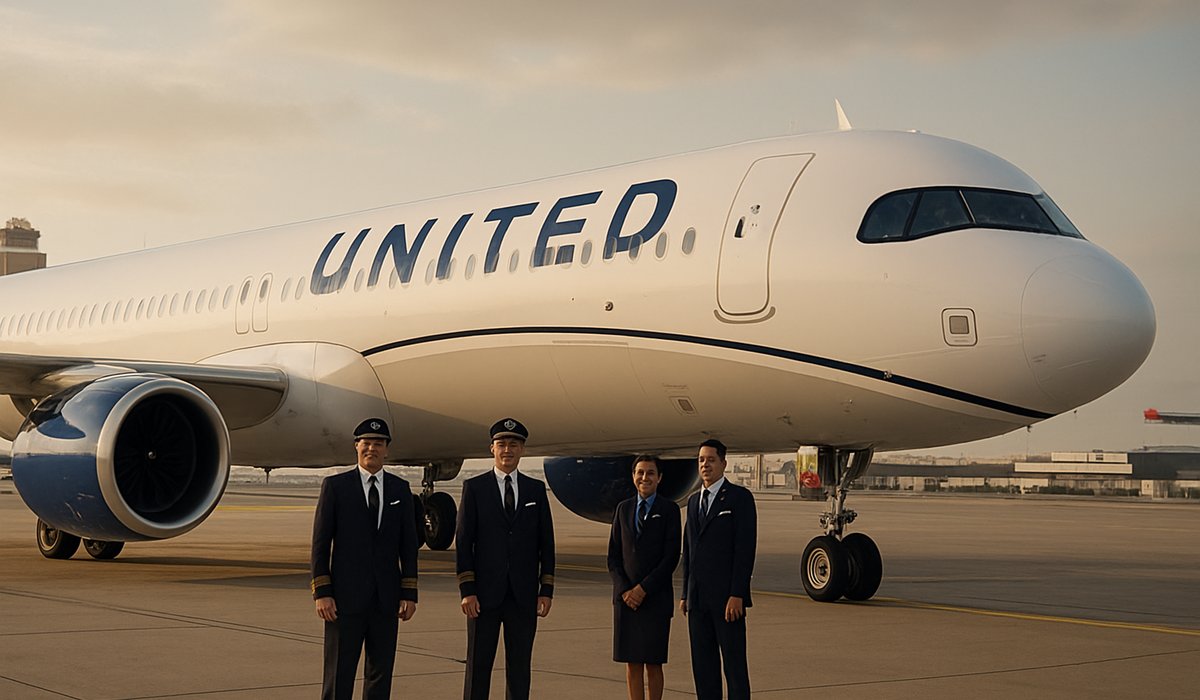
Image generated by AI
United Airlines Receives First Airbus A321XLR, Signaling Shift in Long-Range Narrowbody Fleet Strategy
Chicago-based carrier takes delivery of extended-range aircraft from Hamburg facility, marking pivotal expansion in transatlantic and long-haul capabilities
Historic Delivery Reshapes United's Fleet Architecture
United Airlines has officially taken possession of its inaugural Airbus A321XLR, a milestone that positions the carrier at the forefront of a transformational shift in narrowbody aircraft deployment across the global aviation industry. The aircraft, bearing registration N64321, completed its delivery flight from Airbus's manufacturing facility in Hamburg, Germany on June 3, touching down at Tampa International Airport in Florida.
The acquisition represents a watershed moment for United's operational strategy, introducing extended-range single-aisle capacity that fundamentally alters how the airline approaches long-haul and transatlantic routing. The A321XLR—equipped with enhanced fuel efficiency and extended range capabilities—will anchor United's future growth on thinner international routes previously reserved for larger widebody aircraft.
Competitive Advantage in a Transformed Market
This aircraft class has emerged as a game-changer for global carriers seeking to optimize fuel consumption while maintaining robust payload capacity. The A321XLR's extended-range capabilities enable operators to establish direct services on routes that traditionally required larger, more expensive-to-operate widebody platforms, directly impacting operational costs and competitive positioning.
For United, the deployment signals a strategic response to evolving market dynamics. The narrowbody configuration allows the airline to increase seat availability on long-haul routes—potentially stabilizing or reducing per-unit operating costs amid volatile jet fuel markets and rising aviation industry expenses. This efficiency-driven approach mirrors industry-wide trends as carriers seek alternatives to maintain profitability without escalating baggage charges and ancillary fees beyond current levels.
Industry-Wide Fleet Transformation Underway
United's order represents one of dozens of A321XLR commitments from major international carriers, collectively signaling an aviation industry shift toward high-efficiency, single-aisle long-range operations. The aircraft type addresses mounting pressure from environmental regulations and fuel price volatility that have reshaped airline economic models over the past decade.
The delivery underscores competitive pressures intensifying across transatlantic and long-haul aviation markets, where carriers increasingly leverage technological advantages to capture premium international traffic while managing operational overhead.
FAQ: Understanding the A321XLR's Impact on Air Travel
What is the Airbus A321XLR and how does it differ from standard narrowbody aircraft? The A321XLR is an extended-range variant of Airbus's single-aisle A321 family, featuring enhanced fuel capacity and efficiency systems enabling transatlantic and long-haul operations previously reserved for widebody jets. This reduces operating costs per available seat mile compared to traditional widebody deployment.
How will the A321XLR affect airline baggage fees and ticket pricing? Extended-range narrowbodies improve airline profitability margins through reduced fuel consumption and maintenance costs. While this may moderate future fee increases, airlines typically maintain current ancillary revenue models rather than reducing existing charges.
Why are airlines prioritizing long-range narrowbodies over traditional widebody aircraft? Volatile jet fuel prices and environmental regulations incentivize operators toward fuel-efficient alternatives. Single-aisle aircraft consume substantially less fuel per passenger, allowing carriers to maintain profitability on lower-demand international routes.
Which other carriers operate A321XLR aircraft? Multiple international carriers have ordered the A321XLR, including European and Middle Eastern operators, establishing it as an industry-standard solution for long-haul narrowbody operations.
When will United Airlines begin commercial A321XLR service? United has not announced specific route deployment timelines, though the aircraft will eventually serve the carrier's transatlantic and extended-range network following crew training and regulatory certification completion.
Related Travel Guides
- Aviation Updates: United Airlines Flight UAL2388 Boeing 737-700 N54711 Diverts from Houston to Washington Dulles Route to Charlotte Douglas International Airport on June 23, 2026 in Precautionary Mid-Flight Operational Decision That Disrupts East Coast Air Travel
- Hong Kong International Airport Defeats Asia-Pacific Travel Chaos, Shielding 5.34 Million Passengers From Regional Flight Cancellations and Airport Disruptions With Massive Global Network Expansion: Latest Airline News
- Severe Travel Chaos Paralyzes Atlanta as Delta Air Lines Suffers 129 Flight Disruptions, Triggering Massive Global Airport Disruptions: Latest Airline News
Disclaimer
This article is for informational and educational purposes only. It does not constitute legal, financial, or professional advice. While we strive to provide accurate and up-to-date information, travel policies, regulations, and conditions change rapidly. Always verify information with official sources before making travel decisions. Nomad Lawyer makes no representations about the accuracy, reliability, completeness, or suitability of the information provided. Readers should consult qualified professionals for advice specific to their circumstances. The views expressed in this article are those of the author and do not necessarily reflect the views of Nomad Lawyer.
Raushan Kumar
Founder & Lead Developer
Full-stack developer with 11+ years of experience and a passionate traveller. Raushan built Nomad Lawyer from the ground up with a vision to create the best travel and law experience on the web.
Learn more about our team →