
Nepal Travel Alert: Rasuwa Flash Floods Disrupt Himalayan Tourism Routes and Tibet Border Access 2026
Devastating flash floods in Nepal's Rasuwa district have disrupted key Himalayan tourism corridors and Tibet border routes, leaving hundreds missing, including dozens of American citizens.

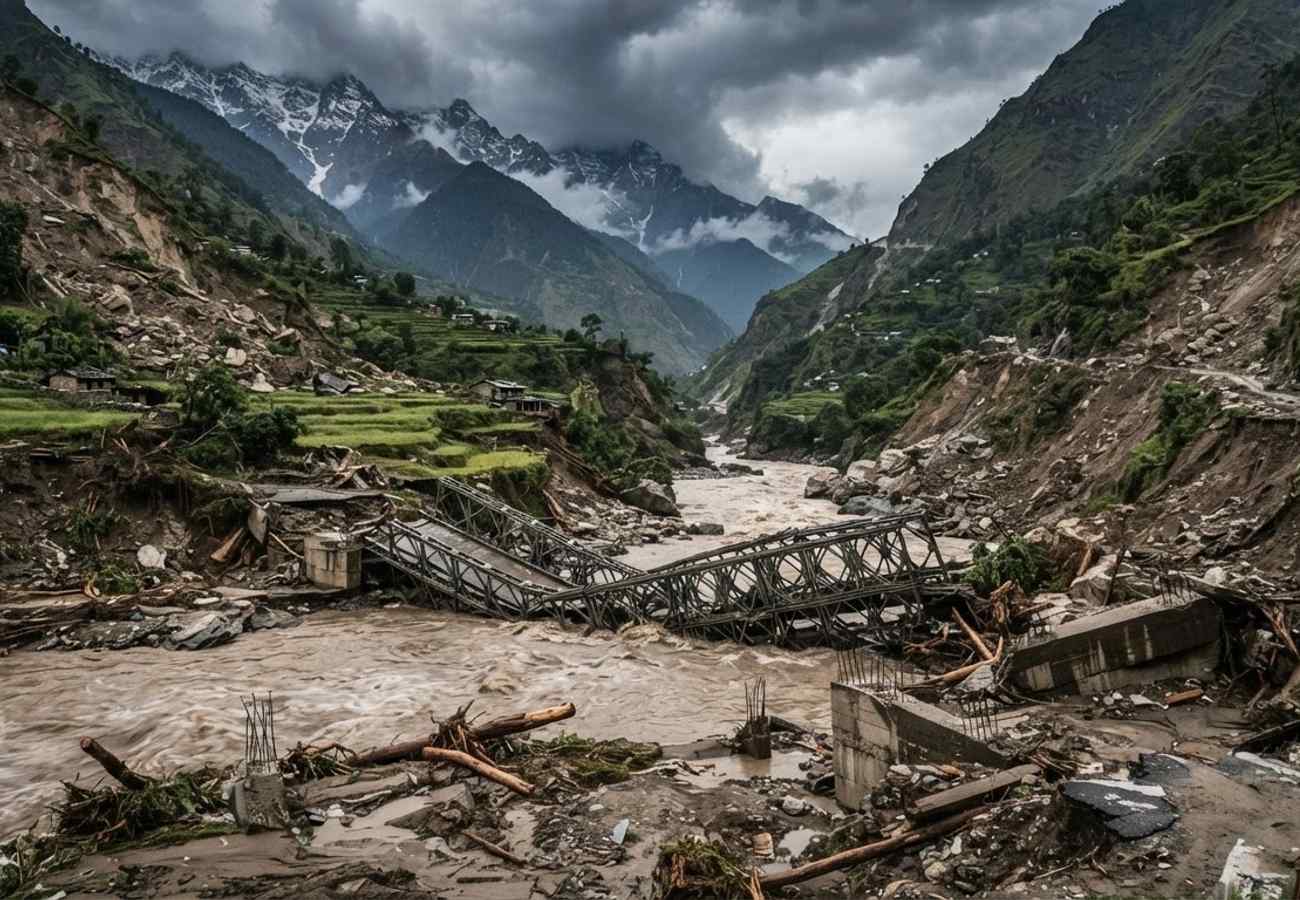
Image generated by AI
Flash floods in the Rasuwa district have severed critical transport links near the Nepal–Tibet border, trapping international tourists and halting operations across key Himalayan corridors.
The disaster has triggered a large-scale emergency response as rescue teams struggle against collapsed infrastructure and volatile mountain weather. The Rasuwa region, a primary gateway for high-altitude trekking and cross-border pilgrimage, is currently experiencing severe operational paralysis.
Emergency Status and Casualty Reports
Current reports indicate that hundreds of individuals are missing following the flash flood event. Early data confirms that dozens of Americans are among the missing or affected. Verification efforts are ongoing, though the scale of the disaster has complicated the process of accounting for all foreign nationals in the region.
The Nepal Tourism Board and the Ministry of Culture, Tourism and Civil Aviation are coordinating with emergency responders to locate missing persons and stabilize the region.
Critical Infrastructure Failures
The flood has caused systemic failure across the district's transportation network. Our analysis of the geography indicates that the narrow valleys and steep terrain of Rasuwa amplified the flood's impact, leading to:
- Total destruction of key bridges and arterial roads.
- Severed access to remote Himalayan villages and trekking hubs.
- Communication blackouts due to damaged infrastructure and limited connectivity in high-altitude zones.
Impact on High-Value Tourism Corridors
The Rasuwa district is not merely a local transit point; it is a strategic node for several high-traffic tourism segments:
- Langtang Valley Trekking: Access to one of Nepal's most iconic trekking circuits is severely compromised.
- Tibet Border Transit: The region serves as a vital corridor for those entering Tibet.
- Mount Kailash Pilgrimages: While Mount Kailash is located in Tibet, Nepal is a primary entry point for thousands of spiritual travelers. The disruption of these routes halts the movement of pilgrims seeking sacred Himalayan destinations.
Logistics and Safety Breakdown
| Impact Area | Current Status | Primary Constraint |
|---|---|---|
| Transport | Severely Disrupted | Destroyed bridges and road washouts |
| Communication | Limited/Unstable | Remote terrain and power failures |
| Rescue Ops | Active/Ongoing | Extreme weather and inaccessible terrain |
| Border Access | Restricted | Infrastructure damage near Tibet frontier |
Why This Matters: Industry Analysis
From a logistical perspective, this event exposes a critical vulnerability in Nepal's adventure tourism model: over-reliance on single-access corridors. When a primary bridge or road in a narrow valley like Rasuwa fails, entire regional economies—including trekking operators, teahouse owners, and guiding services—are instantly paralyzed.
For travelers, the real impact is the "information vacuum" that occurs during these events. The delay in confirming the status of foreign nationals highlights a systemic gap in real-time traveler tracking in remote zones. This incident will likely accelerate the push for mandatory satellite communication devices for registered trekking groups and a shift toward more climate-resilient infrastructure.
Market trends suggest that high-spending adventure tourists are increasingly sensitive to "climate risk." If Nepal cannot demonstrate a robust emergency response and infrastructure hardening, it risks a shift in tourist traffic toward more stable, though perhaps less authentic, mountain destinations.
Forward Outlook
The immediate priority remains the search and rescue operation for the missing. However, the long-term recovery will depend on three specific factors:
- Infrastructure Hardening: Moving beyond temporary repairs to build flood-resistant bridges and roads.
- Digital Safety Nets: Implementing better registration and tracking systems for tourists entering high-risk zones.
- Diversification of Routes: Developing alternative access points to the Tibet border to prevent total corridor collapse during future weather events.
Travelers planning journeys to the Langtang or Rasuwa regions should postpone travel until official clearance is issued by the Ministry of Culture, Tourism and Civil Aviation.
The resilience of the Himalayas is being tested by a changing climate, demanding a new standard for mountain safety.
Related Travel Guides
Disclaimer
This article is for informational and educational purposes only. It does not constitute legal, financial, or professional advice. While we strive to provide accurate and up-to-date information, travel policies, regulations, and conditions change rapidly. Always verify information with official sources before making travel decisions. Nomad Lawyer makes no representations about the accuracy, reliability, completeness, or suitability of the information provided. Readers should consult qualified professionals for advice specific to their circumstances. The views expressed in this article are those of the author and do not necessarily reflect the views of Nomad Lawyer.
Naina Thakur
Contributor & Travel Specialist
Travel enthusiast and legal writer covering visa regulations, responsible tourism, and cultural journeys across global destinations.
Learn more about our team →