
Nepal Tourism Crisis 2026: Glacial Collapse and Flash Floods Devastate Langtang and Trekking Hubs
A catastrophic glacial collapse on August 26, 2026, has devastated Nepal's tourism infrastructure, leaving international travelers stranded and critical trekking routes destroyed.

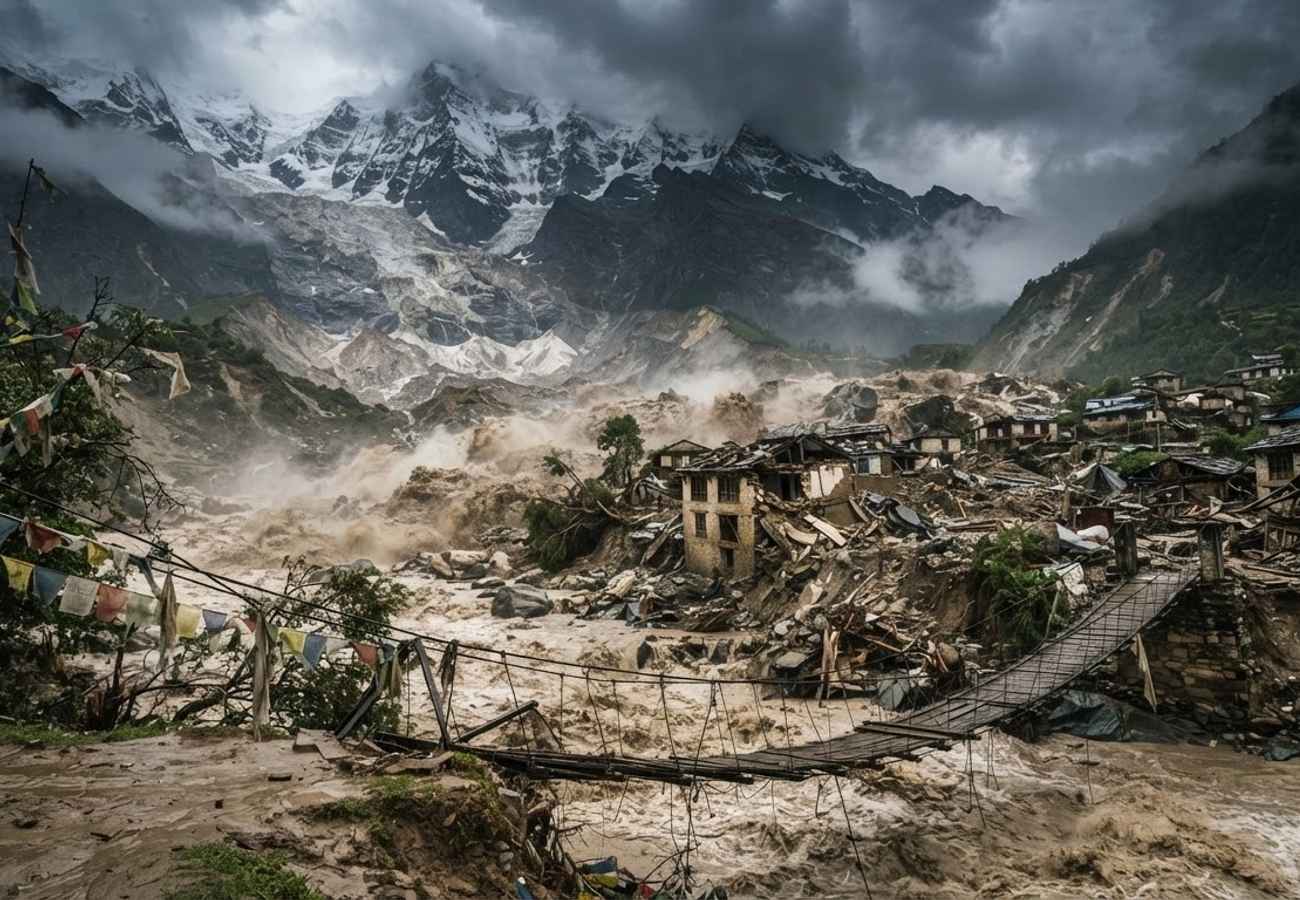
Image generated by AI
Severe climate-induced disasters have crippled Nepal's tourism corridors, headlined by a massive glacial collapse on August 26, 2026. Hundreds of international tourists and pilgrims remain missing or stranded as vital infrastructure in the Langtang and Trishuli regions is wiped out.
Critical Infrastructure Failure in the Himalayas
On August 26, 2026, a large-scale glacier collapse near Langtang Lirung triggered a catastrophic ice-rock avalanche. This event generated an "inland tsunami" of flash floods that surged through the Bhote Koshi and Trishuli river valleys.
The surge completely destroyed border settlements, including Syabrubesi and Timure, and obliterated the Gyirong Port. This event is the culmination of a five-year cycle of environmental instability characterized by melting high-altitude permafrost and extreme monsoonal rainfall.
Flight and Ground Transport Impact Breakdown
The disruption extends beyond the immediate flood zones, affecting the broader logistics of Himalayan travel:
- High-Risk Zones: Langtang National Park, the Annapurna Circuit, and the Araniko Highway corridor have suffered repeated trail washouts and bridge collapses.
- Border Connectivity: The destruction of the Gyirong Port has severed a primary cross-border pilgrimage and trade artery.
- Aviation Safety Concerns: Previous incidents, including the Yeti Airlines Flight 691 crash in Pokhara (January 15, 2023) and the Saurya Airlines crash in Kathmandu (July 24, 2024), have already placed domestic aviation under intense scrutiny.
- Access Points: Major transit corridors leading to mountain trekking hubs remain blocked or unstable due to seasonal landslides.
Chronology of Major Disruptions (2021–2026)
| Date of Event | Event Type & Location | Infrastructure Impact |
|---|---|---|
| June–Sept 2021 | Nationwide Monsoon | Blocked major transit corridors and mountain hub highways. |
| Sept–Oct 2022 | Dashain Monsoonal Deluge | Highway segments swept away during peak arrival season. |
| Jan 15, 2023 | Yeti Airlines Flight 691 (Pokhara) | ATR 72 crash; severely impacted Annapurna Circuit gateway. |
| July 24, 2024 | Saurya Airlines (Kathmandu) | 18 fatalities; intensified scrutiny of transport safety. |
| October 2025 | Eastern Nepal Floods | Severed connectivity to eastern mountain trekking regions. |
| August 26, 2026 | Rasuwa-Tibet Glacial Collapse | Destroyed Syabrubesi, Timure, and Gyirong Port; hundreds missing. |
Passenger Rights & Advisory
For travelers currently in Nepal or those with upcoming bookings, the current situation necessitates immediate action regarding safety and contractual rights.
For the affected passenger, this means:
- Emergency Evacuations: If you are stranded in the Langtang or Trishuli regions, prioritize communication with your embassy. Our analysis of current conditions suggests that ground extraction may be impossible in some sectors, requiring coordinated aerial support.
- Booking Cancellations: Under most international travel insurance policies, "Natural Disasters" or "Acts of God" are covered triggers. Passengers should secure official statements from the Nepal Tourism Board or the Ministry of Culture, Tourism and Civil Aviation to support insurance claims for non-refundable deposits.
- Flight Rebooking: Due to the instability of domestic aviation and airport access, travelers should request "Force Majeure" waivers from carriers for flights into Pokhara or Kathmandu.
- Safety Protocols: Avoid all trekking routes in the Rasuwa district until official clearance is provided. The risk of secondary landslides and glacial lake outburst floods (GLOFs) remains high.
The recurring nature of these disasters indicates that Nepal's traditional tourism framework is no longer viable in the face of rapid Himalayan warming. The transition from seasonal disruptions to catastrophic systemic failures—such as the August 26 collapse—demands a shift toward climate-resilient infrastructure.
The industry must move away from high-vulnerability flood zones and invest in advanced glacial lake monitoring systems. Without international collaboration on meteorological data and a complete overhaul of early-warning systems, the economic backbone of Nepal's adventure tourism sector remains at critical risk.
Travelers are urged to monitor real-time updates from national aviation ministries and local meteorology centers before attempting mountain transit.
Related Travel Guides
Disclaimer
This article is for informational and educational purposes only. It does not constitute legal, financial, or professional advice. While we strive to provide accurate and up-to-date information, travel policies, regulations, and conditions change rapidly. Always verify information with official sources before making travel decisions. Nomad Lawyer makes no representations about the accuracy, reliability, completeness, or suitability of the information provided. Readers should consult qualified professionals for advice specific to their circumstances. The views expressed in this article are those of the author and do not necessarily reflect the views of Nomad Lawyer.
Raushan Kumar
Founder & Lead Developer
Full-stack developer with 11+ years of experience and a passionate traveller. Raushan built Nomad Lawyer from the ground up with a vision to create the best travel and law experience on the web.
Learn more about our team →