
European and American Trekkers Drive Autumn Tourism Boom Across Nepal’s Kanchenjunga Circuit

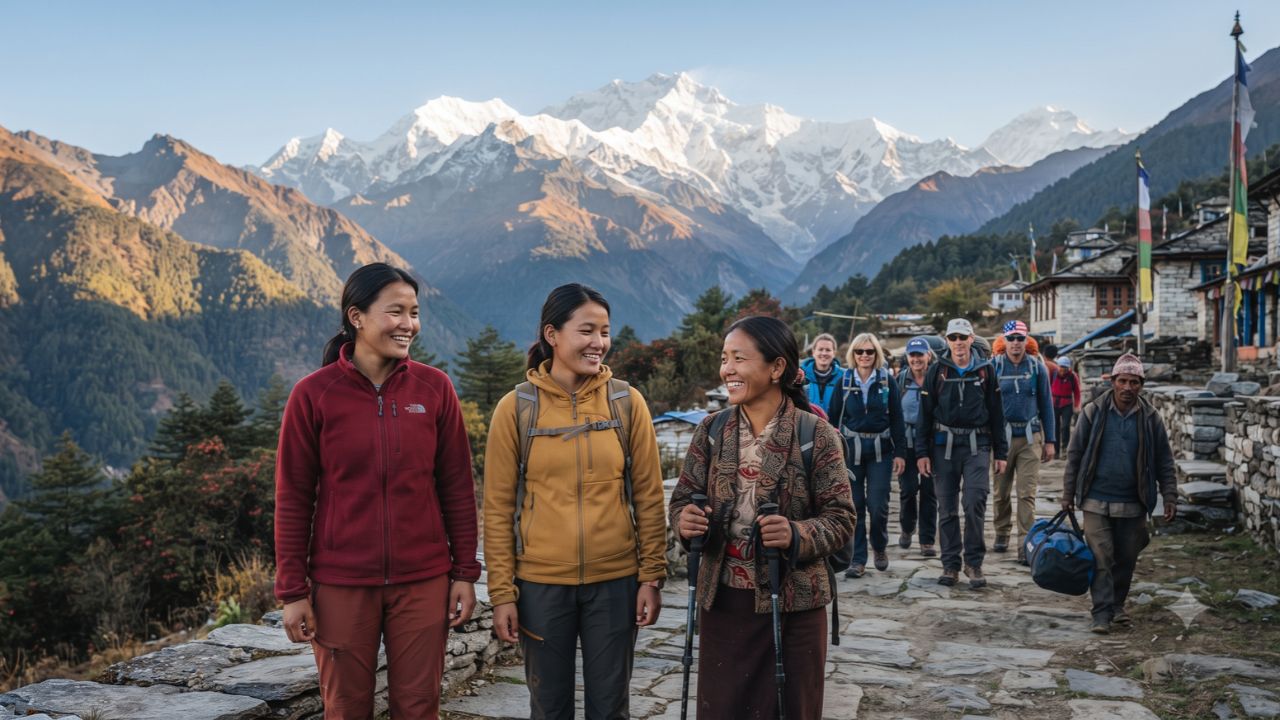
Recording approximately 170 international trekkers by 12 October 2026 alongside a surge in domestic travelers that outnumbers overseas visitors by two to one, eastern Nepal's remote Kanchenjunga region is experiencing its most concentrated autumn tourism upswing in years. Official registration data from the Ghunsa Tourism Check Post, operated by the Kanchenjunga Conservation Area Management Council under the oversight of the Department of National Parks and Wildlife Conservation (DNPWC), confirms that mountaineers and hikers from Germany, France, Australia, and the United States are spearheading overseas arrivals into Taplejung District. Spurred by pristine Himalayan visibility following the monsoon and timed to coincide with Nepal's major national celebrations of Dashain and Tihar, the seasonal influx has pushed village tea houses, rustic homestays, and high-altitude mountain lodges in Ghunsa and peripheral valleys to maximum operating capacity.
The sudden convergence of foreign expedition groups and domestic holidaymakers highlights a broader operational shift within Himalayan adventure travel. As traditional commercial trails in the Khumbu and Annapurna regions face escalating crowd density and environmental scrutiny, experienced hikers are deliberately redirecting their capital toward eastern Nepal's isolated wilderness. Encircling Mount Kanchenjunga—the planet's third-highest peak at 8,586 meters—the conservation zone presents an authentic, low-impact trekking environment. However, the surge in demand also exposes severe logistical bottlenecks across eastern Nepal's transport corridors, emergency medical services, and local high-altitude workforce management.
Dual-Corridor Logistics: Northern Pangpema and Southern Oktang Routes
Operating within the administrative boundaries of Taplejung District, trekking in the Kanchenjunga region functions along two distinct geographical axes, each presenting acute logistical demands. The northern circuit approaches Kanchenjunga Base Camp at Pangpema, situated at an elevation of approximately 5,140 meters above sea level. This corridor ascends through the deep Ghunsa Valley, utilizing Ghunsa village as an essential acclimatization stopover before hikers push forward through the high-altitude settlements of Kambachen and Lhonak. Pangpema offers immediate vistas of Kanchenjunga’s sheer northern face, but requires trekkers to spend multiple days living above 4,000 meters in sub-freezing conditions.
Conversely, the southern approach targets the Oktang viewpoint and base camp precinct at approximately 4,730 meters, directing trekkers through Yamphudin, Tseram, and Ramche before opening onto the massive terminal moraine of the Yalung Glacier. Both routes require rigorous logistical synchronization governed by the Trekking Agencies' Association of Nepal (TAAN), as independent solo hiking remains strictly prohibited within the border-adjacent conservation zone. Groups must navigate through licensed agencies, employ certified local guides, and secure specialized restricted area permits.
| Trekking & Logistical Metric | Operational Parameter (Autumn 2026) | Strategic Significance for Travelers & Operators |
|---|---|---|
| Official Checkpoint Registry | Ghunsa Tourism Check Post | Council-monitored entry gate verifying conservation permits |
| Recorded International Volume | ~170 foreign trekkers (as of 12 Oct 2026) | Leading outbound markets: Germany, France, Australia, United States |
| Domestic-to-Foreign Ratio | 2:1 domestic traveler dominance | Driven by Dashain and Tihar holiday breaks across October |
| Peak Operational Windows | Autumn (Sep–Dec) & Spring (Mar–May) | Weather-stable trekking windows avoiding monsoon and deep winter |
| Northern Base Camp Apex | Pangpema (~5,140 meters) | High-altitude northern face vantage approached via Kambachen and Lhonak |
| Southern Viewpoint Apex | Oktang (~4,730 meters) | Yalung Glacier overlook accessed through Yamphudin, Tseram, and Ramche |
| Key Acclimatization Node | Ghunsa Village | Primary village hub for supply resupply, porter hiring, and altitude staging |
| Seasonal Trail Hazards | Jun–Jul rainfall / Dec–Feb snowfall | Severe landslide risks during monsoon; impassable snowdrifts in winter |
| Lodging Capacity Status | 100% occupancy during festival peaks | Homestays and tea houses operating at full physical capacity |
Economic Dispersal: Festival Dynamics and Village Supply Chains
The influx of autumn trekkers provides an indispensable financial injection into the remote rural economy of Taplejung. Unlike urban tourism hubs that rely on multinational hospitality chains, expenditure in the Kanchenjunga Conservation Area flows directly into family-run micro-enterprises. Mountain guides, local porters, jeep drivers, and rustic lodge operators experience their primary annual earning window between late September and early December. Trekkers traveling in long-distance expeditions create sustained downstream demand for local agricultural produce, packaged rations, pack animals, and equipment porterage across dozens of isolated mountain hamlets.
However, the simultaneous arrival of international adventurers and domestic festival vacationers places extraordinary stress on seasonal supply chains. Because domestic travelers do not undergo mandatory conservation check-in procedures, their precise volumes remain unrecorded in central databases, though field estimates indicate they outnumber foreign visitors two to one. During the peak weeks of Dashain and Tihar, when urban Nepalis return to ancestral villages or undertake mountain holidays, rooms in Ghunsa sell out days in advance. Lodge owners frequently convert dining halls and common areas into makeshift sleeping quarters, while local transportation networks between regional access airstrips and trailheads face acute capacity shortages.
Expert Analysis: High-Altitude Safety Deficits and Adventure Tourism Economics
The commercial growth of Kanchenjunga reveals an intensifying structural tension between surging visitor demand and fragile backcountry infrastructure. In remote eastern Nepal, trail development and mountain safety protocols monitored by the Nepal Tourism Board (NTB) have struggled to keep pace with rising international and domestic volumes.
For travelers booking this route, the direct consequence is an operational environment where logistical self-reliance and flexible scheduling are mandatory. Unlike the Everest or Annapurna circuits, where commercial helicopter evacuation is readily available and private clinics operate at intermediate trail points, Kanchenjunga remains exceptionally isolated. Between Kambachen, Lhonak, and Pangpema, emergency medical facilities and comprehensive first-aid stations are virtually nonexistent. If a hiker succumbs to acute mountain sickness or high-altitude pulmonary edema at 5,140 meters, adverse weather over eastern Nepal's jagged ridges can ground rescue helicopters for days, forcing expedition leaders to orchestrate manual ground evacuations across treacherous terrain. Additionally, early winter blizzards in late November or early December can trap unprepared trekking parties behind snowbound passes.
The pricing pressure this creates means that certified expedition operators will inevitably increase mandatory package rates to subsidize higher porter wages, dedicated satellite communication hardware, and guaranteed contingency reserves. Because lodge inventory in key transit hamlets like Ghunsa and Tseram is finite, independent operators face cutthroat competition for available beds during festival peaks.
This accommodation deficit forces reputable expedition agencies to carry supplemental four-season camping gear, driving up porter requirements and overall trip fees. For budget-conscious hikers, attempts to cut costs by booking cut-rate agencies without comprehensive evacuation insurance or satellite tracking represent an uncalculated physical hazard in a region that lacks established civil safety nets.
Key Takeaways
- Autumn Trekking Surge: Approximately 170 international trekkers registered at the Ghunsa Tourism Check Post by 12 October 2026, led by visitors from Germany, France, Australia, and the US.
- Domestic Holiday Dominance: Local business estimates indicate Nepali travelers outnumber foreign hikers by a 2:1 ratio during the concurrent Dashain and Tihar festival period.
- Severe Accommodation Strain: Homestays, tea houses, and mountain lodges in Ghunsa and nearby staging villages have reached 100% physical capacity.
- Dual Base Camp Profiles: Trekkers navigate either the northern route to Pangpema (5,140m) or the southern approach to the Oktang viewpoint (4,730m), both requiring mandatory guide accompaniment.
- Infrastructure Deficits: Critical gaps in high-altitude first-aid centers, trail signage, and weather-independent emergency evacuation protocols remain urgent priorities for regional authorities.
FAQ: Kanchenjunga Autumn Trekking 2026
How many tourists visited Kanchenjunga during autumn 2026?
Approximately 170 international tourists registered at the Ghunsa Tourism Check Post as of 12 October 2026, alongside an estimated domestic volume roughly twice that size.
Which countries are driving international arrivals to Kanchenjunga?
The primary foreign source markets for the autumn 2026 trekking season are Germany, France, Australia, and the United States.
What are the main base camps and altitudes in Kanchenjunga?
The northern route leads to Pangpema Base Camp at approximately 5,140 meters, while the southern route reaches the Oktang viewpoint at roughly 4,730 meters.
Why are accommodations in Ghunsa experiencing shortages?
Concurrent demand from international expeditions and domestic travelers celebrating the Dashain and Tihar holidays has pushed local lodges and homestays to maximum physical capacity.
[For wilderness hikers seeking untamed Himalayan solitude, Kanchenjunga delivers an unmatched expedition, provided travelers respect its unforgiving terrain and logistical isolation.]
Related Travel Guides
Disclaimer
This article is for informational and educational purposes only. It does not constitute legal, financial, or professional advice. While we strive to provide accurate and up-to-date information, travel policies, regulations, and conditions change rapidly. Always verify information with official sources before making travel decisions. Nomad Lawyer makes no representations about the accuracy, reliability, completeness, or suitability of the information provided. Readers should consult qualified professionals for advice specific to their circumstances. The views expressed in this article are those of the author and do not necessarily reflect the views of Nomad Lawyer.
Preeti Gunjan
Contributor & Community Manager
A passionate traveller and community builder. Preeti helps grow the Nomad Lawyer community, fostering engagement and bringing the reader experience to life.
Learn more about our team →