
Art Basel Tourism Economics: How Basel, Hong Kong, Paris, and Miami Compete for High-Yield Cultural Travelers

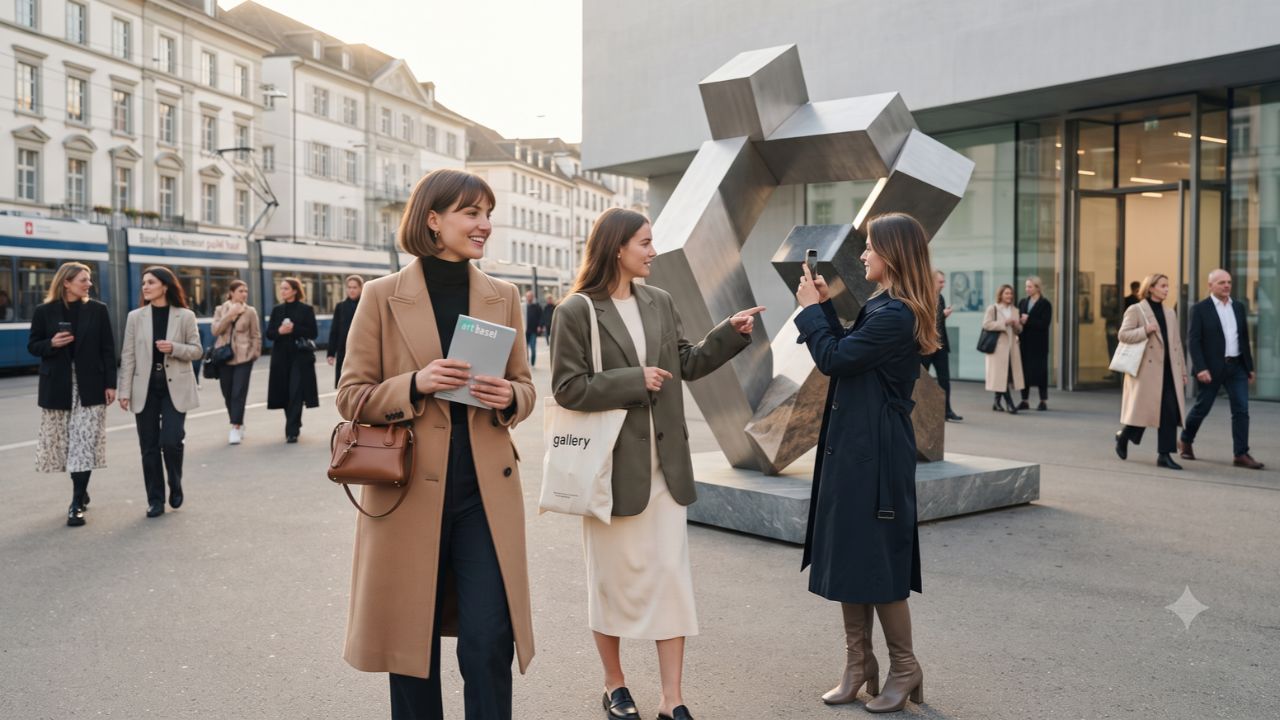
A peak hotel room occupancy of 93% in Basel and 91,500 recorded attendees in Hong Kong reveal how premier international art fairs have transformed from trade exhibitions into powerful drivers of municipal tourism revenue. With the Canton of Basel-Stadt registering over 39,000 hotel room nights during Art Week in June 2026, and the City of Miami Beach documenting an estimated $547 million in broader economic activity during its 2024 edition, host cities are locked in an intense competition for high-net-worth cultural travelers. However, measuring the true economic return of these international gatherings requires looking past top-line visitor counts to examine hotel room yields, length of stay, dining expenditure, and the degree to which fair visitors displace regular corporate travel.
While major commercial exhibitions generate headlines through high-value artwork sales, municipal leaders focus on broader secondary spending. Collectors, institutional curators, gallery directors, and independent cultural travelers spend across hospitality networks, transport systems, fine dining venues, and independent retail districts. As Art Basel expands its global calendar across Switzerland, Asia, France, and North America, each destination deploys a distinctly different urban strategy to retain international visitors beyond the exhibition hall.
Global Fairs as Economic Engines: Contrasting Basel, Hong Kong, Paris, and Miami Beach
The global Art Basel circuit operates across four distinct urban markets, each demonstrating varying levels of tourism maturity, seasonal demand, and lodging capacity.
Basel offers the clearest documented evidence of event-specific accommodation demand due to its compact municipal boundary. The Swiss edition in June 2026 welcomed 90,000 visitors representing 103 countries, drawing 290 galleries from 43 countries and territories alongside delegates from more than 270 international museums and foundations. This concentration drove average net room occupancy across Basel-Stadt to 84% during Art Week. Occupancy surged to a peak of 93% on Monday, 15 June 2026, contrasting sharply with an event-window low of 44% on Sunday, 7 June. Because Basel’s urban core is compact, international travelers walk between the Messe Basel exhibition halls, riverside dining districts, and local cultural foundations, directly benefiting local neighborhood businesses. Organizers have set the next Swiss edition for 17–20 June 2027, giving regional hoteliers and transport authorities a defined baseline for yield management.
Hong Kong establishes a different benchmark, recording the highest attendance among the completed 2026 fairs with 91,500 visitors in March. The Asian flagship featured 240 galleries from 41 countries and territories, while drawing representatives from over 170 international museums and foundations across 27 jurisdictions. To anchor this spending long-term, the Hong Kong Special Administrative Region government finalized a five-year collaboration agreement with Art Basel in March 2026. Supported by promotional initiatives tracked through the Hong Kong Tourism Board, the city integrates free public film screenings, panel discussions, and harborfront installations to draw travelers into West Kowloon and Central. The next Hong Kong edition will take place from 25–27 March 2027.
Paris brings unmatched regional tourism scale to the circuit as Art Basel Paris prepares to occupy the restored Grand Palais from 23–25 October 2026, with VIP previews starting 21–22 October. Its fifth edition brings 211 exhibitors from 41 countries and territories, including 32 first-time participants. Unlike Basel, where the fair dominates local hospitality, Paris absorbs art tourism into a massive visitor economy. During the first six months of 2026, the Paris Region recorded 24.7 million tourist arrivals—comprising 11.5 million international travelers and 13.2 million domestic visitors—generating €11.8 billion in spending (up 4% year on year and 17% above 2019 levels) and 34.1 million hotel room nights. The Grand Palais event functions as a premium catalyst within an already thriving cultural calendar.
Miami Beach represents the winter pinnacle of the fair calendar, returning to the Miami Beach Convention Center from 4–6 December 2026, following VIP preview days on 2–3 December. Featuring 272 exhibitors from over 40 countries and territories, the fair anchors Miami Art Week, extending cultural activities across South Beach and the mainland. To disperse visitor spending across hospitality properties, the municipal No Vacancy program places site-specific installations by 12 artists across 12 Miami Beach hotels between 12 November and 19 December 2026, encouraging guests to tour diverse properties regardless of fair admission status.
Comparative Metrics: Dissecting Attendance, Accommodation, and Economic Footprints
Understanding how each host city extracts value from art tourism requires evaluating verified attendance data against available accommodation indicators:
| Destination & Venue | Event Dates & Planning Cycle | Exhibitor & Institutional Reach | Verified Tourism & Lodging Indicators | Strategic Economic Profile |
|---|---|---|---|---|
| Basel, Switzerland (Messe Basel) | June 2026 (Next edition: 17–20 June 2027) | 290 galleries from 43 territories; 270+ museum delegations | 90,000 visitors; 39,000+ hotel nights; 84% average net occupancy (93% peak) | Concentrated municipal demand driving extreme hotel occupancy surges |
| Hong Kong (HKCEC, Wan Chai) | March 2026 (Next edition: 25–27 March 2027) | 240 galleries from 41 territories; 170+ museum delegations | 91,500 recorded attendees; 5-year official government partnership pact | Premier regional trading hub driving cross-border Asian collector inflows |
| Paris, France (Grand Palais) | 23–25 October 2026 (Previews: 21–22 Oct) | 211 exhibitors from 41 territories; 32 debut participants | Regional baseline of 34.1M room nights and €11.8B spend in H1 2026 | High-yield collector focus integrated into a massive cultural capital |
| Miami Beach, USA (Convention Center) | 4–6 December 2026 (Previews: 2–3 Dec) | 272 exhibitors from 40+ countries and territories | 2024 benchmark: 75,000+ attendees; $547M estimated economic impact | Resort-anchored Art Week model combining beach hospitality with public hotel art |
Expert Analysis: Decoding High-Net-Worth Yield, Displacement, and Yield Management
The economics of art tourism differ fundamentally from sporting events or convention travel. While mass gatherings depend on ticket volume and concession sales, art fairs attract ultra-high-net-worth individuals, institutional directors, and commercial gallerists who spend heavily on luxury hospitality, private aviation, Michelin-starred dining, and specialized logistics.
For travelers booking this route, the direct consequence is an immediate spike in accommodation costs and strict minimum-stay requirements across all primary hotel categories. In Basel, the scarcity of five-star inventory pushes average daily room rates to annual peaks, forcing independent curators and regional travelers to seek rooms across the border in Mulhouse, France, or Freiburg, Germany. In Paris, the positioning of Art Basel at the Grand Palais directly overlaps with autumn corporate travel, causing hotel inventory around the Champs-Élysées and the 8th arrondissement to sell out months in advance.
The pricing pressure this creates means that ordinary leisure visitors face severe displacement during fair weeks. Hotels implement non-refundable reservation policies, mandatory three- to five-night minimums, and premium room-rate multipliers. Destination managers must carefully evaluate whether the high spending of art patrons produces genuine net incremental revenue or simply displaces standard business and leisure travelers who would have booked rooms at standard seasonal rates.
Furthermore, public installations play a vital role in widening the economic footprint of the fairs. When exhibitions remain confined within convention halls, spending stays concentrated among accredited VIPs and gallerists. Initiatives such as Miami Beach’s No Vacancy program—which activates 12 distinct hotels—and Hong Kong’s harborfront screenings successfully distribute pedestrian foot traffic into independent cafes, neighborhood boutiques, and regional transit lines. By extending art engagement into the public sphere, host cities convert exclusive trade exhibitions into destination-wide economic festivals.
Strategic Travel Logistics: Navigating Fair Calendars and Accommodation Bottlenecks
Travelers planning itineraries around global art fair schedules must apply structured logistical strategies to manage costs and ensure access:
- Paris (October 2026): Visitors targeting Art Basel Paris at the Grand Palais should look beyond the central 8th arrondissement. Exploring hotel inventory in the 9th, 10th, or 11th arrondissements provides convenient access via Metro Line 1 and Line 9 while avoiding premium luxury surcharges. Travelers should secure Grand Palais admission passes and museum reservations well in advance to coordinate with citywide autumn exhibitions.
- Miami Beach (December 2026): With 272 galleries congregating at the Miami Beach Convention Center, room rates on South Beach reach seasonal highs. Travelers can achieve better pricing by booking properties in Brickell, Downtown Miami, or Wynwood, using the Brightline rail service and express causeway shuttles to access the barrier island. Exploring free No Vacancy hotel installations provides substantial cultural immersion without fair ticket fees.
- Hong Kong (March 2027): Given the high attendance of 91,500 visitors, planning around the 25–27 March 2027 dates requires reserving rooms along Hong Kong Island’s northern corridor or across Victoria Harbour in Tsim Sha Tsui. The MTR network provides efficient transfers directly to Exhibition Centre Station in Wan Chai.
- Basel (June 2027): Because Basel-Stadt room occupancy reaches 93%, international visitors should secure lodging six to nine months ahead of the 17–20 June 2027 fair dates. If municipal rooms are booked, utilizing Swiss Federal Railways (SBB) connections from Zurich or regional trains from nearby Alsace allows convenient day commuting into the Messe Basel complex.
Key Takeaways
- Unprecedented Lodging Pressure: Basel’s 2026 edition achieved an 84% average net room occupancy across Art Week, peaking at 93% on Monday, 15 June, and generating more than 39,000 hotel room nights.
- Hong Kong Leads Attendance: Drawing 91,500 visitors in March 2026 across 240 galleries, Hong Kong established the highest reported attendance among completed 2026 Art Basel editions, supported by a new five-year government partnership.
- Grand Palais Historic Return: Art Basel Paris convenes 211 exhibitors from 41 territories at the restored Grand Palais from 23–25 October 2026, embedded within a regional tourism market that generated 34.1 million room nights in H1 2026.
- Miami Art Week Commercial Scale: Featuring 272 exhibitors from over 40 jurisdictions from 4–6 December 2026, Miami Beach expands its cultural footprint through the No Vacancy initiative across 12 hotels following a 2024 economic impact estimate of $547 million.
- Visitor Yield Over Volume: The true economic return of art fairs lies in attracting extended, high-spending stays rather than maximizing single-day ticket counts.
FAQ: Art Basel Tourism and Cultural Travel Economics 2026
What are the official dates for the upcoming Art Basel fairs in late 2026?
Art Basel Paris runs from 23–25 October 2026 (previews 21–22 October) at the Grand Palais. Art Basel Miami Beach takes place from 4–6 December 2026 (previews 2–3 December) at the Miami Beach Convention Center.
How significantly does Art Week impact hotel occupancy in Basel?
Art Week dramatically tightens Basel's lodging market. In June 2026, net room occupancy averaged 84% and peaked at 93%, generating over 39,000 hotel room nights across the Canton of Basel-Stadt.
When will Art Basel return to Hong Kong and Switzerland in 2027?
Art Basel Hong Kong is scheduled for 25–27 March 2027 at the Hong Kong Convention and Exhibition Centre. The flagship Swiss edition in Basel will take place from 17–20 June 2027.
What is the purpose of Miami Beach's No Vacancy program?
Running from 12 November to 19 December 2026, No Vacancy exhibits works by 12 artists across 12 Miami Beach hotels, extending cultural tourism beyond the convention center and into local hospitality properties.
[In the high-stakes arena of global cultural tourism, the ultimate asset is not the painting on the wall, but the traveler who stays the week.]
Related Travel Guides
Disclaimer
This article is for informational and educational purposes only. It does not constitute legal, financial, or professional advice. While we strive to provide accurate and up-to-date information, travel policies, regulations, and conditions change rapidly. Always verify information with official sources before making travel decisions. Nomad Lawyer makes no representations about the accuracy, reliability, completeness, or suitability of the information provided. Readers should consult qualified professionals for advice specific to their circumstances. The views expressed in this article are those of the author and do not necessarily reflect the views of Nomad Lawyer.
Preeti Gunjan
Contributor & Community Manager
A passionate traveller and community builder. Preeti helps grow the Nomad Lawyer community, fostering engagement and bringing the reader experience to life.
Learn more about our team →