
Nepal Monsoon Crisis: Jhapa District Under High Alert as Heavy Rainfall and Flood Threats Surge Across Eastern Regions
Nepal's Jhapa district has been placed under strict monsoon high alert due to heavy rainfall forecasts and rising flood risks affecting 8,000+ households across vulnerable river regions.

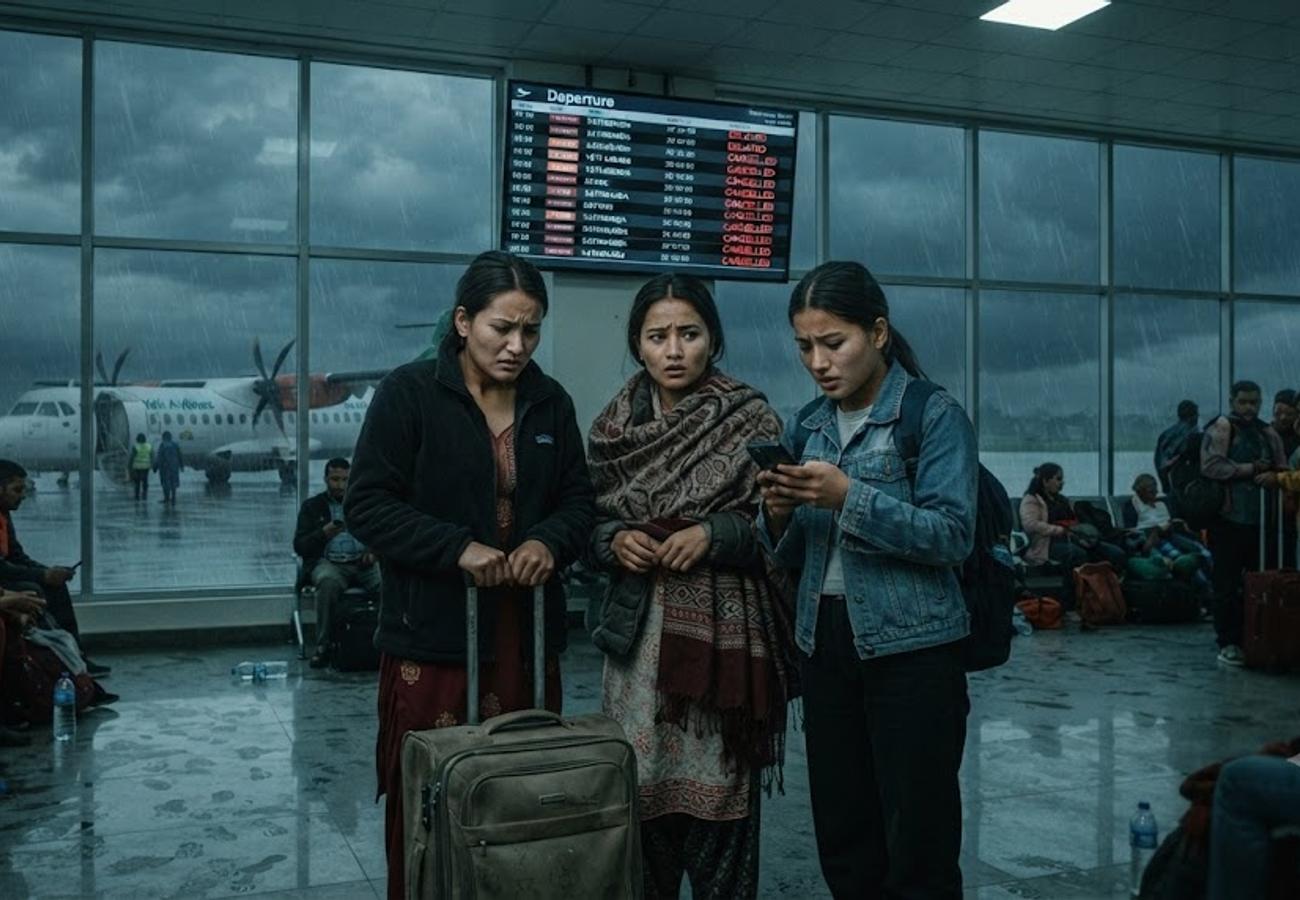
Image generated by AI
Nepal Issues Critical Travel Advisory as Jhapa District Enters Monsoon Emergency State
Nepal's Jhapa district has officially entered a state of maximum alert as the Department of Hydrology and Meteorology issued an urgent warning for heavy to very heavy rainfall across eastern Nepal during the peak monsoon window of June 30 and July 1. The alert signals serious danger: intensified monsoon systems coupled with thunderstorms and lightning are expected to trigger flash flooding, rapid inundation, and catastrophic water-level surges across multiple river basins.
The District Administration Office (DAO), Jhapa has formally issued a public safety notice directing all residents and travellers to exercise extreme caution as weather conditions deteriorate rapidly.
This is no routine seasonal weather update—it's an emergency-level alert affecting thousands of vulnerable communities.
Over 8,000 Households Face Displacement Risk
The scale of potential impact cannot be understated. According to local estimates, more than 8,000 households are currently classified as being at very high risk of flooding, displacement, and severe property damage. These families live in low-lying settlements adjacent to swollen river systems with minimal flood-control infrastructure.
The Nepal Red Cross Society in Jhapa has mobilized approximately 120 trained volunteers, first-aid teams, and search-and-rescue units positioned on standby for immediate deployment. Emergency relief supplies—food stock and essential materials—have already been pre-positioned across seven strategic locations within the district.
Reddit: "If you're planning to visit Nepal during monsoon season, check Jhapa's flood status before booking. The monsoon here is not a gentle rain—it's a genuine disaster risk." — r/travel
Seven High-Risk Municipalities Under Close Monitoring
Out of Jhapa's 15 local administrative units, several municipalities have been classified as critical flood zones due to their low elevation and proximity to major river systems:
Gaurigunj Rural Municipality sits directly in the flood path. Kachankawal, Bahradashi, Jhapa, and Kamal Rural Municipalities face similar threats. Shivasatakshi Municipality and Bhadrapur Municipality have dense settlements that amplify disaster exposure.
Residents in these zones have been explicitly warned to avoid unnecessary travel during heavy rainfall periods and to stay away from river channels, streams, and natural drainage routes—which can become death traps within minutes during monsoon surges.
Six Major Rivers Marked as Flood Threat Hotspots
The following rivers flowing through Jhapa have been identified as highly sensitive during the current monsoon cycle:
The Kankai River, Biring River, Ratuwa River, Mechi River, Mawa River, and Ninda River all pose elevated risk due to rapid runoff from upstream rainfall and limited flood-control infrastructure. Even short bursts of intense rainfall can trigger flash floods that sweep away vehicles, livestock, and unprepared travellers.
Authorities have issued an unequivocal warning: crossing swollen rivulets must be strictly avoided under any circumstances.
Multi-Agency Emergency Response Activated
Chief District Officer (CDO) Shivaram Gelal confirmed that a comprehensive emergency response mechanism has been activated across the district. The following agencies are now on high alert:
The Nepali Army, Nepal Police, Armed Police Force, and Nepal Red Cross Society, working in coordination with local government authorities, have completed an integrated disaster response plan prioritizing flood preparedness and rapid inter-agency coordination.
Security personnel have also undergone specialized training. A recent programme conducted under the Koshi Province Ministry of Internal Affairs trained 20 municipal police personnel from five municipalities in disaster response coordination, search and rescue techniques, community-level emergency management, and flood evacuation procedures.
This is not preparation—this is active mobilization.
Broader South Asian Monsoon Context
The monsoon system affecting Nepal is part of a larger South Asian weather pattern. According to regional meteorological data, similar seasonal dynamics are influencing multiple countries across the region. India is experiencing widespread monsoon activity across northern and northeastern states. Bangladesh faces riverine flooding risks in delta regions. Bhutan is dealing with landslide-prone Himalayan zones.
For travellers planning trips across South Asia, this is a critical period requiring heightened awareness of regional weather systems and seasonal hazards.
Travel Guidance: What You Must Know
If you're currently in or planning to visit Jhapa district, here's what you need to do:
Avoid all river crossings until the alert is lifted. Stay away from low-lying areas and riverbank settlements. Monitor official alerts from the District Administration Office in real time. Identify safe shelter locations in advance if you're in a vulnerable zone. Do not attempt travel during heavy rainfall periods.
Families have been instructed to prepare evacuation routes and keep emergency supplies on hand. This is not precautionary theatre—authorities have pre-positioned disaster relief materials across the district because they expect severe conditions.
When Will the Alert Be Lifted?
The Department of Hydrology and Meteorology continues to monitor rainfall intensity and river levels in real time. As of now, the critical window extends through July 1, but extended warnings may be issued depending on weather developments. Check official Nepali government meteorological updates and the District Administration Office notices before making any travel plans to eastern Nepal.
Regional monsoon patterns typically persist through September, but the most acute flood risk occurs during June and July when rainfall intensity peaks.
The Bottom Line for Travellers
Jhapa district is effectively in disaster-response mode. This isn't a minor travel inconvenience—it's a genuine emergency situation with thousands of lives at stake. Authorities have activated security forces, positioned rescue teams, and issued formal evacuation guidance.
If your trip to eastern Nepal isn't essential, postpone it. If you're already there, follow official guidance without hesitation. The monsoon in Nepal is a serious natural hazard, and this alert reflects real, immediate danger.
Stay informed. Stay safe. Stay away from flood zones.
The monsoon waits for no traveller—respect the weather, respect the alert, and plan accordingly.
Related Travel Guides
Disclaimer
This article is for informational and educational purposes only. It does not constitute legal, financial, or professional advice. While we strive to provide accurate and up-to-date information, travel policies, regulations, and conditions change rapidly. Always verify information with official sources before making travel decisions. Nomad Lawyer makes no representations about the accuracy, reliability, completeness, or suitability of the information provided. Readers should consult qualified professionals for advice specific to their circumstances. The views expressed in this article are those of the author and do not necessarily reflect the views of Nomad Lawyer.
Kunal K Choudhary
Co-Founder & Contributor
A passionate traveller and tech enthusiast. Kunal contributes to the vision and growth of Nomad Lawyer, bringing fresh perspectives and driving the community forward.
Learn more about our team →