
Nepal's Annapurna Tourism Surges 8.6% as September 2026 Arrivals Reach 21,048
Nepal's Annapurna Conservation Area welcomed 21,048 foreign tourists in September 2026, marking an 8.6% growth led by SAARC visitors.

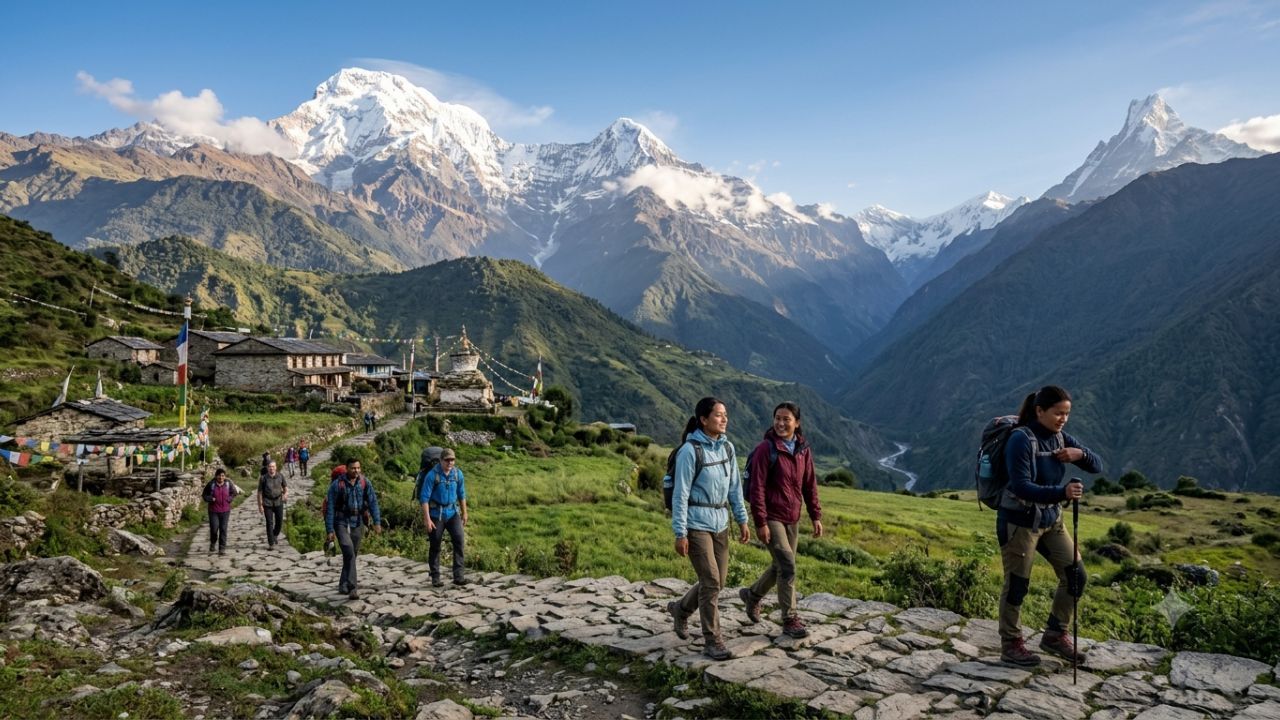
Image generated by AI
International tourist arrivals to Nepal’s Annapurna Conservation Area surged by 8.6 percent year-on-year in September 2026, welcoming 21,048 foreign visitors into the protected mountain sanctuary.
Data released by the Annapurna Conservation Area Project (ACAP) highlights a strong seasonal recovery led primarily by a sharp surge in travelers from South Asian Association for Regional Cooperation (SAARC) nations. The influx marks the second-highest September visitor total for the region over the past five years as Nepal enters its peak autumn Himalayan trekking season.
Regional South Asian Demand Drives 21.1 Percent Growth Surge
The standout driver behind the September recovery was a 21.1 percent surge in visitors from SAARC member states. Regional arrivals rose from 8,542 in September 2025 to 10,343 in September 2026—an increase of 1,801 travelers.
SAARC visitors accounted for 49.1 percent of total international arrivals in September 2026, up from 44.1 percent during the same period in 2025. Conversely, non-SAARC arrivals declined slightly by 1.3 percent from 10,844 to 10,705 visitors, though non-SAARC markets retained a 50.9 percent overall market share.
Five-Year Arrival Trends Show Second-Highest September Volume
Historical tracking across the 7,629-square-kilometer conservation area underscores a broader post-pandemic trekking recovery. September 2026 registered 21,048 foreign arrivals—representing a 29.2 percent increase compared to the 16,297 visitors recorded in September 2022.
While September 2026 demonstrated solid growth over 2025's figure of 19,386, total arrivals remain 8.8 percent below the 5-year September peak recorded in 2024, when 23,088 foreign travelers visited the region.
Five-Year September Visitor Breakdown for the Annapurna Conservation Area
| Year | SAARC Arrivals | Non-SAARC Arrivals | Total Visitors | Year-on-Year Change |
|---|---|---|---|---|
| 2022 | — | — | 16,297 | — |
| 2023 | — | — | 19,181 | +17.7% |
| 2024 | 11,071 | 12,017 | 23,088 | +20.4% |
| 2025 | 8,542 | 10,844 | 19,386 | −16.0% |
| 2026 | 10,343 | 10,705 | 21,048 | +8.6% |
Key Himalayan Destinations Benefit as Autumn Trekking Season Begins
The rise in foreign arrivals provides vital economic support to mountain lodges, licensed trekking guides, transport operators, and local tea houses across western Nepal. Managed by ACAP, the protected zone houses major Himalayan trekking circuits, high-altitude lakes, and sacred mountain routes.
Core trekking corridors driving visitor demand include:
- Annapurna Circuit: The classic multi-day loop traversing high mountain passes and traditional Gurung and Thakali villages.
- Annapurna Base Camp: The iconic trek leading into the central Annapurna Sanctuary amphitheater.
- Tilicho Lake: One of the world's highest-altitude lakes, attracting adventure trekkers.
- Kali Gandaki Gorge: One of the deepest gorges on Earth, linking Manang and Mustang.
- Manang and Mustang: High-altitude rain-shadow districts celebrated for Tibetan-influenced cultural heritage and ancient monasteries.
To support sustainable mountain travel and visitor safety, official destination updates are maintained by the Nepal Tourism Board.
Frequently Asked Questions
How many foreign tourists visited Annapurna in September 2026?
The Annapurna Conservation Area welcomed 21,048 foreign tourists in September 2026, representing an 8.6 percent year-on-year increase compared to September 2025.
What drove the growth in September 2026 arrivals?
Growth was primarily driven by a 21.1 percent surge in travelers from SAARC member nations, which accounted for 10,343 of the total arrivals.
How large is the Annapurna Conservation Area?
The Annapurna Conservation Area covers approximately 7,629 square kilometers across western Nepal and is managed by the Annapurna Conservation Area Project (ACAP).
What are the main trekking routes in the Annapurna region?
Key trekking routes include the Annapurna Circuit, Annapurna Base Camp, Tilicho Lake, the Kali Gandaki Gorge, and mountain routes through Manang and Mustang.
Related Travel Guides
Disclaimer
This article is for informational and educational purposes only. It does not constitute legal, financial, or professional advice. While we strive to provide accurate and up-to-date information, travel policies, regulations, and conditions change rapidly. Always verify information with official sources before making travel decisions. Nomad Lawyer makes no representations about the accuracy, reliability, completeness, or suitability of the information provided. Readers should consult qualified professionals for advice specific to their circumstances. The views expressed in this article are those of the author and do not necessarily reflect the views of Nomad Lawyer.
Naina Thakur
Contributor & Travel Specialist
Travel enthusiast and legal writer covering visa regulations, responsible tourism, and cultural journeys across global destinations.
Learn more about our team →