
South Korea Tourism Data 2026: Foreign Arrivals Jump 21.6% as Seoul and Busan Lead Growth
International arrivals in South Korea hit 15.05 million by August 2026, with foreign spending surging 48.5%. New K-Tour Pass and regional cultural initiatives are now aggressively pushing visitors beyond Seoul into Busan and other provinces.

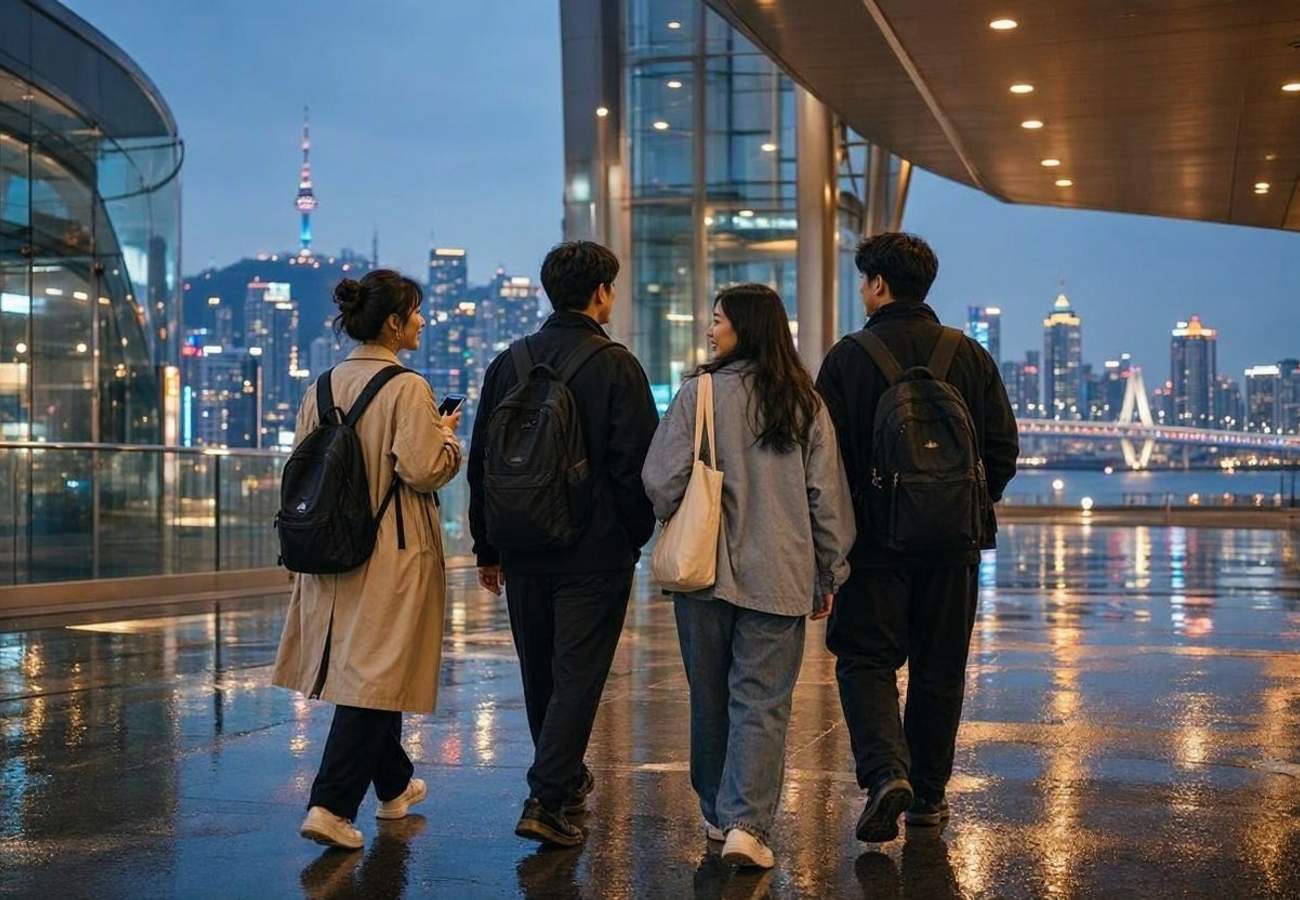
Image generated by AI
International arrivals to South Korea climbed from 12.38 million in the first eight months of 2025 to 15.05 million during the same period in 2026—a 21.6% year-over-year surge. This growth is paired with an even more aggressive spike in capital injection, as foreign tourism-related card expenditure reached KRW 14.018 trillion, marking a 48.5% increase in spending. These figures indicate that while more people are visiting, the average spend per visitor is accelerating at more than double the rate of arrival growth.
The Regional Shift in Numbers: Seoul to Busan
The South Korean government is leveraging this momentum to solve a chronic industry challenge: the over-concentration of tourists in the capital. By introducing the K-Tour Pass and the "2026 Korea Is Performing" campaign, the state is attempting to decentralize tourism revenue.
The K-Tour Pass, priced at KRW 15,000, acts as a strategic funnel. It integrates a 50% discount on the Airport Railroad AREX for the initial transit into Seoul and provides a choice of onward regional incentives: either a 40% discount on transport to Busan (capped at KRW 24,000) or a Korail Pass discount coupon of KRW 24,000.
Beyond transport, the pass integrates access to approximately 35 Busan-based attractions—including the Songdo Marine Cable Car, Skyline Luge Busan, and Lotte World Adventure Busan—where visitors can claim one free admission. Furthermore, around 50 partner locations, including cafes and experience centers, provide repeatable discounts to encourage prolonged stays in the south.
Comparative Growth and Infrastructure Benchmarks
The data suggests a record-breaking trajectory. August 2026 alone saw 2.25 million arrivals, a 23.3% increase over the previous year. This represents a 30-year peak for the month of August. To support this volume, the Ministry of Culture, Sports and Tourism has shifted from simple promotion to structural ease-of-access, releasing multilingual transport guides in English, Japanese, Traditional Chinese, and Simplified Chinese.
The following table breaks down the key performance indicators for the January–August 2026 period compared to the previous year.
| Metric | Jan–Aug 2025 | Jan–Aug 2026 | Year-over-Year Change |
|---|---|---|---|
| Total International Arrivals | 12.38 Million | 15.05 Million | +21.6% |
| August Monthly Arrivals | 1.82 Million* | 2.25 Million | +23.3% |
| Foreign Card Spending | KRW 9.47 Trillion* | KRW 14.018 Trillion | +48.5% |
| Regional Focus (Busan) | Limited Packages | K-Tour Pass / 35+ Attractions | Structural Shift |
*Calculated based on provided growth percentages.
What This Means for Travelers
For those planning a trip to East Asia in late 2026, the data suggests a strategic window for regional exploration. If you are visiting between October 1 and November 30, the "2026 Korea Is Performing" initiative offers a significant value proposition with approximately 1,700 performances nationwide across 16 cultural foundations.
Actionable Booking Advice:
- Leverage the K-Tour Pass: For KRW 15,000, the pass effectively pays for itself via the AREX and Busan transport discounts. Ensure you acquire the integrated WOWPASS card to consolidate your transit and debit payments into one tool.
- Target Regional Vouchers: Since September 1, second-round performance discount vouchers have been available via five online platforms. Specifically, look for the two additional vouchers per person designated for performances outside the Seoul metropolitan area.
- Time Your Visit for Festivals: The Seoul Performing Arts Festival (Oct 8–25) and the RE:BOUND Festival (Oct 16–Nov 14) provide high-density cultural options. Booking regional accommodation 6-8 weeks in advance is recommended, as the government is actively linking these performances with local restaurant and hotel promotions.
Cultural Economics and Forward Projection
South Korea is moving toward a "Cultural Economy" model where performing arts are not isolated events but anchors for regional spending. The involvement of 20 Regional Representative Arts Organizations through the RE:BOUND Festival indicates a long-term move to distribute the World Tourism Organization (UNWTO) recognized benefits of tourism across smaller provinces.
The trajectory suggests that by 2027, we will see a further integration of fintech (like WOWPASS) with regional government incentives. As foreign card spending grows at 48.5%, the industry is shifting its focus from "volume" (number of heads) to "value" (spend per head). Travelers should expect more "bundle" offers that link high-speed rail, regional hotel stays, and cultural tickets.
FAQ: South Korea Tourism 2026
Is the K-Tour Pass worth it for short trips? Yes. For KRW 15,000, the 50% AREX discount and Busan transport savings (up to KRW 24,000) typically exceed the cost of the pass, making it a net gain for anyone leaving Seoul.
When is the best time to visit for cultural events? The window from October 1 to November 30, 2026, is optimal due to the "Korea Is Performing" campaign, which coordinates 1,700 events and provides specific regional discount vouchers.
How do I pay for transport in regional areas? The WOWPASS card provided with the K-Tour Pass functions as both a debit and transit card. Additionally, the government's new multilingual guides cover all major rail, bus, and taxi systems.
Which cities besides Seoul are seeing the most growth? Busan is the primary target of current growth initiatives, with over 35 major attractions and dedicated transport discounts designed to pull traffic away from the capital.
The data is clear: the era of the Seoul-only itinerary is ending as regional incentives make the south of the peninsula financially irresistible.
Related Travel Guides
Disclaimer
This article is for informational and educational purposes only. It does not constitute legal, financial, or professional advice. While we strive to provide accurate and up-to-date information, travel policies, regulations, and conditions change rapidly. Always verify information with official sources before making travel decisions. Nomad Lawyer makes no representations about the accuracy, reliability, completeness, or suitability of the information provided. Readers should consult qualified professionals for advice specific to their circumstances. The views expressed in this article are those of the author and do not necessarily reflect the views of Nomad Lawyer.
Naina Thakur
Contributor & Travel Specialist
Travel enthusiast and legal writer covering visa regulations, responsible tourism, and cultural journeys across global destinations.
Learn more about our team →