
NATO Aircraft Nations: Presidential Fleets Ranked 2026
NATO's 32 member nations operate vastly different presidential aircraft fleets in 2026. Compare Air Force One, Airbus A350s, and regional alternatives that reflect geopolitical priorities and VIP transport capabilities across allied nations.

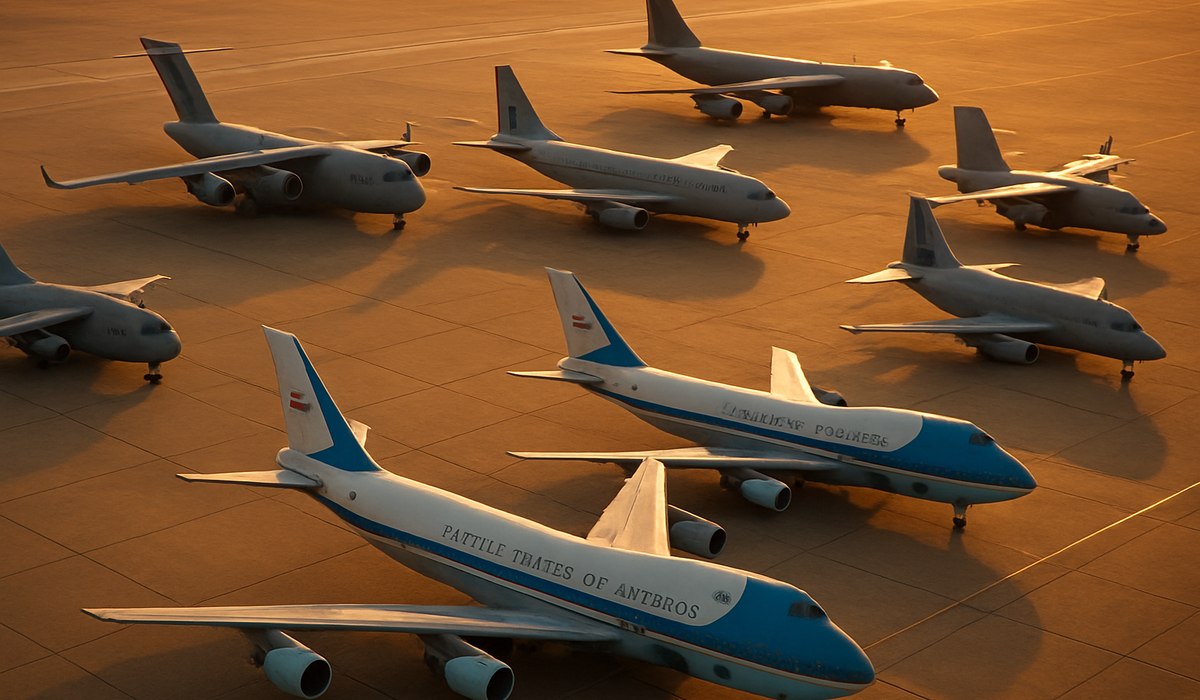
Image generated by AI
NATO's Presidential Aircraft Fleet: A Comparative Overview
NATO's 32 member nations operate dramatically different presidential aircraft, reflecting each country's defense budget, aerospace capabilities, and strategic positioning within the Western alliance. From the legendary Air Force One to sleek European business jets, these VIP transport platforms reveal far more than luxury—they showcase military-industrial strength and diplomatic reach. Understanding how allied nations transport senior leadership provides insight into geopolitical priorities, technological advancement, and the shifting landscape of transatlantic security partnerships in 2026.
United States: The Boeing 747-8 Standard
The United States maintains the world's most advanced presidential aircraft fleet, anchored by two Boeing 747-8 variants designated as Air Force One. These 70,000-pound aircraft represent the pinnacle of aerospace engineering, equipped with advanced defense systems, secure communications suites, and the capacity to refuel mid-air through aerial tankers. The 747-8 can remain aloft for 19 hours, enabling the sitting president to conduct state business globally without relying on foreign airfields. Each aircraft costs approximately $660 million to operate and maintain across its operational life.
The U.S. also employs Boeing 737 aircraft for shorter presidential transport missions when full 747-8 deployment proves unnecessary. This multi-tiered approach ensures flexible response capabilities for various diplomatic scenarios. According to the FAA's aircraft registry, the U.S. Air Force maintains the most technologically sophisticated executive transport infrastructure worldwide. The sheer operational complexity—including classified avionics, electronic warfare capabilities, and integrated defense systems—remains unmatched among NATO aircraft nations.
European Powers: Germany, UK, and France Compare
Germany operates the Airbus A350-900, a twin-engine, wide-body aircraft that represents the modern European standard for presidential transport. The A350 carries 315 passengers in standard configuration but operates with significantly reduced capacity for executive comfort. It offers 14-hour range capability and incorporates Airbus's latest avionics and efficiency technologies. Germany took delivery of its A350 in 2016, making it one of Europe's newest presidential aircraft.
The United Kingdom relies on modified Boeing 787 Dreamliners designated as RAF Voyager aircraft. Initially procured for military aerial refueling, the Voyager has been adapted for high-level government transport. The 787 offers impressive fuel efficiency and range exceeding 16 hours, enabling non-stop transatlantic connectivity without intermediate refueling stops. This dual-use approach reflects budget constraints while maintaining operational capability.
France operates the Airbus A330-200, a slightly older wide-body platform that still delivers reliable presidential transport with 11-hour range. The A330 has served French state functions since 2003 and remains viable despite emerging alternatives. France's preference for Airbus aircraft underscores the European Union's industrial strategy of promoting continental aerospace manufacturers over American competitors, particularly regarding NATO aircraft nations' purchasing decisions.
Secondary NATO Members: Canada and Turkey's Choices
Canada utilizes two Airbus CC-150 Polaris aircraft (commercial A310 variants) for vice-regal and ministerial transport. These smaller wide-body platforms carry approximately 190 passengers and reflect Canada's more modest defense budgeting compared to NATO's primary military powers. The CC-150 provides sufficient capability for North American operations and transatlantic crossings, though the aging fleet faces eventual retirement considerations within the next five years.
Turkey, NATO's critical southeastern anchor, operates a fleet of Airbus A350s and Bombardier Global 6000 business jets. This mixed approach reflects Turkey's geographic positioning and need for both long-range capability and flexible regional transport. The Global 6000 variants provide rapid-response capacity for rapidly evolving Mediterranean security situations, where presidential delegations often require expedited departure from complex political environments.
VIP Transport Capabilities and Military Implications
The disparity in presidential aircraft across NATO aircraft nations reflects broader defense spending realities. The United States invests approximately $4.9 trillion in annual defense spending—more than the combined expenditures of the next ten countries. This funding advantage translates directly into aerospace superiority, where the 747-8 represents an aspirational standard most European allies cannot justify economically.
However, European manufacturers have successfully positioned Airbus products (A350, A330) as viable alternatives that offer superior fuel efficiency, lower operational costs, and reduced environmental footprints compared to aging Boeing platforms. From 2020 through 2026, over 40 percent of new presidential aircraft acquisitions within NATO have been Airbus-designated platforms, signaling gradual technological rebalancing toward European aerospace manufacturers.
Military implications extend beyond comfort or range. Presidential aircraft serve as flying command centers during crises. The U.S. maintains sophisticated systems for secure communications, nuclear command authority redundancy, and integrated defense networks. European aircraft, while equipped with modern avionics, lack comparable classified defense integration—a capability gap that doesn't concern allies during peacetime but becomes strategically relevant during military tensions or extended operations in contested airspace.
| NATO Nation | Primary Aircraft | Passenger Capacity | Range (Hours) | Introduction Year | Operational Status |
|---|---|---|---|---|---|
| United States | Boeing 747-8 | 70 | 19 | 2005/2015 | Active (2 aircraft) |
| Germany | Airbus A350-900 | 315 | 14 | 2016 | Active |
| United Kingdom | Boeing 787 Dreamliner | 284 | 16 | 2012 | Active |
| France | Airbus A330-200 | 300 | 11 | 2003 | Active |
| Canada | Airbus CC-150 | 190 | 12 | 1991 | Active (Pending Retirement) |
| Turkey | Airbus A350/Bombardier Global | 315/16 | 14/11 | 2005/2014 | Active (Dual Fleet) |
What This Means for Travelers
Understanding how NATO aircraft nations prioritize presidential transport reveals patterns affecting commercial aviation development and geopolitical power dynamics:
-
Aircraft Selection Reflects Alliance Status: Nations with stronger defense budgets and closer U.S. relationships tend to operate Boeing platforms, while budget-conscious allies standardize on Airbus alternatives, shaping procurement patterns across the entire aviation industry.
-
Technological Capability Gaps Matter: The disparity between U.S. 747-8 capabilities and European alternatives indicates significant differences in military-grade systems integration, affecting how nations respond to regional security crises requiring executive-level rapid deployment.
-
European Consolidation Trends: Increasingly, European NATO members coordinate aircraft acquisitions around Airbus platforms, creating economic synergies and supply chain efficiencies that may eventually challenge American aerospace dominance within the alliance.
-
Environmental Pressures Drive Upgrades: Newer aircraft like the A350 and 787 produce 20-30 percent fewer emissions than legacy platforms, pushing older presidential aircraft toward retirement despite significant remaining operational life—a pattern increasingly affecting regional commercial airlines.
-
Cost Implications for National Budgets: Presidential aircraft maintenance, crew training, and operational readiness consume 0.2-0.8 percent of defense budgets across NATO members, creating pressure toward retirement of aging platforms and consolidation of fleet operations.
FAQ: NATO Aircraft Nations and Presidential Transport
What aircraft does Air Force One use in 2026? Air Force One utilizes two Boeing 747-8 variants, the most advanced presidential aircraft globally. These aircraft cost approximately $660 million each across their operational lifespan and remain the standard for U.S. executive transport through 2030, with potential successor aircraft in development phases.
**Why do European nations prefer Airbus over Boeing for
Disclaimer
This article is for informational and educational purposes only. It does not constitute legal, financial, or professional advice. While we strive to provide accurate and up-to-date information, travel policies, regulations, and conditions change rapidly. Always verify information with official sources before making travel decisions. Nomad Lawyer makes no representations about the accuracy, reliability, completeness, or suitability of the information provided. Readers should consult qualified professionals for advice specific to their circumstances. The views expressed in this article are those of the author and do not necessarily reflect the views of Nomad Lawyer.
Raushan Kumar
Founder & Lead Developer
Full-stack developer with 11+ years of experience and a passionate traveller. Raushan built Nomad Lawyer from the ground up with a vision to create the best travel and law experience on the web.
Learn more about our team →