
Mumbai Rail Links Boom: Metro Expansion Reshapes Pilgrimage Routes
Mumbai's expanding metro network in 2026 is revolutionizing sacred travel, connecting suburban devotees directly to Maharashtra's revered temples with drastically reduced journey times.

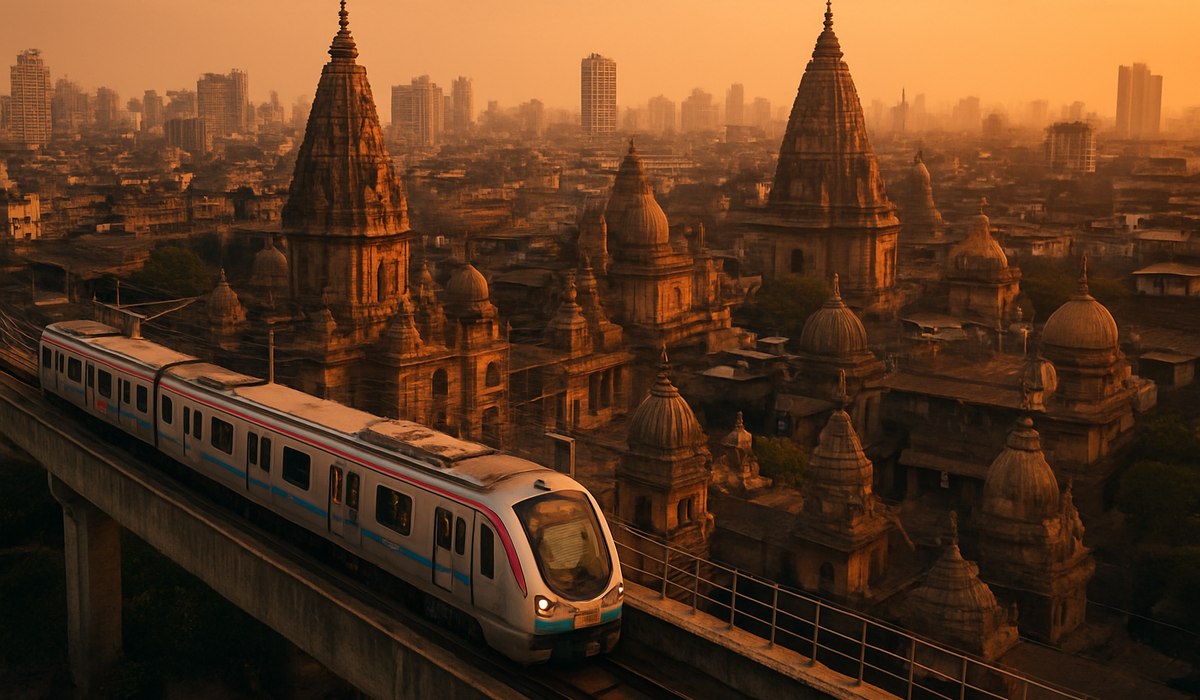
Image generated by AI
Mumbai's Expanding Metro Network Transforms Spiritual Journeys
Mumbai's metro system is fundamentally reshaping how devotees access Maharashtra's most sacred religious sites. The city's rapidly expanding urban rail corridors now connect suburban neighborhoods directly to historic temples, shrines, and pilgrimage destinations with unprecedented speed and convenience. These Mumbai rail links represent a watershed moment for faith-based travel, eliminating the congestion and delays that once plagued traditional commuter routes into the spiritual heart of India's financial capital.
Metro Lines Reshape Spiritual Journeys Across Mumbai
The underground Aqua Line, officially designated as Metro Line 3, has emerged as the cornerstone of Mumbai's pilgrimage accessibility revolution. Operating in phases since late 2025, this north-south corridor now stretches from Aarey in northern Mumbai to Cuffe Parade at the city's southern tip. The line passes directly beneath some of Mumbai's oldest and most revered neighborhoods, placing historic temples and churches within rapid transit reach for commuters traveling from distant suburbs.
By integrating seamlessly with existing transportation hubs at Dadar, Mahalaxmi, and Chhatrapati Shivaji Maharaj Terminus, the Aqua Line has dramatically reduced journey times for devotees heading toward iconic spiritual sites in South Mumbai. Religious travelers previously dependent on crowded local trains now enjoy air-conditioned, predictable transit with clear wayfinding and frequent service. This modal shift has noticeably decreased congestion on traditional suburban rail networks, freeing capacity for longer-distance pilgrimage journeys. Station interchanges now provide multiple routing options, allowing flexible itinerary planning for multi-day temple circuits across Maharashtra.
For comprehensive information about Mumbai's metro system, visit the official MMRDA website to access real-time schedules and system maps.
Underground Aqua Line Connects South Mumbai Shrines to Suburban Neighborhoods
The strategic positioning of the Aqua Line has fundamentally altered the geography of accessible spirituality in Mumbai. Historically, suburban residents required 60-90 minutes to reach central shrine clusters via congested local trains and road traffic. Today, residents from Borivali, Kandivali, and Malad can reach Girgaum, Marine Lines, and Fort neighborhoods housing ancient temples and colonial-era chapels in under 40 minutes.
This acceleration has economic ripple effects across Mumbai's temple economy. Smaller neighborhood shrines report increased visitor traffic from suburbs, while major pilgrimage sites now attract mid-week devotees who previously reserved religious visits for weekly holidays. Temple prasad vendors, flower merchants, and donation collection systems have adapted to higher throughput, while accommodation providers near transit hubs have expanded offerings. The environmental benefit extends beyond reduced car usage—fewer private vehicles on congested routes mean lower emissions and improved air quality across central Mumbai's oldest residential districts.
Red Line Extension Opens Western Routes to Devotees
Mumbai's elevated Red Line metro corridor has experienced significant expansion in 2026, extending from Dahisar East to Kashigaon in the Mira Bhayandar area. This network growth directly serves western suburban communities long underserved by direct rapid transit to central spiritual destinations. The new stations position themselves strategically near existing suburban rail hubs, creating natural interchange points that maximize connectivity efficiency.
Western Railway suburban services, historically overwhelmed during peak pilgrimage seasons, now benefit from distributed passenger load across parallel metro tracks. This relief enables more reliable express service for long-distance devotional trains bound toward coastal temple towns and inland shrines in Malwa and Marathwada regions. Pilgrims from western suburbs can now plan complex multi-destination circuits with confidence, knowing that initial suburban transit delays no longer cascade into missed connections or ruined itineraries. The Red Line's extension addresses a critical accessibility gap that previously confined faith-based tourism benefits to central and eastern suburban populations.
Infrastructure Planning Prioritizes Pilgrimage Accessibility
Maharashtra's transport planners have explicitly recognized sacred site connectivity as a priority within broader metro expansion strategies. Beyond the Aqua and Red Lines, substantial investments in suburban rail capacity expansion are underway across Central and Western Railway networks. Double-tracking projects between Virar and Dahanu Road, scheduled for completion in late 2026 and 2027, will segregate local services from long-distance and freight trains, dramatically improving reliability for pilgrimage-bound express services.
The planned addition of dedicated underground tracks between Kalyan, Thane, and Parel represents an even more ambitious intervention addressing eastern suburban congestion. These engineering works, though unglamorous compared to metro showpieces, directly impact multi-leg pilgrimage itineraries originating from Mumbai's eastern industrial zones. Vande Bharat Express services, now operational on multiple routes radiating from Mumbai, benefit tremendously from these infrastructure enhancements. Faster suburban approaches mean more reliable timed connections with semi-high-speed trains serving sacred destinations like Nanded, Vikarabad, and Pandharpur—three of Maharashtra's most significant pilgrimage hubs.
For booking Vande Bharat services and coordinating multi-modal journeys, visit Indian Railways' official booking portal or check Trainline for consolidated journey planning across rail operators.
How to Book the Best Fare
Mumbai's enhanced rail network enables several smart booking strategies that weren't previously viable. First, identify whether metro or suburban rail offers optimal first-leg transport to interchange stations—often the Aqua Line proves faster and cheaper for south-bound pilgrims. Book suburban rail tickets directly through the Western or Central Railway apps, which offer day passes and weekly cards providing substantial discounts for multi-journey pilgrimage circuits.
For express and Vande Bharat services toward distant shrines, book 30-45 days in advance through IRCTC or authorized agents to secure premiere-season fares. Weekend devotional travel carries premium pricing; consider mid-week visits if flexibility permits. Many temples offer coordinated travel packages incorporating discounted rail fares through authorized travel agents—inquire at major shrine administrative offices for current offerings. Mobile ticketing eliminates queuing delays at busy stations, a critical advantage during high-volume festival periods like Navratri and Ganesh Chaturthi.
| Infrastructure Element | Route/Line | Service Type | Completion Date | Primary Benefit |
|---|---|---|---|---|
| Aqua Line (Metro 3) | Aarey to Cuffe Parade | Underground metro | Dec 2025 | South Mumbai shrine access from suburbs |
| Red Line Extension | Dahisar East to Kashigaon | Elevated metro | April 2026 | Western suburb connectivity |
| Virar-Dahanu Road Lines 3-4 | Virar to Dahanu Road | Suburban rail | Q4 2026 | Coastal temple town express service |
| Kalyan-Thane-Parel Underground | Central axis | Dedicated fast service | 2027-2028 | Marathwada pilgrimage express corridors |
| Vande Bharat Routes | Multiple Mumbai termini | Semi-high-speed | Ongoing | Sacred city circuit acceleration |
| Borivali-Virar Lines 5-6 | Western suburban | Segregated fast/slow | Q2 2027 | Western Railway congestion relief |
What This Means for Travelers
Mumbai's rail transformation creates unprecedented opportunities for pilgrimage circuit planning and spiritual tourism.
-
Multi-destination circuits now viable: Suburban residents can reach central shrine clusters in 30-45 minutes, enabling same-day visits to 2-3 temples previously requiring overnight stays.
-
Reduced planning complexity: Simplified metro-to-express interchanges
Disclaimer
This article is for informational and educational purposes only. It does not constitute legal, financial, or professional advice. While we strive to provide accurate and up-to-date information, travel policies, regulations, and conditions change rapidly. Always verify information with official sources before making travel decisions. Nomad Lawyer makes no representations about the accuracy, reliability, completeness, or suitability of the information provided. Readers should consult qualified professionals for advice specific to their circumstances. The views expressed in this article are those of the author and do not necessarily reflect the views of Nomad Lawyer.
Raushan Kumar
Founder & Lead Developer
Full-stack developer with 11+ years of experience and a passionate traveller. Raushan built Nomad Lawyer from the ground up with a vision to create the best travel and law experience on the web.
Learn more about our team →