
Mumbai Metro Expansion Shifts Commuter Patterns as Suburban Train Ridership Drops 4.46 Million
Mumbai Suburban Railway ridership falls by 44.65 lakh passengers in Q2 2026 as Metro corridors and AC local trains reshape urban transit.

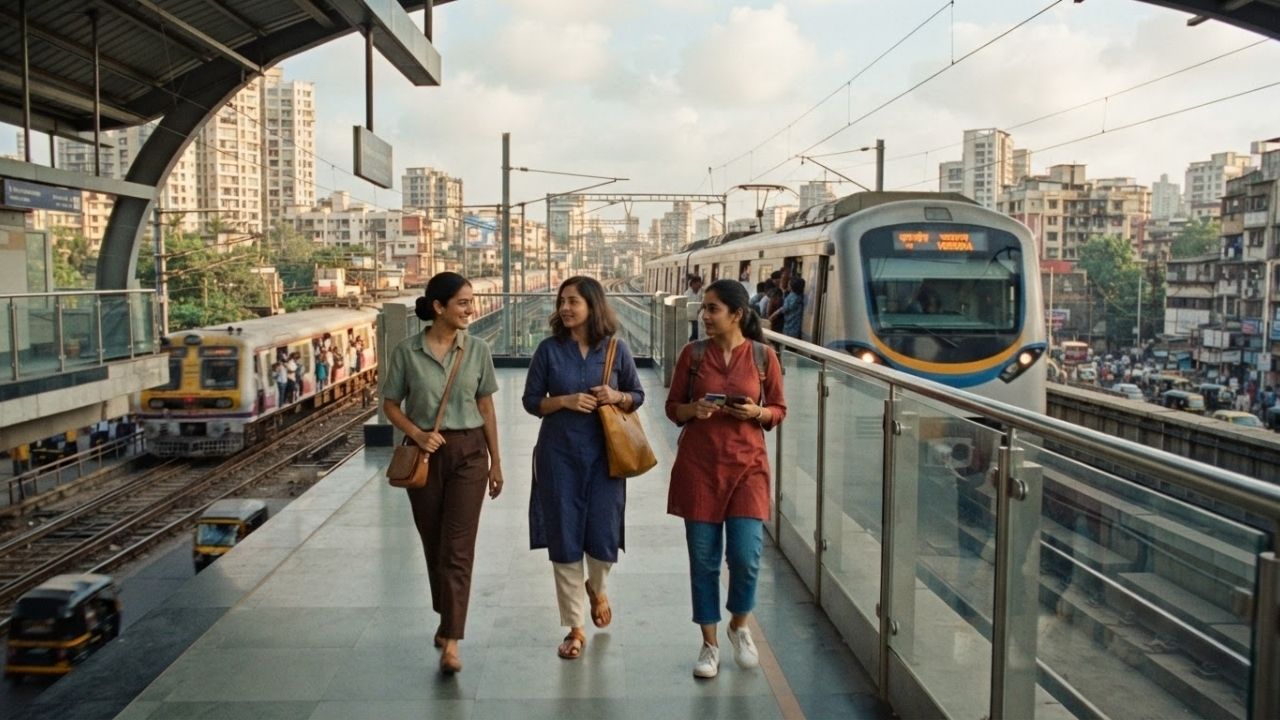
Image generated by AI
Commuter transit patterns across Mumbai are undergoing a structural shift as Western Railway reports a decline of 44.65 lakh passengers on suburban local trains during the April–June 2026 quarter, falling 1.71% to 25.60 crore. Concurrently, newly expanded Metro Yellow, Red, and Aqua lines logged 3.91 crore passenger rides, while premium AC local train usage surged nearly 30% to reach 1.78 crore riders.
[MUMBAI, India, Sept. 2, 2026] — Passenger statistics published by Western Railway’s Mumbai Central Division reveal a clear shift in urban mobility across India’s financial capital. According to official data from the Ministry of Railways, overall suburban local train ridership contracted by 44.65 lakh (4.465 million) passengers during the first quarter of fiscal year 2026 (April–June), falling 1.71% to 25.60 crore (256 million) compared to 26.04 crore during the same period in 2025.
The decline in traditional suburban train traffic coincides directly with the rapid expansion of the Mumbai Metro network operated under the Mumbai Metropolitan Region Development Authority (MMRDA). Commuters along key suburban corridors—including Borivali, Dahisar, and Andheri—now utilize interconnected Metro routes, offering climate-controlled transit alternatives.
Western Railway Data Shows 4.46 Million Commuter Drop Across Non-AC Suburban Lines
The reduction in suburban railway usage was concentrated primarily within non-air-conditioned passenger classes:
- Second Class Passenger Decline: Second Class train services—which handle the vast majority of daily commuters—saw ridership drop 3%, falling from 21.94 crore passengers in Q1 2025 to 21.28 crore in Q1 2026.
- First Class Journey Ticket Drop: First Class non-AC travel experienced a larger contraction, declining 7.23% from 2.74 crore to 2.54 crore passengers.
The data indicates that daily commuters are actively re-evaluating urban transit choices based on speed, travel comfort, and line-interchange convenience.
Station Ticket Sales Drop: Andheri, Mahalaxmi, and Marine Lines Experience Shifts
Specific suburban railway stations along Western Railway recorded significant declines in non-AC ticket sales, particularly at hubs offering direct Metro integration:
- Andheri Station: First Class journey ticket sales fell 15.02%, while Second Class journey tickets dropped 6.51%.
- Mahalaxmi Station: First Class journey ticket sales recorded the steepest drop at 19.18%, alongside significant reductions in season tickets.
- Marine Lines Station: First Class journey ticket sales declined 15.66%.
- Mira Road & Prabhadevi Stations: First Class journey tickets fell 13.32% at Mira Road and 12.26% at Prabhadevi.
Metro Network Expansion: Yellow, Red, and Aqua Lines Handle 39.1 Million Passengers
While suburban rail experienced contractions, Mumbai's expanding Metro lines recorded substantial passenger volume during the April–June 2026 quarter:
- Yellow Line & Red Line (Borivali-Dahisar Corridor): Transported 2.26 crore passengers, averaging 2.48 lakh daily journeys.
- Aqua Line (Andheri & South Mumbai Corridor): Recorded 1.65 crore passenger rides, averaging 1.82 lakh daily journeys.
- Combined Metro Network Volume: The three active Metro lines handled 3.91 crore (39.1 million) total passenger movements during the three-month period.
AC Local Trains Surge 30% as Commuters Prioritize Air-Conditioned Comfort
In contrast to non-AC local train declines, demand for Air-Conditioned (AC) suburban local trains experienced explosive growth. AC local train passenger volume surged nearly 30% (+29.9%), rising from 1.37 crore to 1.78 crore riders.
Several key Western Railway stations recorded dramatic increases in AC journey ticket sales:
- Lower Parel Station: AC journey ticket sales surged 175%.
- Ram Mandir Station: AC journey ticket sales expanded 156%.
- Goregaon Station: AC journey ticket sales grew 127%, while AC season ticket sales surged 164.50%.
- Khar Road Station: AC journey ticket sales increased 115%.
Mumbai Transit Performance Breakdown (April–June 2026 Quarter)
| Transit System / Category | Q1 2025 Baseline | Q1 2026 Performance | Absolute / Percentage Change |
|---|---|---|---|
| Total Western Railway Suburban Passengers | 26.04 crore (260.4M) | 25.60 crore (256.0M) | -44.65 lakh (-1.71%) |
| Second Class Non-AC Passengers | 21.94 crore | 21.28 crore | -66 lakh (-3.0%) |
| First Class Non-AC Passengers | 2.74 crore | 2.54 crore | -20 lakh (-7.23%) |
| AC Local Train Passengers | 1.37 crore | 1.78 crore | +41 lakh (+29.9%) |
| Metro Yellow & Red Lines (Borivali-Dahisar) | — | 2.26 crore rides (2.48L/day) | Major alternative feeder route |
| Metro Aqua Line (Andheri-South Mumbai) | — | 1.65 crore rides (1.82L/day) | Key east-west intermodal transit |
| Combined Metro Network Ridership | — | 3.91 crore (39.1M rides) | Rapid adoption across urban commuters |
Comparative Station Metrics: Non-AC Decline vs. AC Local Ticket Surges
| Railway Station Hub | Non-AC First Class Ticket Change | AC Local Journey Ticket Change |
|---|---|---|
| Andheri | -15.02% (First Class) | High Metro interchange transfer volume |
| Mahalaxmi | -19.18% (First Class) | Notable season ticket drop |
| Lower Parel | Steady base demand | +175% (AC Journey Tickets) |
| Ram Mandir | Moderate non-AC change | +156% (AC Journey Tickets) |
| Goregaon | Moderate non-AC change | +127% (AC Journey) / +164.5% (AC Season) |
| Khar Road | Moderate non-AC change | +115% (AC Journey Tickets) |
Industry Impact Analysis: Urban Transit Integration in High-Density Megacities
Urban mobility experts observe that Mumbai’s transit shift reflects a broader global trend in megacity transport. As urban populations expand, traditional heavy-rail networks are increasingly augmented by climate-controlled, high-frequency Metro lines and upgraded AC commuter trains.
Rather than indicating a decline in total mobility, the data shows commuters redistributing across integrated modal networks. To maintain long-term financial viability, Indian Railways is expanding AC local fleet deployments while planning seamless physical interchanges between suburban stations and MMRDA Metro portals.
Why This Matters: Essential Takeaways for Daily Commuters and Travelers in Mumbai
For commuters and visitors navigating Mumbai in 2026, understanding updated transport options streamlines daily transit:
- Switch to AC Local Trains for Comfort: Take advantage of expanded AC local schedules on Western Railway to avoid heat and humidity during peak commuting hours.
- Utilize Metro Lines for East-West Crossings: Use the Yellow, Red, and Aqua Metro lines to bypass road congestion and crowded railway interchanges around Andheri and Borivali.
- Purchase Digital UTS Mobile Tickets: Avoid long ticket counter queues at busy stations like Andheri and Lower Parel by using the UTS mobile app for AC local and suburban bookings.
- Plan Intermodal Transit Around Major Hubs: Leverage integrated station walkways connecting Metro lines with Western Railway platforms at Andheri and Dadar.
Frequently Asked Questions
By how much did Mumbai suburban local train ridership decline in Q1 2026?
Suburban local train ridership on Western Railway dropped by 44.65 lakh (4.465 million) passengers, falling 1.71% to 25.60 crore in the April–June 2026 quarter.
How many rides were recorded across Mumbai Metro lines during the quarter?
Active Mumbai Metro lines (Yellow, Red, and Aqua) handled 3.91 crore (39.1 million) total passenger rides during the April–June 2026 period.
How did AC local train ridership perform compared to non-AC trains?
AC local train ridership surged nearly 30% (+29.9%) from 1.37 crore to 1.78 crore passengers, while Second Class and First Class non-AC ridership dropped by 3% and 7.23% respectively.
Which station recorded the highest growth in AC local ticket sales?
Lower Parel Station recorded the highest growth, with AC local journey ticket sales surging 175%.
Related Travel Guides
Disclaimer
This article is for informational and educational purposes only. It does not constitute legal, financial, or professional advice. While we strive to provide accurate and up-to-date information, travel policies, regulations, and conditions change rapidly. Always verify information with official sources before making travel decisions. Nomad Lawyer makes no representations about the accuracy, reliability, completeness, or suitability of the information provided. Readers should consult qualified professionals for advice specific to their circumstances. The views expressed in this article are those of the author and do not necessarily reflect the views of Nomad Lawyer.
Raushan Kumar
Founder & Lead Developer
Full-stack developer with 11+ years of experience and a passionate traveller. Raushan built Nomad Lawyer from the ground up with a vision to create the best travel and law experience on the web.
Learn more about our team →