
Mumbai Flyers Face Fresh Turbulence From Technical and Regional Woes
Mumbai flyers face cascading disruptions as technical failures and regional airspace constraints plague Chhatrapati Shivaji Maharaj International Airport in April 2026, affecting thousands of passengers on domestic and international routes.

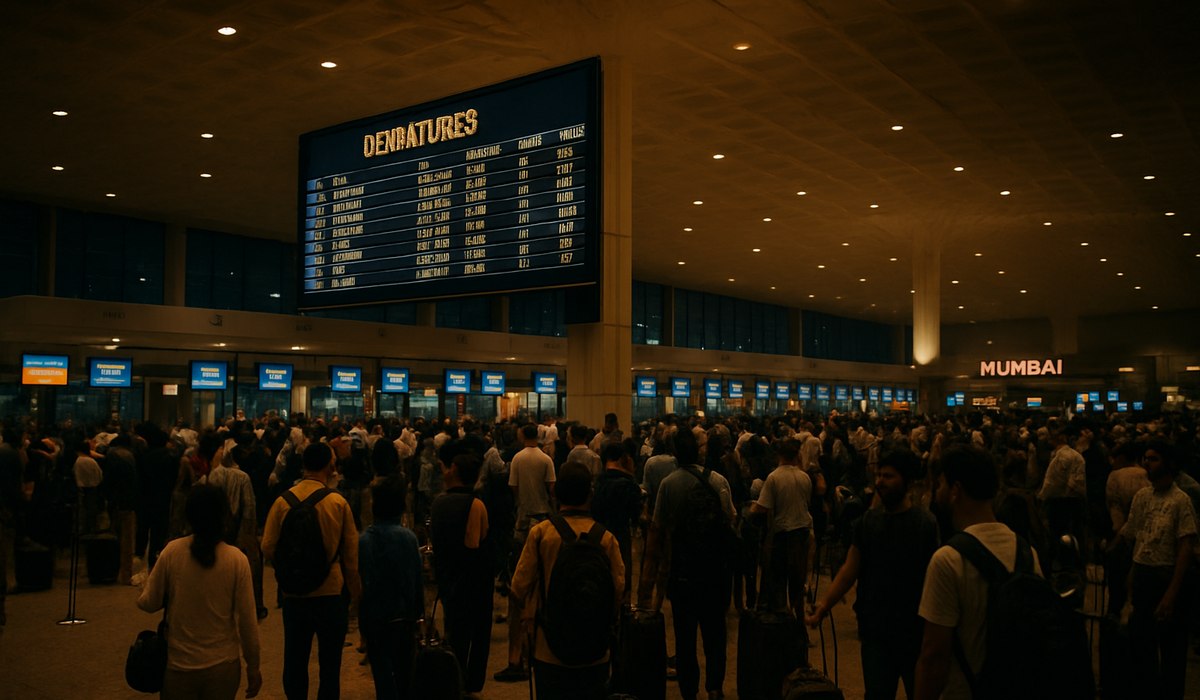
Image generated by AI
Mumbai Flyers Face Mounting Operational Headwinds
Chhatrapati Shivaji Maharaj International Airport is grappling with a confluence of technical incidents, regional airspace constraints, and airline scheduling chaos that is affecting thousands of passengers across domestic and international routes. Between April 9 and 11, 2026, multiple flight diversions, emergency returns, and facility incidents have exposed operational fragility at India's second-busiest international gateway. The cascading disruptions stem from three interconnected factors: aircraft technical issues, geopolitical airspace restrictions reshaping long-haul flight paths, and capacity constraints at critical Gulf transfer hubs. For Mumbai flyers, the result is a volatile travel environment marked by schedule uncertainty, rebooking delays, and higher-than-normal load factors on remaining available flights.
Scattered Technical Incidents Expose Operational Fragility
Recent days have revealed how quickly operations at Mumbai can unravel when multiple systems are stressed simultaneously. On April 9, 2026, an Air India flight departing for Bengaluru returned to Mumbai after a suspected technical malfunction just minutes after takeoff, forcing an emergency landing and prompting a cascade of passenger rebookings. The same day saw a second Air India aircraft make a precautionary diversion due to engine alerts, requiring ground engineers to inspect systems before departure.
While individual technical incidents occur at any major hub, the frequency and timing of these events highlight the strain on aircraft maintenance teams and airline operations during peak demand periods. Mumbai flyers face fresh challenges as engineers work through backlogs and airlines attempt to minimize knock-on delays by deploying reserve aircraft. A separate incident involving a fire alert in the international terminal complex, though contained without disrupting flight operations, added to passenger anxiety about facility resilience. For travelers, these scattered events create a ripple effect—missed connections, extended layovers, and hurried rebooking decisions that can leave passengers stranded or rerouted on less desirable itineraries. Learn more about airport operational resilience during travel disruptions from industry authorities.
Regional Airspace Constraints Add to Disruption
Beyond aircraft maintenance challenges, geopolitical developments are fundamentally reshaping how airlines route long-haul flights through Mumbai. Heightened tensions in the Middle East and evolving airspace restrictions have forced carriers to reroute around sensitive zones, adding up to 90 minutes to some Europe-India sectors. This extension of flight times pushes aircraft utilization to its limits, reducing operational flexibility and making it harder for airlines to absorb minor delays.
Mumbai flyers face fresh scheduling volatility as a result. Airlines including British Airways, Lufthansa, and Air France have adjusted frequencies on key Mumbai routes, while Indian carriers like Air India and Indigo are juggling limited fleet resources between Gulf operations, European services, and North American routes. Fewer flights translating to higher load factors means less seat availability and greater disruption when operational changes occur elsewhere in the global network. Regional airspace constraints are also forcing carriers to reposition aircraft inefficiently, consuming fuel, crew duty hours, and ground time that could otherwise buffer against delays. For passengers dependent on Mumbai as their departure point, this means restricted route options, tighter connections, and higher probability of last-minute changes.
Dubai and Gulf Hub Constraints Ripple Into Mumbai Operations
The operational stress extends beyond Mumbai itself. Dubai International Airport, a critical transfer hub for Mumbai residents connecting to Europe and North America, faced over 100 delayed flights and multiple cancellations on April 10, 2026, due to extreme weather and airspace constraints. These disruptions have rippled back to India-Dubai corridors, where airlines are consolidating services and adjusting departure times.
New operational limits on foreign-carrier rotations into Dubai through May 2026 are expected to further constrain capacity on India-Dubai routes. Airlines serving Mumbai, including low-cost carriers and full-service operators, are reducing daily nonstop frequency or reshuffling departure times to comply with capacity caps while maintaining profitability. For Mumbai flyers relying on Dubai as a connection point to long-haul destinations, this translates to fewer convenient connection windows, longer layovers, and increased pressure to book earlier in the day when flights are less full. The interconnected nature of modern aviation means disruptions at major hubs cascade across hundreds of departure points, and Mumbai is no exception.
Impact on Passenger Experience and Rebooking Challenges
The cumulative effect of technical incidents, airspace rerouting, and regional hub constraints is a degraded passenger experience across Mumbai airport. Travelers are encountering longer wait times at rebooking desks, reduced availability on preferred flight times, and pressured decisions to accept less convenient routings. Airlines are managing rebooking backlogs with dynamic pricing, meaning alternative flights may come at higher fares than original bookings.
Passengers booked on affected routes are facing extended ground time, missed meetings, and travel fatigue as they navigate unexpected itinerary changes. Frequent flyers accustomed to reliable service through Mumbai are reporting frustration with the lack of transparent communication and proactive rebooking offers. For families and business travelers, the uncertainty compounds stress. Airlines are deploying communication teams to manage expectations, but the pace of operational changes is outrunning customer service capacity at peak periods. Ground handling agents at Mumbai are overwhelmed with manual rebooking requests as automated systems struggle to find viable alternative routings.
What Airlines and Authorities Are Doing
Major carriers are implementing mitigation strategies to restore schedule reliability. Air India has accelerated maintenance checks on regional aircraft to reduce unscheduled diversions, while also redeploying wider-body aircraft from less-affected routes to maintain capacity on Mumbai-Europe services. Indigo is increasing flight crew training focused on operational decision-making under time pressure.
Airport authorities at Chhatrapati Shivaji Maharaj International Airport are coordinating with airlines and air traffic control to optimize runway utilization and reduce ground delays. The Airports Authority of India is monitoring maintenance schedules across terminal facilities to prevent recurrence of infrastructure incidents. However, systemic solutions to airspace constraints require broader geopolitical resolution, which falls outside the airport's direct control. Airlines are also implementing temporary schedule reductions on low-demand time slots to match available aircraft and crew to realistic operational windows. Learn more about airline operational resilience strategies from industry sources.
Key Data on Mumbai Airport Disruptions (April 2026)
| Metric | Details |
|---|---|
| Airport Name | Chhatrapati Shivaji Maharaj International Airport, Mumbai |
| Technical Incidents (Apr 9-10) | 2 confirmed emergency diversions; 1 terminal facility alert |
| Regional Airspace Impact | Europe-India routes delayed by up to 90 minutes per flight |
| Dubai Hub Delays (Apr 10) | 100+ flights delayed; multiple India-Dubai connections affected |
| Capacity Constraint Period | Late April through May 2026 (foreign carrier rotation caps in Dubai) |
| Affected Airlines | Air India, Indigo, British Airways, Lufthansa, Air France, multiple carriers |
| Estimated Passenger Impact | Thousands across domestic and international routes |
| Expected Duration | Ongoing through May 2026; resolution dependent on regional stability |
What This Means for Travelers
-
Book with flexibility: Select flights with longer layover buffers and avoid tight connections through Dubai or other Gulf hubs during this period. Consider booking on carriers with strong operational track records at Mumbai.
-
Monitor schedule changes: Enable airline notifications and check your booking status 48 hours before departure. Airlines are making near-real-time schedule adjustments, and early awareness allows time to seek alternatives.
-
Expect higher fares on remaining flights: Reduced frequency and higher load factors mean fewer discount seats.
Disclaimer
This article is for informational and educational purposes only. It does not constitute legal, financial, or professional advice. While we strive to provide accurate and up-to-date information, travel policies, regulations, and conditions change rapidly. Always verify information with official sources before making travel decisions. Nomad Lawyer makes no representations about the accuracy, reliability, completeness, or suitability of the information provided. Readers should consult qualified professionals for advice specific to their circumstances. The views expressed in this article are those of the author and do not necessarily reflect the views of Nomad Lawyer.
Preeti Gunjan
Contributor & Community Manager
A passionate traveller and community builder. Preeti helps grow the Nomad Lawyer community, fostering engagement and bringing the reader experience to life.
Learn more about our team →