
Cairo Flight Cancellations Disrupt Gulf and Levant Routes in May 2026
Cairo International Airport faces eight regional flight cancellations in May 2026 affecting Qatar Airways, EgyptAir and Saudia. Travelers to Gulf and Levant destinations face missed connections and rebooking challenges.

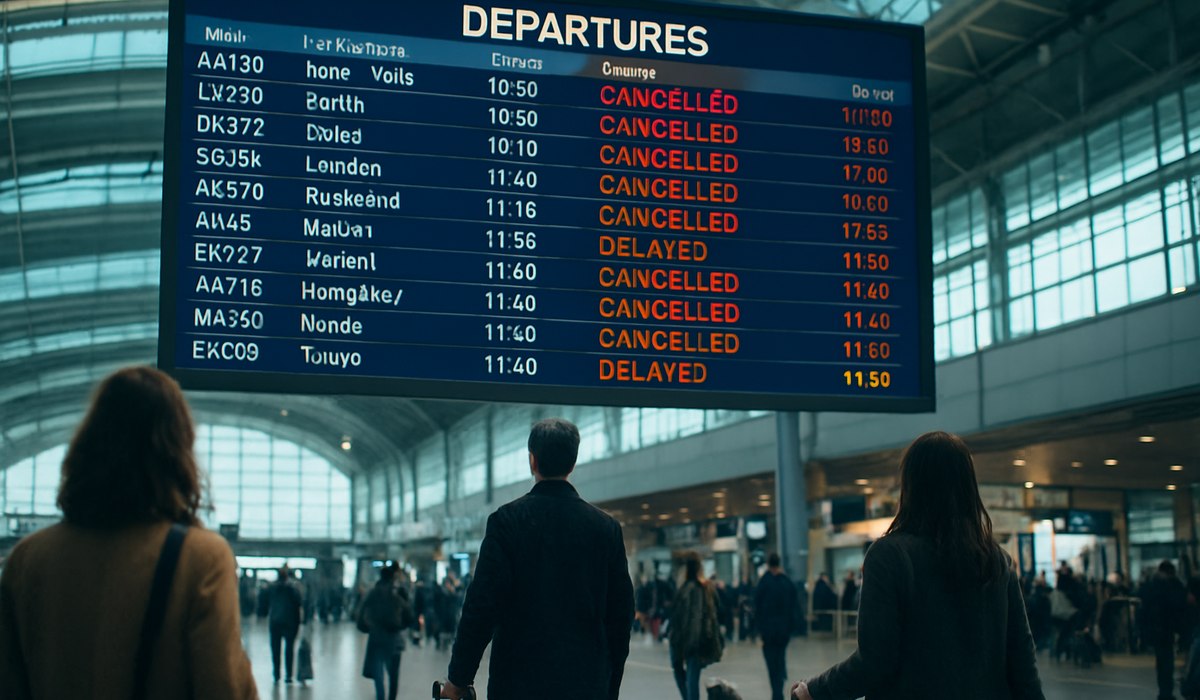
Image generated by AI
Cairo Flight Cancellations Leave Passengers Stranded Across Gulf and Levant Corridors
Cairo International Airport has scrubbed at least eight regional departures to critical Gulf and Levant destinations this week, as Qatar Airways, EgyptAir, and Saudia implement emergency schedule cuts. The cancellations eliminate flights to Doha, Kuwait City, Beirut, Jeddah, and Medina—routes that normally serve thousands of migrant workers, business travelers, and families navigating the Middle East's interconnected hubs. The disruptions compound months of airspace volatility and signal renewed strain on one of Africa's busiest aviation nodes as a primary connector for the broader region.
Cancellations Hit Eight Key Regional Routes
Cairo flight cancellations have intensified over the past 72 hours, targeting short-haul sectors that depend on stable overflight permissions and predictable turnaround windows. Flight-tracking platforms including FlightAware confirm the removal of at least eight scheduled departures from Cairo's roster, with multiple carriers simultaneously reducing frequencies on identical routes.
The most affected corridors include Cairo-Doha (Qatar Airways primary link), Cairo-Kuwait City (EgyptAir and regional carriers), and Cairo-Beirut (major feeder for onward Levantine connections). Additionally, Jeddah and Medina services operated by Saudia have experienced ad hoc cancellations, particularly impacting religious travelers and seasonal labor migration flows. Airlines have provided minimal advance notice for most cancellations, with confirmations arriving only hours before scheduled departure times.
The timing of these cancellations coincides with broader Middle Eastern airspace restrictions that began earlier in 2026, forcing carriers to reroute traffic through secondary hubs or suspend services entirely. Cairo's role as a budget-friendly transfer point for passengers moving between Africa and the Gulf makes these cancellations especially consequential for price-sensitive travelers.
Qatar Airways and EgyptAir Among Most Affected Carriers
Qatar Airways continues managing significant operational pressure across its Cairo services following regional airspace closures that began in March 2026. The Doha-based carrier has canceled hundreds of flights network-wide since spring, and Cairo operations remain vulnerable to short-notice withdrawals. At least one Cairo-Doha departure per day has been removed this week, forcing connection-dependent passengers onto alternative routings through Istanbul, Muscat, or Riyadh—adding 8-14 hours to typical journey times.
EgyptAir, Egypt's national flag carrier, faces particular strain as the primary operator on Cairo-Kuwait and Cairo-Beirut routes. As the airline most directly impacted by Egyptian airspace policy and regional security conditions, EgyptAir has suspended entire route networks to Kuwait and Beirut multiple times since early 2026. Current cancellations represent a selective culling of remaining frequencies rather than complete route suspensions, but passenger load factors on surviving flights have climbed above 90%, creating cascading rebooking challenges.
Saudia has trimmed Cairo-Jeddah and Cairo-Medina capacities by roughly 25% this month alone, reflecting both the regional environment and competing operational priorities during peak Umrah and summer holiday seasons. When individual flights are canceled on these already-reduced schedules, alternative seats vanish within hours of cancellation announcements.
Cascading Impact on Labor and Family Travel Corridors
The Egypt-Gulf labor corridor employs roughly 3 million Egyptian nationals, most of whom transit Cairo when returning home or rotating to new positions. Cairo flight cancellations directly threaten wage remittance cycles and employment contract timelines. A single canceled Cairo-Kuwait flight can strand 200-300 workers attempting to return to jobs, triggering cascading absences and employer penalties.
Family reunion travel—including visits by Gulf-based expatriates to Egypt—relies heavily on predictable Cairo hub scheduling. Unexpected cancellations force passengers into expensive last-minute bookings on non-hub carriers or multi-stop routings that triple total transit times. Children missing school year starts and patients postponing medical procedures have been documented outcomes of short-notice Cairo flight cancellations.
Religious travel for Umrah and Hajj pilgrimage similarly depends on reliable Cairo connections, particularly during May-September peak season. Cancellations now could signal supply constraints heading into summer months, potentially forcing pilgrims into pre-booked, non-refundable alternative airlines at higher cost. Passenger-rights groups have warned that airline communication regarding rebooking and compensation remains inadequate for Arabic-speaking traveler populations unfamiliar with European Union or U.S. consumer protection standards.
Broader Context: Airspace Restrictions Reshape Middle East Networks
The current Cairo flight cancellations emerge from a 90-day pattern of Middle Eastern airspace volatility beginning in early March 2026. Multiple regional nations implemented partial or full airspace closures affecting overflight corridors between the Gulf, Levant, and North Africa. Qatar Airways absorbed the most visible disruption, canceling over 400 flights during March-April, though EgyptAir and regional carriers also withdrew services.
Beirut's connectivity has contracted significantly, with multiple international airlines reducing frequencies or suspending routes to Lebanon's sole major international airport. This capacity loss shifted transient passenger flows toward Istanbul and Amman, fragmenting the Cairo-Beirut-Gulf travel chain that traditionally served Levantine markets. Saudi airspace adjustments—though less restrictive than neighboring regions—nonetheless created uncertainty for carriers planning overfly routes, prompting conservative schedule planning and selective flight cancellations rather than full-route suspensions.
The cumulative effect has been a reshuffling of Middle East hub economics, with Turkish, Jordanian, and Emirati carriers gaining market share at the expense of traditional Egypt-Qatar-Saudi airline partnerships. Cairo's position as a legacy African gateway to the Gulf has weakened, making each cancellation wave a reminder of the airport's vulnerability to regional geopolitics.
Live Flight Status and Tracking Resources
Travelers with departures from Cairo should monitor real-time status on FlightAware, which aggregates official airline data and provides alerts when flights are canceled or delayed. EgyptAir and Qatar Airways mobile applications also push notifications when schedule changes occur, though these often arrive after cancellations are announced publicly.
Contact your airline directly at least 72 hours before departure to confirm flight status, as short-notice cancellations are typical in the current environment. Do not rely solely on booking confirmations; active status monitoring is essential for Cairo-Gulf and Cairo-Levant passengers.
Passenger Rights and Compensation in Cairo Cancellations
Under Egyptian Civil Aviation Authority (ECAA) regulations, passengers on canceled Cairo departures may claim compensation depending on carrier, route classification, and rebooking outcomes. International carriers operating from Cairo should offer rebooking on alternative flights or refunds under IATA regulations, though enforcement varies by airline.
The U.S. Department of Transportation Aviation Consumer Protection Division provides guidance for U.S.-origin passengers, while European carriers must comply with EU261 standards even on Cairo-originating routes. Seek written confirmation of cancellation reasons and rebooking options in Arabic or English; verbal assurances are insufficient for dispute resolution.
Traveler Action Checklist
If your Cairo flight has been canceled or you are booking travel to Gulf or Levant destinations via Cairo:
-
Verify flight status 72 hours before departure using airline apps, FlightAware, or direct airline contact rather than relying on booking confirmations.
-
Request written rebooking options in your preferred language, specifying whether you accept alternative routings, refunds, or hotel/meal vouchers during extended
Disclaimer
This article is for informational and educational purposes only. It does not constitute legal, financial, or professional advice. While we strive to provide accurate and up-to-date information, travel policies, regulations, and conditions change rapidly. Always verify information with official sources before making travel decisions. Nomad Lawyer makes no representations about the accuracy, reliability, completeness, or suitability of the information provided. Readers should consult qualified professionals for advice specific to their circumstances. The views expressed in this article are those of the author and do not necessarily reflect the views of Nomad Lawyer.
Raushan Kumar
Founder & Lead Developer
Full-stack developer with 11+ years of experience and a passionate traveller. Raushan built Nomad Lawyer from the ground up with a vision to create the best travel and law experience on the web.
Learn more about our team →