
Mulberry Shades Bengaluru Nandi Hills Strengthens Safety Leadership With New Loss Prevention Manager Appointment
Mulberry Shades Bengaluru Nandi Hills Strengthens Safety Leadership With New Loss Prevention Manager Appointment

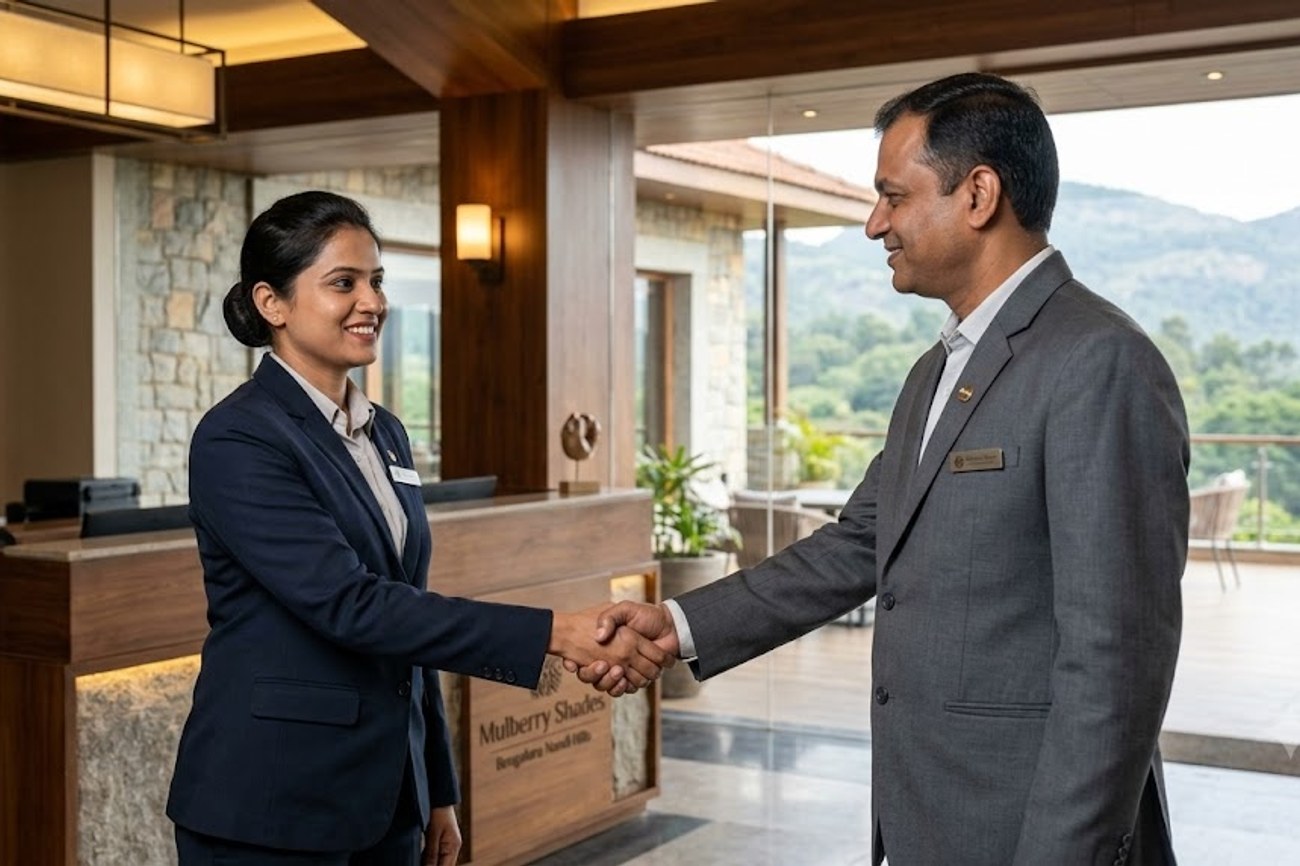
Image generated by AI
While global hotel security spending has historically lagged behind guest-facing amenities, the recent shift toward specialized "Loss Prevention" roles in India’s luxury tier mirrors a 15-20% increase in risk management allocations across APAC luxury resorts over the last 24 months. The appointment of Trilochan Behera as Loss Prevention Manager at Mulberry Shades Bengaluru Nandi Hills, a Tribute Portfolio Resort, is not a mere personnel change but a data-backed response to the evolving safety requirements of the high-net-worth traveler.
The Security Metric: Loss Prevention in Numbers
The strategic focus at Mulberry Shades Bengaluru Nandi Hills is centered on a professional with 11 years of documented experience in security and safety management. In the luxury hospitality sector, "Loss Prevention" has evolved from basic surveillance to a complex intersection of risk assessment, compliance auditing, and crisis coordination. Behera's background is a composite of three distinct high-stakes environments: premium hospitality, corporate finance, and commercial infrastructure.
His career trajectory provides a blueprint for the modern safety framework:
- Corporate Rigor: Experience as a Trust Safety Officer at JP Morgan and Security Supervisor at World Trade Center Bengaluru.
- Luxury Hospitality Depth: Previous leadership roles at JW Marriott Hotel Bengaluru (Assistant Loss Prevention Manager), Renaissance Bengaluru Race Course Hotel, and Marriott Hotel Whitefield Bengaluru.
- Operational Scope: Direct oversight of fire safety, emergency response drills, and risk identification.
This move signals that luxury resorts are no longer treating security as a passive utility. Instead, they are integrating corporate-grade safety protocols—similar to those used in financial hubs—into the leisure experience. According to IATA, the integration of seamless safety protocols is now a primary driver for international traveler confidence, particularly in emerging markets where infrastructure varies.
Comparative Risk Management Frameworks
The transition from general security to specialized Loss Prevention management represents a shift in how luxury assets are protected. Historically, hotel security focused on "perimeter control." The current trend, exemplified by the Mulberry Shades appointment, shifts toward "proactive risk mitigation."
The following table compares the traditional security model against the modern Loss Prevention model currently being implemented in the Bengaluru luxury corridor.
| Metric | Traditional Security Model | Modern Loss Prevention Model (2024) |
|---|---|---|
| Primary Goal | Reactive Incident Response | Proactive Risk Identification & Prevention |
| Personnel Profile | General Security Staff | Multi-sector Experts (Corporate + Hospitality) |
| Training Focus | Access Control / Patrols | Compliance Audits / Crisis Coordination |
| Integration | Isolated Security Department | Cross-functional (Engineering + Operations) |
| Audit Cycle | Annual / Ad-hoc | Continuous / Data-driven |
| Emergency Scope | Fire / Theft | Holistic Crisis Management / Trust Safety |
This shift is particularly evident in the Bengaluru market. By hiring a manager with experience from the World Trade Center Bengaluru and JP Morgan, Mulberry Shades is importing a "zero-failure" corporate mentality into a nature-focused resort setting. This reflects a broader trend noted by STR regarding the professionalization of back-of-house operations to protect rising Average Daily Rates (ADR) in the luxury segment.
Practical Traveler Advisory and Strategic Insights
For the individual traveler, the professionalization of loss prevention at a resort level translates into a lower probability of operational friction and a higher standard of emergency preparedness. When a property invests in a manager with 11 years of cross-sector experience, the guest experience changes in three measurable ways:
- Invisible Security: The goal of a Loss Prevention Manager is to ensure that safety is omni-present but invisible. Travelers visiting the Nandi Hills region can expect a seamless environment where risk is mitigated before it impacts the guest journey.
- Enhanced Crisis Reliability: With a focus on "emergency preparedness plans" and "fire safety exercises," guests can have higher confidence in the property's ability to handle medical or environmental emergencies in a remote, nature-focused location.
- Corporate-Grade Privacy: The influence of "Trust Safety" (a term common in fintech and corporate security) suggests a more rigorous approach to guest data and physical privacy, which is a top priority for the corporate guests and high-profile families frequenting Tribute Portfolio properties.
If you are booking a luxury stay in the Bengaluru outskirts for Q3 or Q4, these operational upgrades mean you can prioritize "experience" over "worry," as the risk management is now handled by specialists rather than generalists.
Forward Projection: The "Safety-First" Luxury Pivot
Based on current hiring patterns in the Karnataka hospitality market, we are seeing a move toward the "Integrated Safety Ecosystem." The collaboration between the Loss Prevention Manager, the engineering department, and operations teams at Mulberry Shades suggests that safety is becoming an engineering problem as much as a personnel one.
We project that by 2026, luxury resorts in India will move beyond human-led loss prevention to AI-driven predictive safety. This will involve:
- IoT Integration: Using sensors to detect fire or structural risks before they trigger traditional alarms.
- Predictive Crowd Analytics: Managing guest flow during peak leisure periods to prevent accidents.
- Certification-Driven Stays: A shift where guests choose resorts based on verified safety certifications (similar to LEED for environment) rather than just star ratings.
The World Travel & Tourism Council (WTTC) has highlighted that safety and security remain the top concerns for travelers in developing tourism hubs. The strategic appointment of a manager with a background in both the World Trade Center and JW Marriott indicates that the "Gold Standard" for resort safety is now being set by the corporate financial sector.
FAQ: Luxury Resort Safety Trends 2024
Does a "Loss Prevention Manager" mean the resort is unsafe? No. It is the opposite. It indicates a proactive investment in safety. Moving from a "Security Guard" model to a "Loss Prevention" model means the resort is identifying risks before they happen to ensure a safer stay.
Will these security upgrades increase room rates? While operational costs increase, these investments are typically absorbed into the luxury brand's overhead. However, they justify the premium pricing of Tribute Portfolio resorts by ensuring a higher standard of guest protection.
How does corporate security experience benefit a leisure resort? Corporate experience (like JP Morgan) brings a level of rigor, auditing, and documentation that traditional hospitality security lacks. This ensures that safety drills and compliance audits are performed with mathematical precision.
Is the Nandi Hills region becoming a hub for luxury corporate retreats? Yes. The focus on "corporate guests" and the hiring of high-level security professionals suggest that Mulberry Shades is positioning itself as a secure sanctuary for executive retreats and high-profile business gatherings.
The era of the "security guard" is over; the era of the "risk architect" has arrived in luxury travel.
Related Travel Guides
Disclaimer
This article is for informational and educational purposes only. It does not constitute legal, financial, or professional advice. While we strive to provide accurate and up-to-date information, travel policies, regulations, and conditions change rapidly. Always verify information with official sources before making travel decisions. Nomad Lawyer makes no representations about the accuracy, reliability, completeness, or suitability of the information provided. Readers should consult qualified professionals for advice specific to their circumstances. The views expressed in this article are those of the author and do not necessarily reflect the views of Nomad Lawyer.
Raushan Kumar
Founder & Lead Developer
Full-stack developer with 11+ years of experience and a passionate traveller. Raushan built Nomad Lawyer from the ground up with a vision to create the best travel and law experience on the web.
Learn more about our team →