
Mount Sinabung Eruption 2026: North Sumatra Tourism Braces as 3.5km Ash Column Hits Karo Regency
Indonesia's Mount Sinabung erupted on August 31, 2026, sending a 3.5km ash plume over North Sumatra, prompting a Level III alert and strict exclusion zones for travelers.
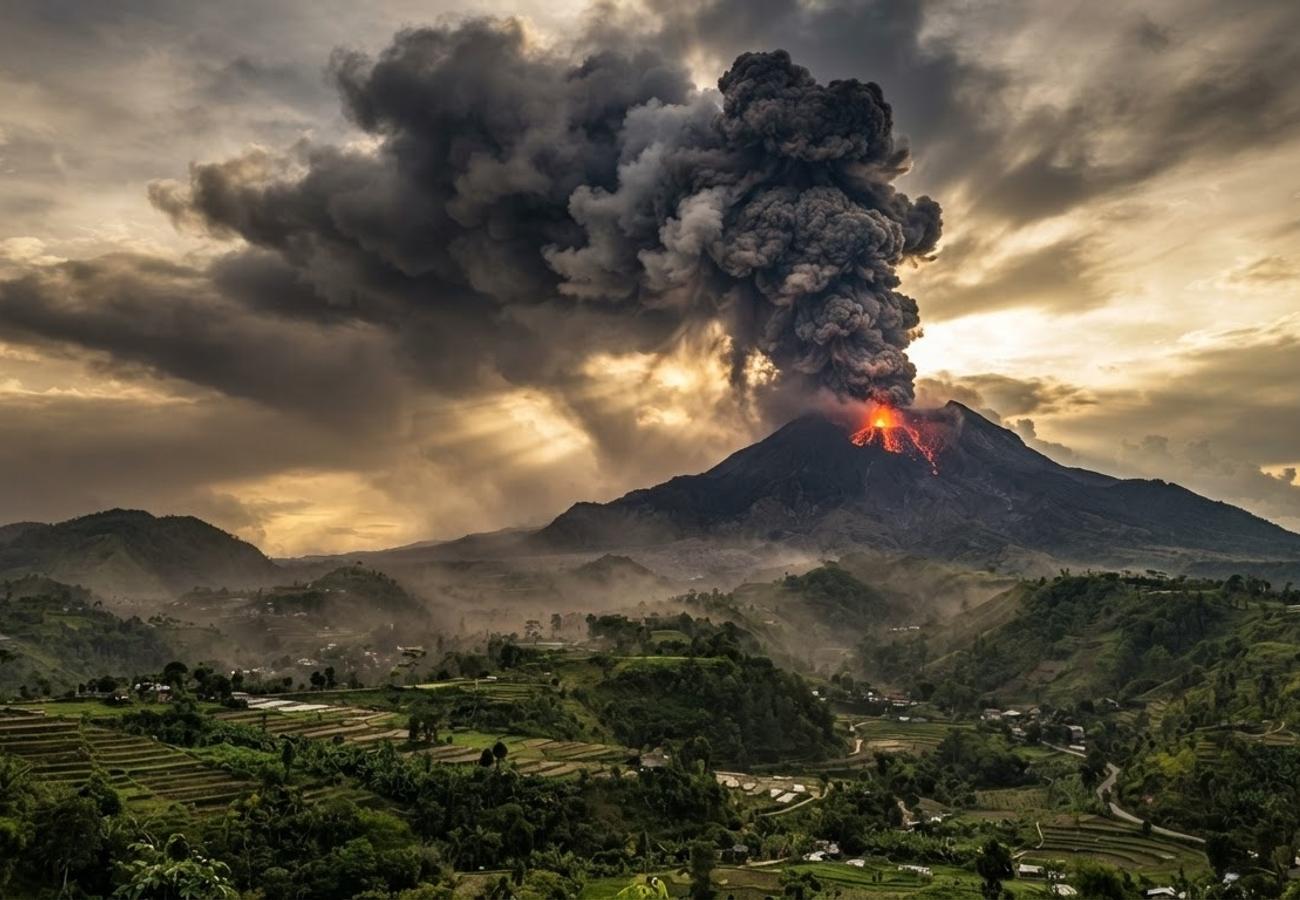
Image generated by AI
A powerful eruption of Mount Sinabung on August 31, 2026, has sent a massive ash column 3.5 kilometers into the atmosphere, forcing Indonesian authorities to implement emergency safety protocols across North Sumatra. The event has triggered an immediate Level III (Siaga) alert, impacting travel logistics and local communities within the Karo Regency.
The sudden surge in volcanic activity has placed the region's tourism infrastructure under pressure, as officials scramble to balance the appeal of Indonesia's dramatic landscapes with the urgent need for visitor safety. While the broader province remains open to international and domestic travelers, the immediate vicinity of the volcano is now under strict surveillance.
Mount Sinabung Erupts With 3.5km Ash Plume Over North Sumatra
The eruption on August 31, 2026, was marked by a violent release of volcanic material that formed a dense ash plume reaching approximately 3.5 kilometers above the summit. Wind patterns carried this volcanic debris primarily toward the eastern and southeastern sectors of North Sumatra, resulting in significant ashfall across several districts.
In the Karo Regency, the impact was felt immediately as volcanic particles blanketed the landscape, reducing visibility and complicating daily operations for residents and hospitality providers. This event underscores the volatile nature of the region's geology, where periods of dormancy can be abruptly interrupted by high-intensity eruptions.
For those currently in the region, the presence of volcanic ash poses not only a logistical challenge but a health risk, as fine particles can irritate the respiratory system and damage electronic equipment.
Seismic Warnings Precede Karo Regency Volcanic Activity
The eruption did not occur without warning. Prior to the blast, Indonesian monitoring systems detected a sharp escalation in subterranean unrest. Reports indicate that 85 volcanic earthquakes were recorded, accompanied by harmonic tremors and other seismic anomalies that signaled rising pressure beneath the mountain's surface.
These technical indicators allowed authorities to elevate the alert status to Level III (Siaga) before the primary eruption occurred. The use of advanced seismic monitoring has become a cornerstone of Indonesian disaster management, providing a critical window for the evacuation of high-risk zones and the notification of tour operators.
The correlation between the 85 detected earthquakes and the subsequent 3.5km ash column highlights the precision of current volcanic tracking, though it also emphasizes how quickly a situation can escalate from "monitoring" to "emergency."
Safety Protocols and Exclusion Zones in North Sumatra
In response to the heightened threat, the Indonesian government has reinforced strict exclusion zones around the perimeter of Mount Sinabung. These boundaries are non-negotiable and designed to protect humans from the most lethal aspects of an eruption, such as pyroclastic flows—high-speed currents of hot gas and volcanic matter.
Tourism operators and independent guides are now required to vet all itineraries against the latest government maps. Several hiking trails and sightseeing vantage points that were previously popular with adventure tourists have been closed indefinitely.
The current safety framework for visitors includes:
- Strict Adherence to Exclusion Zones: Entering prohibited areas can lead to legal penalties and extreme physical danger.
- Real-time Monitoring: Travelers are urged to use official government channels for updates rather than relying on outdated travel blogs.
- Equipment Readiness: The use of N95 masks is recommended for those in the wider Karo Regency area to mitigate the effects of ashfall.
Historical Volatility of Mount Sinabung
This latest event is part of a longer, more dangerous pattern of behavior for Mount Sinabung. Unlike some volcanoes that provide clear, long-term signs of eruption, Sinabung is known for explosive events and the sudden generation of pyroclastic flows.
Past eruptions have proven that the volcano can produce massive amounts of volcanic material in a very short window. This history is why the current Level III alert is being treated with such gravity by local officials. The mountain remains one of the most closely watched geological sites in the world due to its unpredictability.
For the adventure tourism sector, Sinabung represents a paradox: it is a primary draw for those seeking the raw power of nature, yet it requires a level of management and respect that exceeds standard trekking safety.
Impact on Local Communities and Tourism Infrastructure
The ashfall has created immediate operational hurdles for businesses in the Karo Regency. Visibility issues have affected local transport, while the physical accumulation of ash on roofs and roads requires constant maintenance to prevent structural damage and accidents.
While the wider tourism industry in North Sumatra continues to function, the "volcano effect" often leads to a ripple of cancellations in nearby highland destinations. Hotels and tour agencies are currently working to redirect visitors toward safer, unaffected attractions within the province to ensure the local economy does not collapse during the alert period.
Why This Matters: The Traveler's Perspective
From a logistical and legal standpoint, this eruption changes the "duty of care" for tour operators in Indonesia. For the traveler, this means that a standard travel insurance policy may not cover "foreseen" volcanic activity once an alert level is raised to Level III.
If you are traveling to North Sumatra, the reality is that your itinerary is now subject to the whims of geology. A sudden shift in wind direction can turn a clear day into an ash-filled hazard in minutes. From a safety perspective, the most critical action a visitor can take is to maintain a flexible schedule and a direct line of communication with local authorities.
The resilience of Indonesia's tourism depends on this balance. The country does not stop welcoming visitors during volcanic activity—as it is a constant state of existence in the Ring of Fire—but the nature of the visit shifts from "leisure" to "managed risk."
The roar of Mount Sinabung serves as a stark reminder that in North Sumatra, nature holds the final say in every travel itinerary.
Related Travel Guides
Disclaimer
This article is for informational and educational purposes only. It does not constitute legal, financial, or professional advice. While we strive to provide accurate and up-to-date information, travel policies, regulations, and conditions change rapidly. Always verify information with official sources before making travel decisions. Nomad Lawyer makes no representations about the accuracy, reliability, completeness, or suitability of the information provided. Readers should consult qualified professionals for advice specific to their circumstances. The views expressed in this article are those of the author and do not necessarily reflect the views of Nomad Lawyer.