
Mount Fuji Climber Numbers Surge 17 Percent as Japan Tightens Fees and Access Rules: 2026 Season Analysis

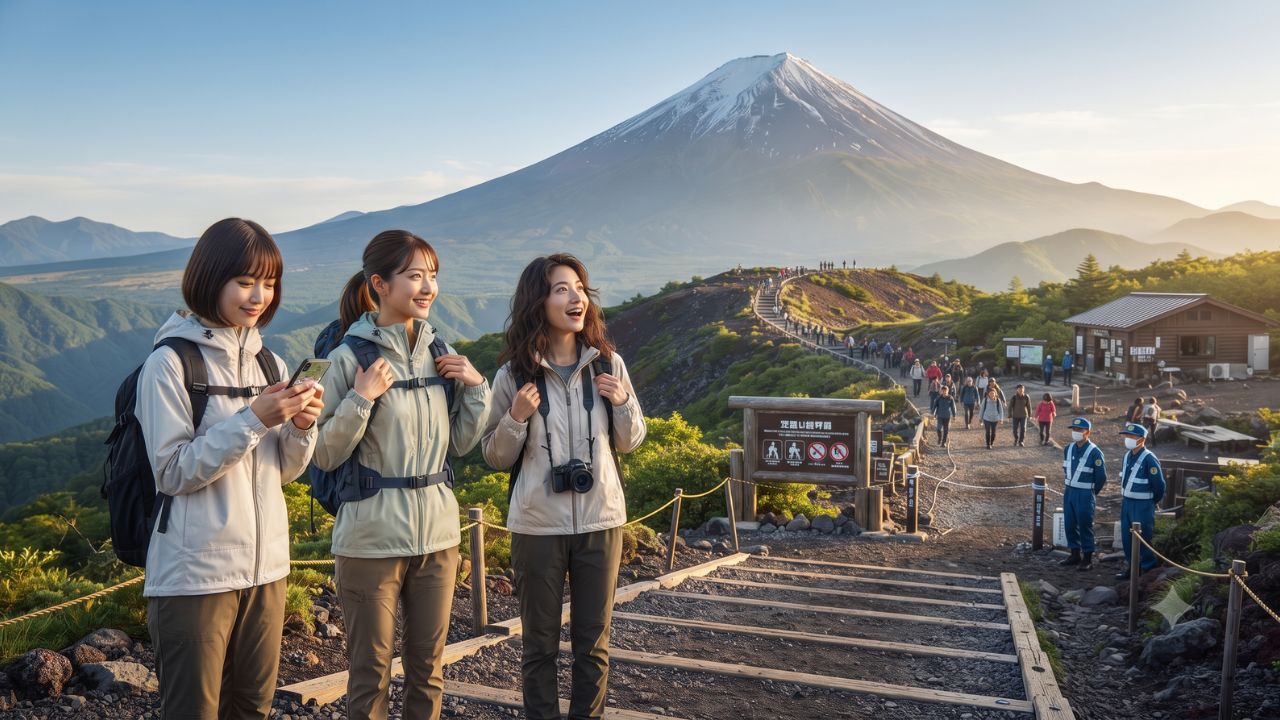
Despite the rollout of mandatory ¥4,000 entry fees and strict daily capacity caps, climber traffic on Mount Fuji surged by roughly 17% during the 2026 summer season, eclipsing pre-pandemic records. According to official monitoring released on 30 September by the Ministry of the Environment of Japan, approximately 240,000 climbers ascended Japan's sacred volcano between 1 July and 10 September 2026.
This total represents an increase of around 35,000 climbers compared to the 205,000 recorded in 2025, reaching 117% of the previous year's volume. More significantly, the 2026 traffic achieved 102% of the 2019 pre-pandemic benchmark of approximately 236,000 climbers. The data underscores a fundamental truth about Japan's premier peak: administrative friction and new cost structures have not dampened global climbing demand. Instead, the focus has shifted entirely to operational flow control, trail safety, and environmental preservation across the mountain's four primary ascents.
Comprehensive Overhaul Across Four Mountain Corridors
Mount Fuji spans two distinct prefectures—Yamanashi to the north and Shizuoka to the south—which jointly administer the four official ascents leading to the 3,776-meter summit. The 2026 climbing window saw synchronized regulatory tightening across all trailheads to eliminate hazardous "bullet climbing," where hikers attempt rapid overnight ascents without acclimatization.
On the Yamanashi side, the popular Yoshida Route opened on 1 July and operated under a rigid ceiling of 4,000 climbers per day, excluding guests with confirmed mountain-hut bookings. Yamanashi released 3,000 daily slots through an online multilingual booking system that launched on 27 April, offering support in Japanese, English, Simplified Chinese, Traditional Chinese, Korean, and Vietnamese with payments handled via credit cards and PayPay.
Across Shizuoka Prefecture, the Subashiri Route opened on 1 July, while the steeper Gotemba and Fujinomiya routes opened on 10 July. Shizuoka instituted the mandatory ¥4,000 charge alongside the "Shizuoka FUJI NAVI" digital platform, requiring every climber to complete an instructional module on trail etiquette and safety before receiving their 5th Station entry certificate.
| Route & Indicator | Prefecture | Season Operating Dates | Entry Fee & Quota | Primary Aircraft / Transport Access |
|---|---|---|---|---|
| Yoshida Route | Yamanashi | 1 July – 10 September 2026 | ¥4,000 (4,000 daily cap; 3,000 advance online) | Direct highway buses from Shinjuku & Tokyo Station |
| Subashiri Route | Shizuoka | 1 July – 10 September 2026 | ¥4,000 (FUJI NAVI registration required) | Shuttle buses from Gotemba Station (72 vehicle restriction days) |
| Gotemba Route | Shizuoka | 10 July – 10 September 2026 | ¥4,000 (FUJI NAVI registration required) | Local buses from JR Gotemba Station |
| Fujinomiya Route | Shizuoka | 10 July – 10 September 2026 | ¥4,000 (FUJI NAVI registration required) | Shuttle buses from Shin-Fuji & Fujinomiya (63 vehicle restriction days) |
What Makes the 2026 Management System Different
The transformation of Mount Fuji's visitor framework reflects a transition from voluntary conservation donations to legally enforceable crowd controls. For decades, hikers paid an optional ¥1,000 cooperation donation. The 2026 framework established a mandatory ¥4,000 fee per climber per ascent across all routes.
Financial modeling released by the Shizuoka Prefectural Assembly reveals the economic math behind the pricing: authorities projected approximately ¥400 million in essential safety infrastructure, rescue response, and sanitation maintenance. Apportioning those costs across an anticipated baseline of 100,000 climbers yielded the ¥4,000 per-person rate.
Nighttime movement rules represent another structural intervention. Across both prefectures, physical gates at the 5th Stations closed between 2:00 p.m. and 3:00 a.m. to anyone without a verified mountain-hut reservation. Rangers verified accommodation bookings before allowing hikers through, effectively eliminating the dangerous stream of ill-equipped tourists trying to hike through freezing sub-zero summit temperatures in single-day pushes.
To curb logistical gridlock at lower elevations, Shizuoka enforced extensive private vehicle bans on access roads leading to the 5th Stations. Private vehicle restrictions lasted 63 days on the Fujinomiya approach (from 9:00 a.m. on 10 July to 6:00 p.m. on 10 September) and 72 days on the Subashiri road (from 1 July through 10 September), requiring visitors to park at valley staging grounds and board dedicated shuttle buses.
Visitor Insider Tips for Climbing Mount Fuji
Ascending Japan's iconic volcano requires meticulous timing and tactical route selection under the updated regulatory regime:
- Advance Hut Reservations are Non-Negotiable: If you plan to watch the sunrise (goraiko) from the summit, secure a mountain hut between the 7th and 8.5 Stations months in advance. Without an official hut booking confirmation, staff will turn you away at the 5th Station gate starting at 2:00 p.m.
- Route Selection Strategy: The Yoshida Route handles over 55% of all climbers and experiences intense bottlenecks near the 8th Station rocky scrambles. Experienced hikers seeking quieter paths should evaluate the Gotemba Route (longest elevation gain, gentlest initial grade) or the Subashiri Route (scenic tree-line approach merging with Yoshida at the 8th Station).
- FUJI NAVI Compliance: Complete the Shizuoka digital registration and educational video before arriving at the mountain. Cellular data reception can fluctuate at mountain trailheads, and presenting a pre-downloaded QR entry certificate prevents long delays at check-in booths.
- Acclimatization at the 5th Station: Spend at least 60 to 90 minutes resting, dining, and hydrating at the 5th Station (roughly 2,300 to 2,400 meters altitude) prior to starting your uphill trek. Rapid ascent is the leading cause of acute mountain sickness (AMS) on Fuji.
- Proper Gear Verification: Rangers at gate checkpoints now perform visual checks for adequate cold-weather layers, sturdy ankle-support boots, headlamps with spare batteries, and rain protection. Do not attempt the climb in running sneakers or lightweight plastic ponchos.
Cultural and Environmental Context of the Sacred Peak
Inscribed as a UNESCO World Heritage Site in 2013 as "Fujisan, sacred place and source of artistic inspiration," Mount Fuji is revered not merely as a sporting challenge but as a spiritual sanctuary. For centuries, pilgrims associated with the Fuji-ko faith walked these volcanic scree trails in white robes, treating the ascent as a ritual of rebirth.
The surge in modern foot traffic has placed severe stress on the fragile alpine ecosystem. Erosion along volcanic cinder slopes, human waste management at 3,000-meter altitudes, and litter along the trails long threatened the mountain's World Heritage status. The funds generated by the ¥4,000 fee directly support bio-toilets, specialized high-altitude first-aid centers staffed with medical personnel, multi-language safety wardens, and continuous trail stabilization. By managing foot traffic sustainably through systems detailed by the Japan National Tourism Organization, Japanese authorities seek to balance global accessibility with sacred heritage preservation.
FAQ: Visiting Mount Fuji 2026
What is the official fee to climb Mount Fuji?
The mandatory entry fee is ¥4,000 per climber per ascent across all four routes (Yoshida, Subashiri, Gotemba, and Fujinomiya).
Can I do a single-day night hike to see the sunrise without a hut booking?
No. Trailhead gates close between 2:00 p.m. and 3:00 a.m. to all climbers without verified mountain-hut reservations to prevent dangerous "bullet climbing."
When is the official climbing season for Mount Fuji?
The official season runs from early July to 10 September each summer. Outside this window, all mountain huts and facilities are closed, and climbing is strongly discouraged.
How do I reach the 5th Station from Tokyo?
Direct highway buses run daily from Shinjuku Expressway Bus Terminal and Tokyo Station directly to the Subaru Line 5th Station (Yoshida Route) during the summer season.
Managing the delicate balance between cultural reverence and historic climbing demand ensures Mount Fuji remains an accessible sanctuary for future generations.
Related Travel Guides
Disclaimer
This article is for informational and educational purposes only. It does not constitute legal, financial, or professional advice. While we strive to provide accurate and up-to-date information, travel policies, regulations, and conditions change rapidly. Always verify information with official sources before making travel decisions. Nomad Lawyer makes no representations about the accuracy, reliability, completeness, or suitability of the information provided. Readers should consult qualified professionals for advice specific to their circumstances. The views expressed in this article are those of the author and do not necessarily reflect the views of Nomad Lawyer.
Naina Thakur
Contributor & Travel Specialist
Travel enthusiast and legal writer covering visa regulations, responsible tourism, and cultural journeys across global destinations.
Learn more about our team →