
Morocco Targets 350,000 Italian Road Trippers with Three-Year GNV Ferry Partnership: 2027–2029 Guide

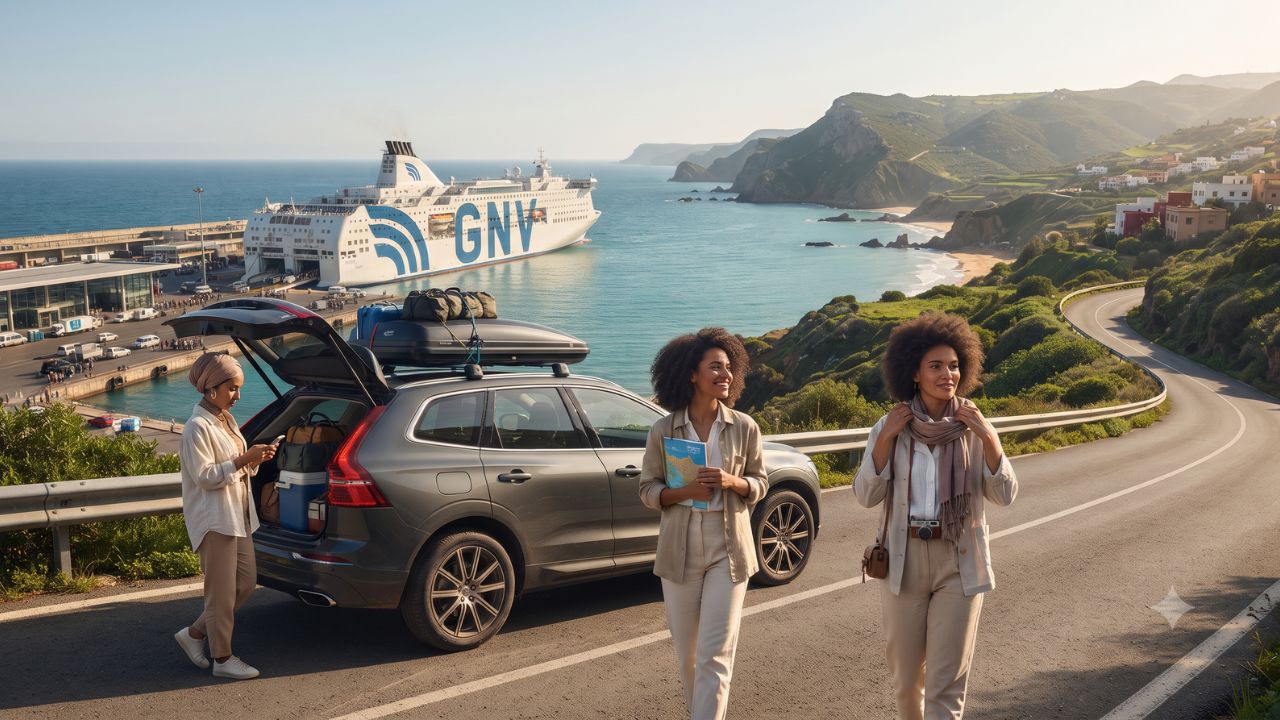
While over 85% of European travelers fly into Marrakech or Casablanca, 15% of the 1.15 million Italian tourists visiting Morocco choose to arrive by maritime ferry with their own 4x4s, campervans, and motorcycles. To accelerate this slow-travel overland movement, the Moroccan National Tourist Office (ONMT) and Italian shipping line Grandi Navi Veloci (GNV) signed a three-year strategic partnership running from 2027 through 2029, targeting 350,000 passenger departures from Italian ports.
Finalized in Rabat following GNV's annual convention in Marrakech (2–5 October 2026) and officially announced on 5 October, the initiative shifts promotional focus toward independent self-drive tourism, backcountry trail exploration, and rural ecotourism. By enabling travelers to bring their personal vehicles directly from Genoa or Civitavecchia to Tangier Med and Nador, Morocco seeks to channel visitor spending beyond urban centers directly into the High Atlas, the Rif Mountains, and the Sahara.
The Maritime Strategy: Connecting Italian Ports to Moroccan Trails
The three-year ONMT–GNV agreement reflects a broader modernization of Morocco's visitor economy under the 2023–2026 national tourism roadmap. Tourism Minister Fatim-Zahra Ammor reported that Morocco welcomed nearly 20 million international arrivals in 2025, generating MAD 138 billion in foreign-exchange receipts and supporting approximately 900,000 sector jobs after creating 90,000 new positions.
Rather than concentrating on package aviation holidays, the GNV alliance appeals to overland adventure travelers and the extensive Moroccan diaspora residing across Southern Europe. Long-distance car ferries allow travelers to avoid rental car mileage caps and vehicle restrictions, facilitating month-long self-supported expeditions across mountain passes and desert dunes.
| Metric / Corridor | Operational Indicator | Historical / Strategic Context | Key Overland Route |
|---|---|---|---|
| Partnership Duration | 2027–2029 | 3-year joint marketing & transit promotion | Genoa / Civitavecchia to Tangier Med / Nador |
| Passenger Ambition | 350,000 departures | Strategic target from Italian departure ports | Trans-Mediterranean roll-on/roll-off maritime links |
| Italian Market Baseline | 1.15 million visitors (2025) | Fast-growing European source market | 15% currently arrive via maritime car ferries |
| National Tourism Footprint | Nearly 20 million arrivals (2025) | MAD 138 billion foreign exchange receipts | Supports approx. 900,000 national tourism jobs |
| Key Maritime Hubs | Tangier Med & Nador | Modern deepwater ports with integrated customs | Direct highway links to A1, A2, and N-route networks |
What Makes Overland Ferry Touring in Morocco Different
Arriving in North Africa by car ferry transforms the travel experience from a standard vacation into a transcontinental overland expedition. Instead of navigating airport security and strict baggage limits, travelers board large vessels equipped with sleeper cabins, restaurants, and vehicle decks in northern Italy, waking up 48 hours later at the gates of the African continent.
Disembarking at Tangier Med provides immediate access to Morocco's well-maintained toll highway (Autoroutes du Maroc) and national road network. Travelers can drive directly south through the cedar forests of the Middle Atlas, cross the Tizi n'Tichka pass in the High Atlas, and descend toward ancient mudbrick fortifications recognized by the UNESCO World Heritage Centre, including the Ksar of Ait-Ben-Haddou and the Medina of Fez.
The freedom of bringing a personal four-wheel-drive vehicle allows overlanders to tackle rugged desert corridors—such as the track between Merzouga (Erg Chebbi) and Zagora (Erg Chigaga)—without paying prohibitive commercial tour surcharges.
Visitor Insider Tips for Driving Your Own Vehicle in Morocco
Taking a European-registered vehicle across the Mediterranean requires adherence to specific customs and driving protocols:
- Temporary Import Vehicle Permit (D16 Ter): When disembarking at Tangier Med or Nador, Moroccan Customs (Douane) issues an electronic or paper temporary import permit (D16 Ter) valid for up to 180 days per calendar year. The registered driver must remain with the vehicle; you cannot leave Morocco while your car remains in the country without customs clearance.
- Green Card Insurance Verification: Verify that your vehicle insurance policy includes Morocco on its International Motor Insurance Card (Green Card). If your insurer excludes Morocco, you must purchase temporary third-party border insurance at the port terminal upon arrival.
- Port Customs Processing Window: While maritime customs clearance is increasingly automated, vehicle processing during peak summer and holiday diaspora return periods (Operation Marhaba) can take two to four hours. Keep vehicle ownership papers, registration, and passports easily accessible.
- Gendarmerie Royal Road Checkpoints: Speed limits and road safety rules are strictly enforced across Morocco. Expect routine Gendarmerie checkpoints on national highways; always come to a complete stop at the "Halte Gendarmerie" sign until waved through by the officer.
- Fuel and Navigation Planning: Diesel (gasoil) is widely available in all towns, but long stretches through the Anti-Atlas and Sahara have limited filling stations. Carry cash (Moroccan Dirham) for fuel purchases in rural areas and download offline satellite GPS maps (such as Maps.me or Gaia GPS).
Cultural and Environmental Context: Dispersing Tourism into the Hinterland
The strategic thrust behind promoting self-drive road trips is the economic decentralization of tourism revenue. Urban tourism in Marrakech, Agadir, and Tangier often centralizes wealth in international hotel chains and corporate tour agencies.
In contrast, independent road trippers disperse revenue directly into rural Amazigh (Berber) villages. Overlanders buy groceries at local weekly open-air markets (souks), stay in family-run adobe guesthouses (riads and kasbahs), hire local desert guides, and frequent small village tire and mechanical workshops (vulcanisateurs). Official campaigns guided by Visit Morocco emphasize environmental responsibility by encouraging overlanders to stay on designated tracks, respect fragile desert oasis ecosystems, and minimize single-use plastics in arid valleys.
FAQ: Italy to Morocco Ferry Road Trips 2027–2029
Which Italian ports offer direct car ferries to Morocco?
GNV operates regular passenger and vehicle ferry services departing from Genoa and Civitavecchia (near Rome) directly to Tangier Med and Nador.
How long does the ferry crossing take from Italy to Morocco?
The direct sea crossing from Genoa to Tangier Med takes approximately 48 to 52 hours, depending on sea conditions and vessel routing.
What documents do I need to bring my car to Morocco?
You need your original vehicle registration document (carte grise), a valid passport with at least 6 months validity, your driver's license, and an insurance Green Card covering Morocco.
Is an international driving permit required in Morocco?
Most European and international driver's licenses are accepted for short-term tourist driving up to 90 days, though an International Driving Permit (IDP) is recommended.
Crossing the Mediterranean with your own vehicle opens an authentic overland passage into Morocco's mountain passes, historic medinas, and boundless desert tracks.
Related Travel Guides
Disclaimer
This article is for informational and educational purposes only. It does not constitute legal, financial, or professional advice. While we strive to provide accurate and up-to-date information, travel policies, regulations, and conditions change rapidly. Always verify information with official sources before making travel decisions. Nomad Lawyer makes no representations about the accuracy, reliability, completeness, or suitability of the information provided. Readers should consult qualified professionals for advice specific to their circumstances. The views expressed in this article are those of the author and do not necessarily reflect the views of Nomad Lawyer.
Naina Thakur
Contributor & Travel Specialist
Travel enthusiast and legal writer covering visa regulations, responsible tourism, and cultural journeys across global destinations.
Learn more about our team →