
Moscow Sheremetyevo and St. Petersburg Pulkovo Airports Record 233 Flight Delays and 26 Cancellations Disrupting Russian Trunk Routes
Pulkovo Airport in St. Petersburg and Sheremetyevo Airport in Moscow reported 233 delays and 26 cancellations on July 5, 2026, affecting major Russian carriers.

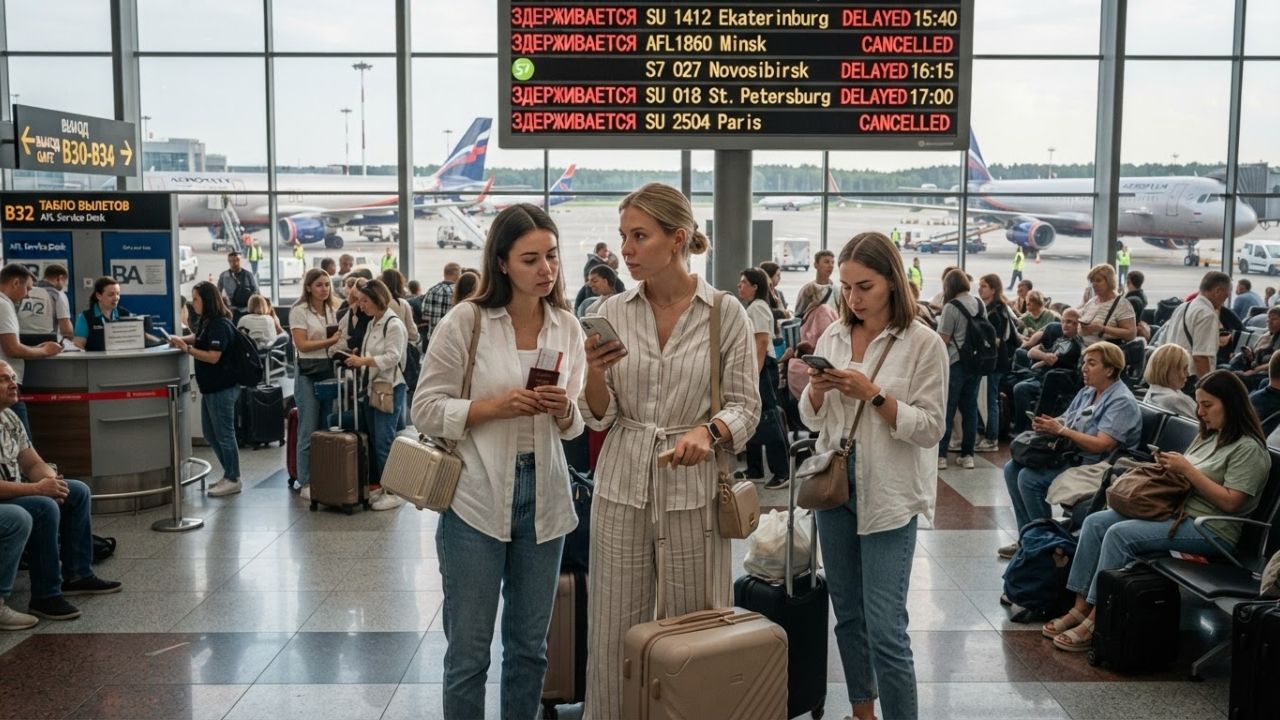
Image generated by AI
Airline operations at Russia's primary aviation gateways are experiencing significant scheduling delays. St. Petersburg Pulkovo Airport and Moscow Sheremetyevo Airport have collectively recorded 233 flight delays and 26 cancellations.
St. Petersburg Pulkovo Airport Registers Highest Volume of Delayed Flight Operations
According to reports, the widespread flight disruptions took place on July 5, 2026, affecting both domestic and international schedules.
Official statistics published by the Pulkovo Airport (LED) flight information board indicate that the facility experienced 151 delayed flights.
The high delay count reflects the prioritization of flight safety, with airlines choosing to postpone departures rather than cancel routes.
Only 10 flight cancellations were reported at Pulkovo, suggesting that ground staff worked to maintain as much of the schedule as possible.
Pulkovo serves as the principal hub for northwestern Russia, and delays here quickly affect regional flights.
The tables below display the airport breakdown and regional flight status impact.
St. Petersburg and Moscow Airport Disruption Breakdown
| Airport Gateway Facility | Location Hub City | Delayed Flight Departures | Cancelled Flight Departures | Total Operational Impact |
|---|---|---|---|---|
| Pulkovo Airport (LED) | St. Petersburg | 151 flights delayed | 10 flights cancelled | 161 flight disruptions |
| Sheremetyevo Airport (SVO) | Moscow | 102 flights delayed | 16 flights cancelled | 118 flight disruptions |
| Combined System Total | Regional hubs | 233 flights delayed | 26 flights cancelled | 279 flight disruptions |
Flight Status Impact Across Major Regional Hubs
| Operating Air Carrier | Main Hub Base | Scheduled Routes Affected | Primary Aircraft Types | Disruption Pattern |
|---|---|---|---|---|
| Aeroflot | Moscow Sheremetyevo | Domestic & International | Airbus A320, Boeing 737 | Cascading delays, gate changes |
| Rossiya Airlines | St. Petersburg Pulkovo | Regional domestic corridors | Sukhoi Superjet, Airbus A319 | Ground delays, crew shortages |
| Pobeda | Moscow Sheremetyevo | Low-cost domestic routes | Boeing 737-800 | High passenger wait times |
| S7 Airlines | Moscow Domodedovo / Novosibirsk | Inter-regional connections | Airbus A320neo, Boeing 737 | Rotational delay adjustments |
| Ural Airlines | Yekaterinburg / Moscow | Ural region trunk routes | Airbus A320 / A321 | Scheduling adjustments |
| Nordwind Airlines | Moscow Sheremetyevo | Leisure and regional routes | Boeing 737, Boeing 777 | Extended terminal departures |
Sheremetyevo International Airport Handles Cascading Delays Across Airline Hub Networks
Sheremetyevo Airport, Russia's busiest international terminal, reported 102 delays and 16 cancellations.
As the primary hub for Aeroflot, Sheremetyevo manages a high volume of connecting transit passengers.
When inbound flights are delayed, transit passengers frequently miss their connecting flights to secondary cities.
Terminal buildings experienced longer queues at customer service counters as passenger backlogs began to grow.
Airlines worked to reassign crews and adjust aircraft rotations to prevent further delays in the network.
Federal Aviation Regulators Monitor Airline Safety Compliance
Operational safety directives monitored by the Federal Air Transport Agency (Rosaviatsiya) show that safety is the primary priority during delays.
The agency coordinates with regional air traffic control to monitor weather patterns and airport runway conditions.
Aviation safety rules require carriers to offer food, beverages, and hotel lodging during extended delays.
Regulators emphasize that temporary restrictions are necessary to maintain safety margins during peak summer travel periods.
Ground Crews and Carrier Scheduling Teams Reorganize Aircraft Rotations
Airlines are using dynamic scheduling tools to return flights to their normal times.
This process involves re-sequencing departure queues and reallocating standby aircraft to busy routes.
Because modern aviation relies on tight turnaround times, restoring schedules can take several hours.
Ground crews at both Pulkovo and Sheremetyevo are working to speed up baggage handling and aircraft refueling.
Travelers are advised to monitor official digital boards for real-time gate and departure changes.
Why This Matters
Our analysis of the flight data indicates that flight delays at major hubs like Sheremetyevo quickly impact regional airports. Since Sheremetyevo handles the majority of domestic transit routes, delays here cascade across multiple time zones.
Airlines must manage their flight crews carefully to avoid violating mandatory duty rest requirements during delays.
Additionally, this event highlights how minor scheduling issues can expand into systemic delays during high-demand summer periods.
For passengers, verifying flight status before leaving for the airport is the most effective way to avoid long terminal waits.
Ultimately, coordinating airport operations through central agencies like Rosaviatsiya is necessary to maintain system safety.
Industry Outlook
Market trends suggest that Russian carriers will continue to adjust schedules to handle peak summer domestic demand. Airlines will focus on maintaining spare aircraft capacity at key hubs to absorb scheduling disruptions.
Expect passenger volumes at St. Petersburg and Moscow to remain high through the summer holiday season. The domestic aviation corridor is projected to operate with high stability.
Key Takeaways
- Extensive Disruptions: Moscow and St. Petersburg airports recorded 233 delayed flights and 26 cancellations on July 5, 2026.
- Pulkovo Impact: Pulkovo Airport in St. Petersburg recorded the most disruptions, with 151 delayed flights.
- Sheremetyevo Congestion: Sheremetyevo Airport in Moscow reported 102 delays and 16 cancellations, impacting transit routes.
- Safety First: Federal regulators confirmed that delays were managed to prioritize passenger safety.
- Carrier Delays: Major carriers, including Aeroflot, Rossiya, and Pobeda, had to adjust aircraft rotations.
FAQ
Why are flights delayed at Moscow and St. Petersburg airports today?
Flights are delayed due to high summer passenger volumes, regional airspace congestion, and aircraft scheduling adjustments.
What are the disruption figures for Pulkovo Airport?
Pulkovo Airport in St. Petersburg reported 151 delayed flights and 10 cancelled flights on July 5, 2026.
How did the delays affect transit passengers at Sheremetyevo?
Many connecting passengers experienced missed flights and longer queues due to late-arriving aircraft at the Moscow hub.
Which airlines are most affected by the disruptions?
The disruptions impacted major Russian carriers, including Aeroflot, Rossiya Airlines, Pobeda, S7 Airlines, Ural Airlines, and Nordwind.
Disclaimer
This article is for informational and educational purposes only. It does not constitute legal, financial, or professional advice. While we strive to provide accurate and up-to-date information, travel policies, regulations, and conditions change rapidly. Always verify information with official sources before making travel decisions. Nomad Lawyer makes no representations about the accuracy, reliability, completeness, or suitability of the information provided. Readers should consult qualified professionals for advice specific to their circumstances. The views expressed in this article are those of the author and do not necessarily reflect the views of Nomad Lawyer.
Kunal K Choudhary
Co-Founder & Contributor
A passionate traveller and tech enthusiast. Kunal contributes to the vision and growth of Nomad Lawyer, bringing fresh perspectives and driving the community forward.
Learn more about our team →