
Asia Air Travel Gridlock: 6,108 Delays and 591 Cancellations Hit Tokyo Haneda, Bangkok, and Shanghai

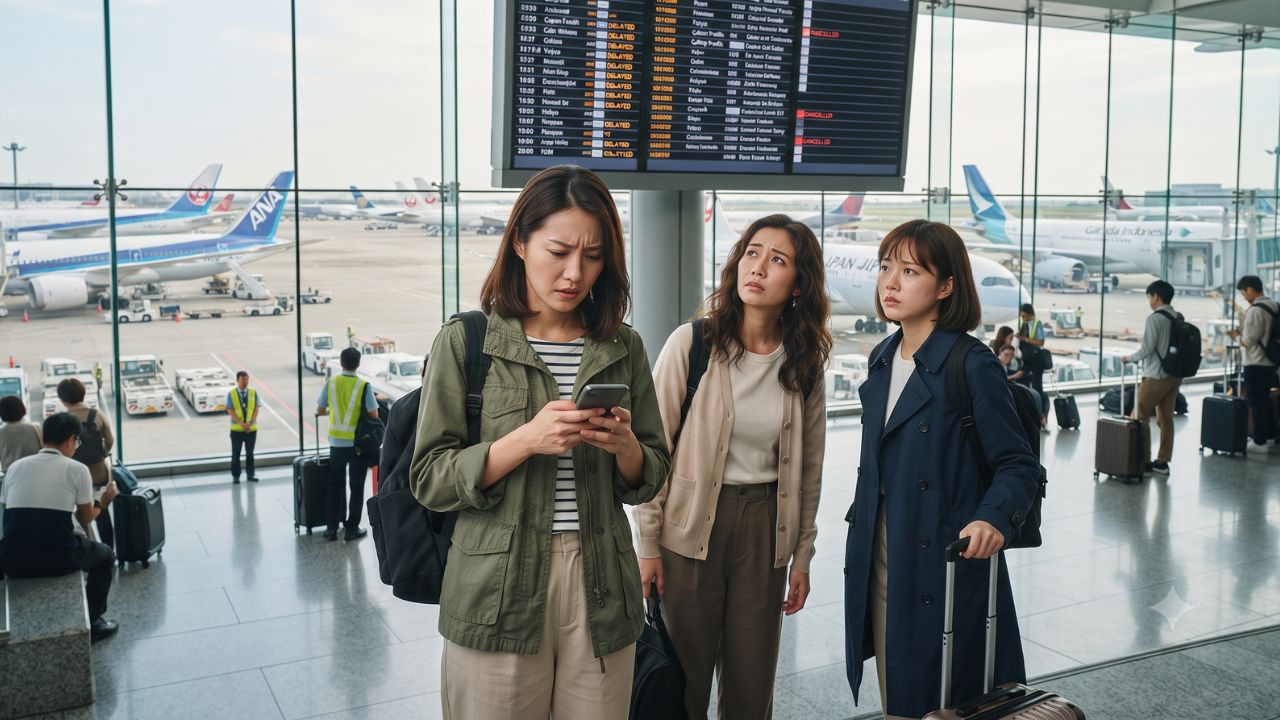
In one of the most severe airspace disruptions recorded across the Asia-Pacific region this year, over 6,108 flights suffered delays and 591 were cancelled in a single 24-hour operational window, with Tokyo Haneda alone logging 650 delayed departures. Compounding weather fronts, air traffic slot restrictions, and cascading crew duty timeouts across Japan, China, Thailand, and India triggered widespread missed connections from Shanghai Pudong to Jakarta and Delhi.
Regional Hub Impact: Tracking Asia’s Major Flight Delays
Verified airspace monitoring logs from FlightAware recorded on September 29 highlight acute operational strain concentrated across major international connecting junctions:
1. Japan: Tokyo Haneda & Regional Gateways
Tokyo Haneda International Airport led regional disruption with 650 delayed flights and 11 cancellations, heavily impacting Japan Airlines (346 delays, representing 44% of its schedule) and All Nippon Airways (224 delays, 38%). Regional Japanese airports suffered ripple effects:
- New Chitose (CTS): 200 delays and 7 cancellations.
- Fukuoka (FUK): 139 delays and 2 cancellations.
- Osaka Itami (ITM): 123 delays and 4 cancellations.
- Detailed terminal updates are maintained by Tokyo Haneda Airport.
2. Thailand & Southeast Asia: Bangkok Suvarnabhumi
Bangkok Suvarnabhumi recorded Southeast Asia's highest cancellation volume with 327 delays and 46 cancellations, heavily impacting Thai Airways (147 delays, representing 53% of its flights, and 44 cancellations). Phuket International recorded 48 delays and 4 cancellations, according to operational notices from Airports of Thailand.
- Jakarta Soekarno-Hatta (CGK): 193 delays and 19 cancellations.
- Hanoi Noi Bai (HAN): 125 delays and 11 cancellations.
- Da Nang (DAD): 63 delays and 8 cancellations.
3. Greater China: Mainland Megacity Groundings
Mainland carriers absorbed significant cancellation numbers, led by China Eastern with 311 delays and 103 cancellations, and Air China with 131 delays and 78 cancellations:
- Shenzhen Bao’an (SZX): 295 delays and 13 cancellations.
- Guangzhou Baiyun (CAN): 279 delays and 26 cancellations.
- Shanghai Pudong (PVG): 272 delays and 33 cancellations.
- Shanghai Hongqiao (SHA): 93 delays and 44 cancellations.
- Beijing Capital (PEK): 95 delays and 33 cancellations.
- Chengdu Tianfu & Shuangliu (TFU/CTU): 178 combined delays and 45 cancellations.
4. South Asia & Middle East Corridors
In India, Delhi Indira Gandhi International registered 228 delays and 13 cancellations (impacting IndiGo with 183 delays and SpiceJet with 22 delays), while Mumbai reported 75 delays. Transiting Gulf carriers also absorbed network holds, with Dubai International reporting 208 delays and Istanbul logging 210 delays.
What Makes Regional Airline Disruptions Different
| Carrier & Country | Scheduled Delayed Flights | Delay Rate (%) | Cancelled Flights | Cancellation Rate (%) |
|---|---|---|---|---|
| Japan Airlines (Japan) | 346 | 44% | 4 | 0% |
| China Eastern (China) | 311 | 12% | 103 | 4% |
| China Southern (China) | 271 | 11% | 2 | 0% |
| All Nippon Airways (Japan) | 224 | 38% | 5 | 0% |
| IndiGo (India) | 183 | 9% | 5 | 0% |
| Thai Airways (Thailand) | 147 | 53% | 44 | 15% |
| Shenzhen Airlines (China) | 134 | 17% | 8 | 1% |
| Air China (China) | 131 | 7% | 78 | 4% |
| ANA Wings (Japan) | 119 | 32% | 6 | 1% |
| FlyDubai (UAE) | 100 | 33% | 4 | 1% |
Visitor Insider Tips: Managing Flight Disruptions Across Asia
- Download Local Carrier Apps for Instant Digital Rebooking: In China and Japan, download official carrier apps (such as China Eastern or ANA) rather than standing in terminal queues; automated rebooking engines allow seat selection on subsequent flights hours before counter staff can process manual tickets.
- Avoid Tight 60-Minute Connections in Tokyo and Bangkok: When booking itineraries connecting between domestic Japanese flights at Haneda or regional Southeast Asian routes at Suvarnabhumi, build minimum 3-hour layovers to prevent baggage misplacement.
- Request Rail Substitution Vouchers in Japan: If domestic flights between Tokyo (HND) and Osaka (ITM) or Nagoya are cancelled, inquire with JAL or ANA regarding complimentary transfer endorsements onto JR Tokaido Shinkansen bullet trains.
- Confirm In-Terminal Transit Hotel Vouchers: If delayed overnight at Bangkok Suvarnabhumi (BKK) or Shanghai Pudong (PVG), request airline-funded day rooms inside terminal transit zones to avoid clearing immigration and customs lines.
Cultural and Environmental Context: East Asian Air Traffic Modernization
Asia’s commercial flight corridors represent some of the highest-density airspace routes on earth, linking megalopolises of tens of millions of residents. When regional convective weather patterns or military airspace restrictions force sudden holding patterns, narrow departure corridors quickly reach maximum capacity.
Airlines and civil aviation authorities are coordinating multi-lateral air traffic flow management programs across ASEAN and East Asia to reduce holding patterns and minimize carbon emissions from aircraft circling busy terminal arrival fixes.
FAQ: Traveling During Asia Flight Disruptions 2026
Which Asian airport experienced the most delays?
Tokyo Haneda International Airport recorded the highest delay total across Asia, logging 650 delayed flights in a single day.
Which airline suffered the highest cancellation rate?
Thai Airways experienced the most severe proportional impact, with 53% of scheduled flights delayed and 15% (44 flights) cancelled outright.
Can passengers transfer to Shinkansen trains during Japanese domestic flight cancellations?
Yes; major Japanese carriers frequently issue re-routing endorsements or full refunds that permit travelers to board JR high-speed bullet trains.
What assistance must airlines provide for overnight delays in Thailand?
Under Thai civil aviation passenger protections, airlines must provide complimentary meals, refreshments, and hotel accommodation with ground transport for substantial overnight schedule delays.
When flight corridors across Asia experience gridlock, patience, digital rebooking tools, and generous connection windows are a traveler’s most valuable assets.
Related Travel Guides
Disclaimer
This article is for informational and educational purposes only. It does not constitute legal, financial, or professional advice. While we strive to provide accurate and up-to-date information, travel policies, regulations, and conditions change rapidly. Always verify information with official sources before making travel decisions. Nomad Lawyer makes no representations about the accuracy, reliability, completeness, or suitability of the information provided. Readers should consult qualified professionals for advice specific to their circumstances. The views expressed in this article are those of the author and do not necessarily reflect the views of Nomad Lawyer.
Kunal K Choudhary
Co-Founder & Contributor
A passionate traveller and tech enthusiast. Kunal contributes to the vision and growth of Nomad Lawyer, bringing fresh perspectives and driving the community forward.
Learn more about our team →