
Morocco Tourism Boom 2026: EasyJet, Ryanair, and Global Airlines Open New Routes to Marrakech, Rabat, and Agadir

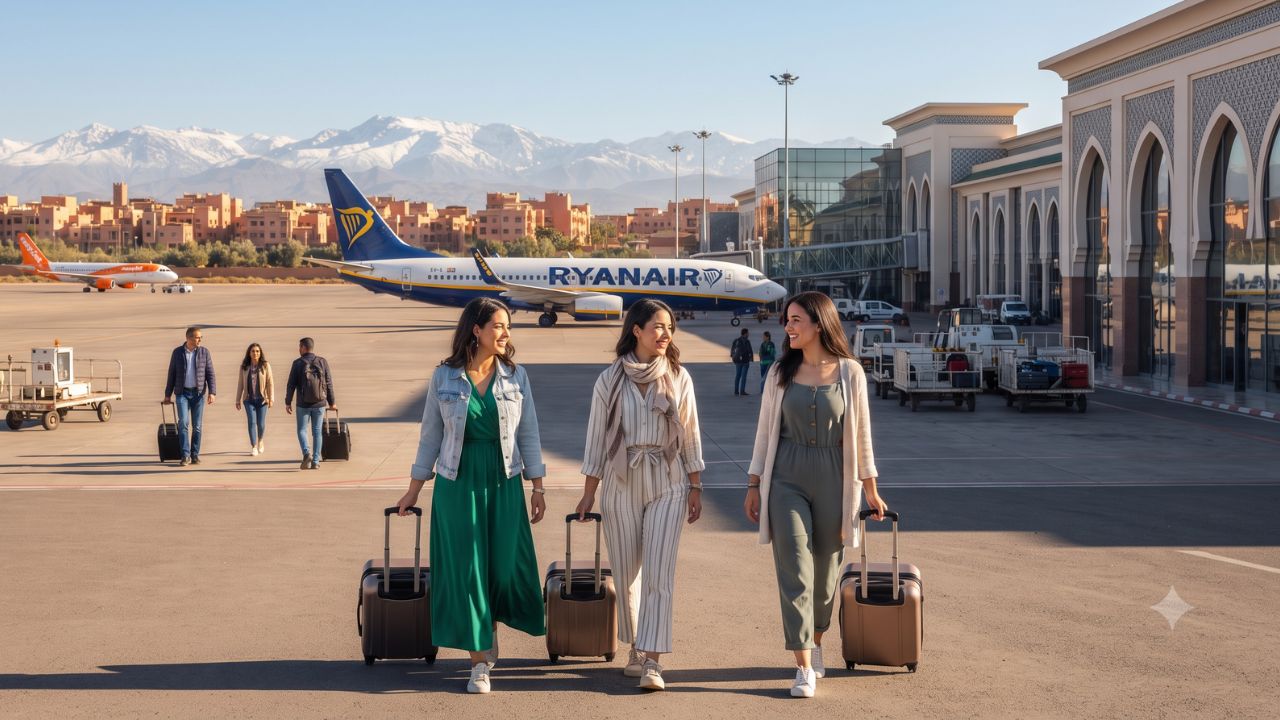
Between January and September 2026, an astonishing 15.7 million travelers touched down in Morocco—an influx adding 717,000 more visitors than the previous year's historic high. While the Kingdom has long enchanted European weekenders with its labyrinthine souks, high-altitude Atlas peaks, and Atlantic surf breaks, a synchronized offensive by global aviation carriers is fundamentally altering how the world accesses North Africa. Rather than funneling all international traffic through Casablanca's crowded transit halls, carriers are establishing direct aerial bridges straight into regional imperial capitals, coastal fishing havens, and desert gateways.
The Coordinated Aviation Offensive Driving Morocco Toward 2030
The timing of this international air surge is deliberate. As Morocco prepares to co-host the 2030 FIFA World Cup alongside Spain and Portugal, the Kingdom has set a bold national benchmark: welcoming 26 million annual visitors by 2030. Figures compiled by the Moroccan Ministry of Tourism confirm that the country is advancing ahead of schedule. The 15.7 million arrivals logged through September represent a 5% gain over the same nine-month period in 2025, which itself closed with an unprecedented 19.8 million total visitors. September 2026 alone drew more than 1.5 million travelers—an 8% jump year on year—proving that Morocco has successfully evolved from a seasonal summer retreat into a sought-after winter escape.
To maintain this momentum, Moroccan transport authorities secured 52 new international air routes during the first half of 2026, pushing contracted summer airline capacity to 7.74 million seats, a 13% annual climb. Low-cost European pioneers, full-service flag carriers, and North American transatlantic operators are deploying aircraft across secondary and tertiary regional airports. The strategy disperses tourist wealth directly into traditional artisan cooperatives, family-run riads, and coastal surf villages.
Low-Cost Pioneers and Flag Carriers: Airline Expansions Across the Kingdom
British budget carrier easyJet took a decisive step on 15 April 2026 by establishing its first-ever African operating base at Marrakech Menara Airport. Stationing three aircraft permanently in the Red City in partnership with the Moroccan National Tourist Office, the base is projected to support approximately four million seats during its opening operational year. The airline launched spring links connecting Geneva to Tangier on 30 March, Hamburg to Marrakech on 1 May, and both Lille and Strasbourg to Marrakech on 3 favoured dates around 3 May. Its winter expansion introduces direct connections from Prague on 25 October, Zurich on 28 October, and Newcastle on 3 November. Simultaneously, easyJet is developing coastal and administrative links, introducing routes from London Luton on 5 November and London Southend on 3 December into Rabat, alongside connections from Nantes to Essaouira, and Bordeaux and Birmingham to Agadir.
Not to be outdone, Irish carrier Ryanair unveiled its largest Moroccan winter schedule in August 2026, injecting 5.3 million seats across 156 routes connecting 14 European nations. A $200 million investment anchors a new two-aircraft operating base in Rabat, which launched in April 2026 to support 20 routes, including seven international services linking the capital to Milan Bergamo, Baden-Baden, Frankfurt-Hahn, Nuremberg, Porto, Pisa, and Valencia. Additional winter routes link Stockholm and Kraków to Rabat, and Wrocław to Marrakech. Ryanair has also designated Agadir as a focal point for winter sunshine, launching routes from Milan, Nuremberg, Bratislava, and Gdańsk, expanding its Morocco-based fleet to 16 aircraft.
National flag carrier Royal Air Maroc (RAM) marked a major milestone on 7 June 2026 with the debut of a thrice-weekly nonstop service linking Casablanca directly to Los Angeles. As the first scheduled nonstop passenger link between the African continent and the American Pacific Coast, the service connects West Coast travelers directly to North Africa. Across the Mediterranean, RAM expanded northern regional networks connecting Tangier and Tétouan with Madrid, Barcelona, Málaga, Bilbao, and Alicante, providing over 8.2 million seats across 86 international destinations in summer 2026.
| Airline | 2026 Expansion Milestones & Strategic Investments | Primary Moroccan Gateways | Core Visitor Impact |
|---|---|---|---|
| easyJet | First African base in Marrakech (3 aircraft); ~4M projected base seats; 8+ new routes. | Marrakech, Rabat, Agadir, Tangier, Essaouira | Expands European city breaks and direct winter sun links from UK, France, and Switzerland. |
| Ryanair | $200M Rabat operating base (2 aircraft); 156 winter routes; 5.3M seats; fleet growing to 16 planes. | Rabat, Marrakech, Agadir, Regional hubs | Deepens connections with 14 European nations; brings budget travelers to coastal and capital sites. |
| Royal Air Maroc | Historic Casablanca–Los Angeles nonstop link; northern corridor expansion to Spain (8.2M summer seats). | Casablanca, Tangier, Tétouan | Opens direct US West Coast access; facilitates multi-destination Iberian-Moroccan circuits. |
| Air Transat | Inaugural Montreal–Agadir nonstop weekly route (June 12 – October 23, 2026). | Agadir, Marrakech | Exclusive North American direct link to southern Atlantic coast; diversifies transatlantic visitors. |
| Discover Airlines | Exclusive Munich–Fez nonstop route; twice-weekly Frankfurt–Agadir flights; up to 16 weekly services. | Fez, Agadir | Caters to German travelers seeking ancient spiritual medinas and Atlantic beach winter holidays. |
| Jet2 | New London Gatwick and East Midlands routes to Agadir starting 22 October 2026. | Agadir | Bundled resort flight-and-hotel packages ensuring stable winter occupancy for southern hoteliers. |
| Transavia France | 8% capacity increase to 611,000 winter seats; up to 160 weekly flights across 25 routes. | Casablanca, Rabat, Fez, Tangier | Connects nine French airports to 11 Moroccan cities, serving the nation's largest international tourist base. |
Long-haul and leisure operators are multiplying these connectivity gains. Canadian leisure airline Air Transat launched weekly Friday flights between Montreal and Agadir on 12 June 2026, running through 23 October as North America's exclusive nonstop link into the Souss-Massa region. Lufthansa Group's Discover Airlines introduced weekly Sunday flights between Munich and Fez in late October 2026 alongside twice-weekly Frankfurt–Agadir services. British package provider Jet2 introduced twice-weekly London Gatwick flights to Agadir on 22 October alongside new East Midlands services. Transavia France bolstered links from Morocco's largest source market—which supplied 3.62 million visitors between January and July 2026 alone—by adding 611,000 winter seats across 25 routes.
Airport Modernization and the 2030 Tourism Infrastructure Push
To prevent airfield congestion as millions of new passengers arrive, the Moroccan government is executing a MAD 38 billion airport infrastructure master plan running from 2025 to 2030. Managed by the Office National Des Aéroports, the program will expand national airport capacity from 34 million passengers annually to 80 million by 2030.
On 29 September 2026, Morocco finalized a €270 million financing facility with the African Development Bank to accelerate modernization works. Capital investments are upgrading terminal facilities, automated baggage handling, apron stands, and security screening across Casablanca Mohammed V, Marrakech Menara, Agadir Al Massira, Tangier Ibn Battouta, and Fez Saïss. Parallel hospitality programs are adding 60,000 hotel beds ahead of the 2030 World Cup, while the state-backed Go Siyaha initiative is financing 1,700 local tourism businesses by the end of 2026, supporting eco-lodges, trekking outfits, and craft workshops across emerging regions such as Oujda, Nador, Saïdia, and Marchica.
Visitor Insider Tips: Exploring Morocco Beyond the Standard Tourist Path
- Fly Directly to Regional Gateways: Instead of landing in Casablanca and enduring four-hour highway transfers, book direct regional flights. Land in Rabat to explore clean seaside medinas, fly into Fez for unhurried artisanal immersion, or alight in Essaouira to access windsurfing bays without enduring the dusty three-hour taxi ride from Marrakech.
- Master Riad Etiquette and Neighborhood Base Selection: In Marrakech, avoid chain hotels along the modern Hivernage strip. Base yourself inside the historic medina around the quieter Mouassine or Kennaria quarters. When arriving at traditional riads, remove outdoor footwear if requested, accept Moroccan mint tea with your right hand, and keep voices low in open interior courtyards.
- Navigate Tangier and Rabat via the Al Boraq High-Speed Train: Morocco operates Africa's first high-speed rail line, the Al Boraq bullet train, linking Tangier, Kenitra, Rabat, and Casablanca at 320 km/h. Booking first-class tickets two days in advance delivers comfortable, reliable transit between coastal imperial centers in under two hours.
- Savor Regional Culinary Specialties: Bypass standardized tourist menus serving generic couscous. In Fez, order pastilla—a delicate pigeon or shredded poultry pastry dusted with cinnamon and confectioner's sugar. In Agadir and the Souss valley, sample tagines infused with genuine cold-pressed argan oil and amlou (roasted almond, argan oil, and honey dip).
- Time Medina Visits for Early Mornings: The narrow alleys of the UNESCO-inscribed medinas in Marrakech and Fez become intensely crowded by midday. Venture out between 8:00 am and 10:30 am when shopkeepers raise their wooden shutters, donkey carts complete morning deliveries, and bakeries produce fresh batches of crusty khobz bread without tourist congestion.
Cultural and Environmental Context: Safeguarding Living Heritage
Morocco's rapid tourism expansion presents profound opportunities alongside vital conservation imperatives. Historic districts—including the Medina of Fez, the Medina of Marrakesh, and the modern capital and historic city of Rabat—are protected through the UNESCO World Heritage Centre. Preserving these living medieval quarters requires strict building regulations that mandate traditional tadelakt plaster, carved cedar woodwork, and hand-cut zellij tilework during riad restorations.
Environmental sustainability represents a critical priority across arid southern regions. In desert oases near Ouarzazate and coastal resort strips in Agadir, expanding tourist developments must balance significant water consumption against agricultural needs. Government guidelines under the Go Siyaha program incentivize boutique hotels and desert camps to install solar energy grids, utilize greywater recycling systems, and eliminate single-use plastics. Simultaneously, community tourism projects in the High Atlas Mountains ensure that hiking expenditures directly support Amazigh (Berber) village cooperatives, maintaining ancient earthen architecture and terraced walnut orchards against flash flooding and environmental erosion.
FAQ: Traveling to Morocco in 2026–2027
What is driving the massive increase in flights to Morocco?
Morocco is aggressively expanding airline partnerships with easyJet, Ryanair, and Royal Air Maroc to reach 26 million annual visitors by 2030, supported by airport expansions and preparation for co-hosting the 2030 FIFA World Cup.
Do travelers need a tourist visa to visit Morocco?
Citizens of the United States, Canada, the United Kingdom, the European Union, Australia, and New Zealand can enter Morocco visa-free for tourism stays of up to 90 days with a passport valid for at least six months.
How can visitors travel efficiently between major Moroccan cities?
Travelers can utilize the Al Boraq high-speed train linking Tangier, Rabat, and Casablanca in just over two hours, or use direct regional domestic and international flights connecting Marrakech, Fez, and Agadir.
Is Morocco safe for independent and solo travelers?
Yes. Morocco maintains a welcoming hospitality culture with low violent crime rates. Practicing standard street awareness, dressing modestly in historic medinas, and agreeing on taxi fares beforehand ensure a comfortable and safe travel experience.
From the sun-drenched Atlantic waves of Agadir to the timeless prayer calls echoing across Fez, Morocco's open skies invite travelers into an extraordinary world where ancient tradition embraces modern wonder.
Related Travel Guides
Disclaimer
This article is for informational and educational purposes only. It does not constitute legal, financial, or professional advice. While we strive to provide accurate and up-to-date information, travel policies, regulations, and conditions change rapidly. Always verify information with official sources before making travel decisions. Nomad Lawyer makes no representations about the accuracy, reliability, completeness, or suitability of the information provided. Readers should consult qualified professionals for advice specific to their circumstances. The views expressed in this article are those of the author and do not necessarily reflect the views of Nomad Lawyer.
Naina Thakur
Contributor & Travel Specialist
Travel enthusiast and legal writer covering visa regulations, responsible tourism, and cultural journeys across global destinations.
Learn more about our team →