
Montreal Trudeau Airport U.S. Preclearance Guide 2026: CBP Process, Timing, and Checkpoint C
Navigate U.S. Customs and Border Protection (CBP) at Montreal Trudeau Airport (YUL) with this 2026 guide on preclearance timing, Mobile Passport Control, and Checkpoint C requirements.

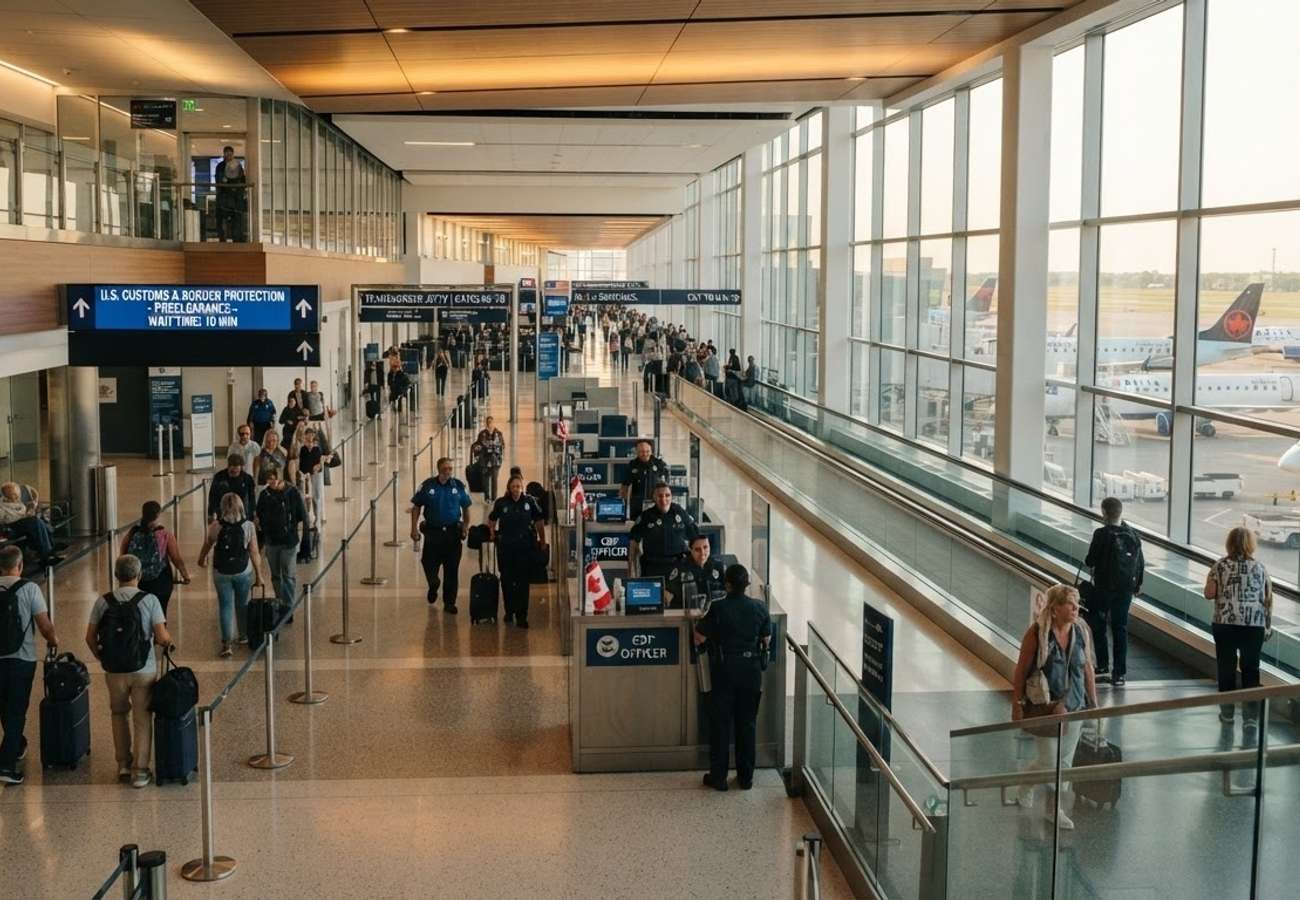
Image generated by AI
Passengers flying from Montreal to the United States must navigate U.S. Customs and Border Protection (CBP) before departure, effectively landing as domestic passengers upon arrival. This preclearance system at Montreal Trudeau International Airport (YUL) can either streamline a trip or lead to missed flights if timing is miscalculated.
For those departing from YUL, the experience is unique because the American border is effectively moved to Canadian soil. This means that the rigorous inspection process typically reserved for arrival halls in cities like New York or Chicago happens before the aircraft even leaves the tarmac in Quebec. When the plane touches down in the U.S., passengers typically bypass immigration and baggage claim, walking straight to their final destination or connecting gate.
The Mechanics of U.S. Preclearance at YUL
Montreal Trudeau is one of only nine Canadian airports equipped with full U.S. border preclearance. All nonstop flights bound for the United States operate out of a specialized transborder zone. To reach the gates, passengers must successfully pass through two distinct layers of screening: airport security and federal border inspection.
The operational flow begins with airline check-in and luggage drop-off in the main terminal. Following this, travelers must proceed to Checkpoint C for security screening. Once cleared, passengers enter the CBP preclearance hall. It is only after a U.S. CBP officer grants entry that the traveler can access the transborder gates, primarily located in the 70s and 80s ranges. This area serves major carriers including Delta, American, United, and Air Canada.
Because these facilities operate under U.S. federal jurisdiction, the interaction with officers is identical to a standard U.S. port of entry. Officers verify travel documents, question passengers regarding their purpose of visit, and collect biometric data where required.
Strategic Timing and Arrival Windows at YUL
Official guidance from the airport and local tourism authorities suggests that U.S.-bound passengers arrive at least three hours before their scheduled departure. This window is particularly vital during peak morning and early afternoon periods when flights to major hubs—such as Atlanta, Washington, Chicago, and New York—depart in concentrated waves.
Bottlenecks typically occur at two points: the security queues at Checkpoint C and the CBP inspection kiosks. For a traveler with only carry-on luggage and a digital boarding pass, arriving 2.5 to 3 hours early generally provides a sufficient buffer. For example, a passenger on a 17:00 flight to Newark arriving at 14:00 can typically navigate both security (approx. 20 minutes) and CBP (approx. 20–30 minutes) without stress.
However, families or those checking bags face higher risks. A family of four departing for Orlando at 07:15 who arrives at 05:45 during holiday seasons may encounter combined wait times of 60 to 90 minutes, leaving very little time to reach the gate.
For those connecting from other international or Canadian cities, the timing is even more critical. While standard minimum connection times are often cited between 60 and 90 minutes, these figures assume ideal conditions. Industry observers suggest a minimum of 2 hours for connecting flights, and up to 2.5 hours for arrivals from Europe during winter months when weather delays are frequent.
Navigating Checkpoint C and the Transborder Jetty
The transborder jetty is accessed exclusively through Checkpoint C. This is distinct from Checkpoint A, which serves domestic and international routes. Travelers should follow the "USA / États-Unis" signage immediately after check-in.
Checkpoint C operates as a standard security screening area, but its volume fluctuates based on flight banks. The heaviest traffic typically occurs between 05:00 and 08:00 and again from 14:00 to 17:00. When Air Canada schedules multiple flights to Boston, Newark, LaGuardia, Washington National, and Chicago within a short window, the queues can expand rapidly.
A common mistake for first-time users is assuming that "customs" happens upon arrival in the U.S. In reality, the design of YUL forces all passengers through the CBP hall immediately after security. There is no bypass. Travelers should view Checkpoint C and the CBP hall as a single, combined process that can take up to 45 minutes during peak hours.
Mandatory Documentation and Eligibility Requirements
Entering the U.S. via preclearance requires the same documentation as a standard international arrival. A valid passport is mandatory for all passengers, including infants. While U.S. citizens use U.S. passports and Canadians use Canadian passports, dual citizens should use the document they intend to use for U.S. entry. Note that a birth certificate combined with a photo ID is not acceptable for air travel.
For non-North American citizens, the requirements are more stringent:
- Visa Waiver Program: Travelers must have an approved ESTA. While CBP officers access this electronically, they may still request proof of return tickets or accommodation details.
- Visa Holders: Those on B1/B2 (business/tourism), F-1 (student), or work visas must carry their visa-bearing passport. Students should specifically carry their I-20 form.
Trusted traveler programs provide a streamlined experience. NEXUS members (Canadian/U.S. citizens or permanent residents) and Global Entry members can utilize dedicated kiosks and fast-track lanes. However, lane availability depends on staffing levels, and travelers should always follow the directions of on-site personnel.
Implementing Mobile Passport Control (MPC) at YUL
To reduce physical queue times, U.S. CBP has implemented the Mobile Passport Control (MPC) app at Montreal Trudeau. This free smartphone application allows eligible travelers to submit their customs declarations and passport information digitally before reaching the officer.
The process at YUL follows a specific sequence:
- After clearing Checkpoint C security, the traveler opens the MPC app.
- A "trip" is created, and passports for all eligible group members are scanned.
- Standard customs declaration questions are answered and submitted electronically.
- The app generates a digital receipt or QR code.
- The traveler enters the designated MPC line, presenting the digital confirmation to the officer for a significantly faster processing experience.
Ensuring all documents are digitized and the MPC app is updated before arriving at the terminal can save upwards of 30 minutes during peak travel windows.
Related Travel Guides
Disclaimer
This article is for informational and educational purposes only. It does not constitute legal, financial, or professional advice. While we strive to provide accurate and up-to-date information, travel policies, regulations, and conditions change rapidly. Always verify information with official sources before making travel decisions. Nomad Lawyer makes no representations about the accuracy, reliability, completeness, or suitability of the information provided. Readers should consult qualified professionals for advice specific to their circumstances. The views expressed in this article are those of the author and do not necessarily reflect the views of Nomad Lawyer.
Raushan Kumar
Founder & Lead Developer
Full-stack developer with 11+ years of experience and a passionate traveller. Raushan built Nomad Lawyer from the ground up with a vision to create the best travel and law experience on the web.
Learn more about our team →