Monaco Rail Shutdown November 2026: SNCF Suspends Nice-Ventimiglia Corridor Services

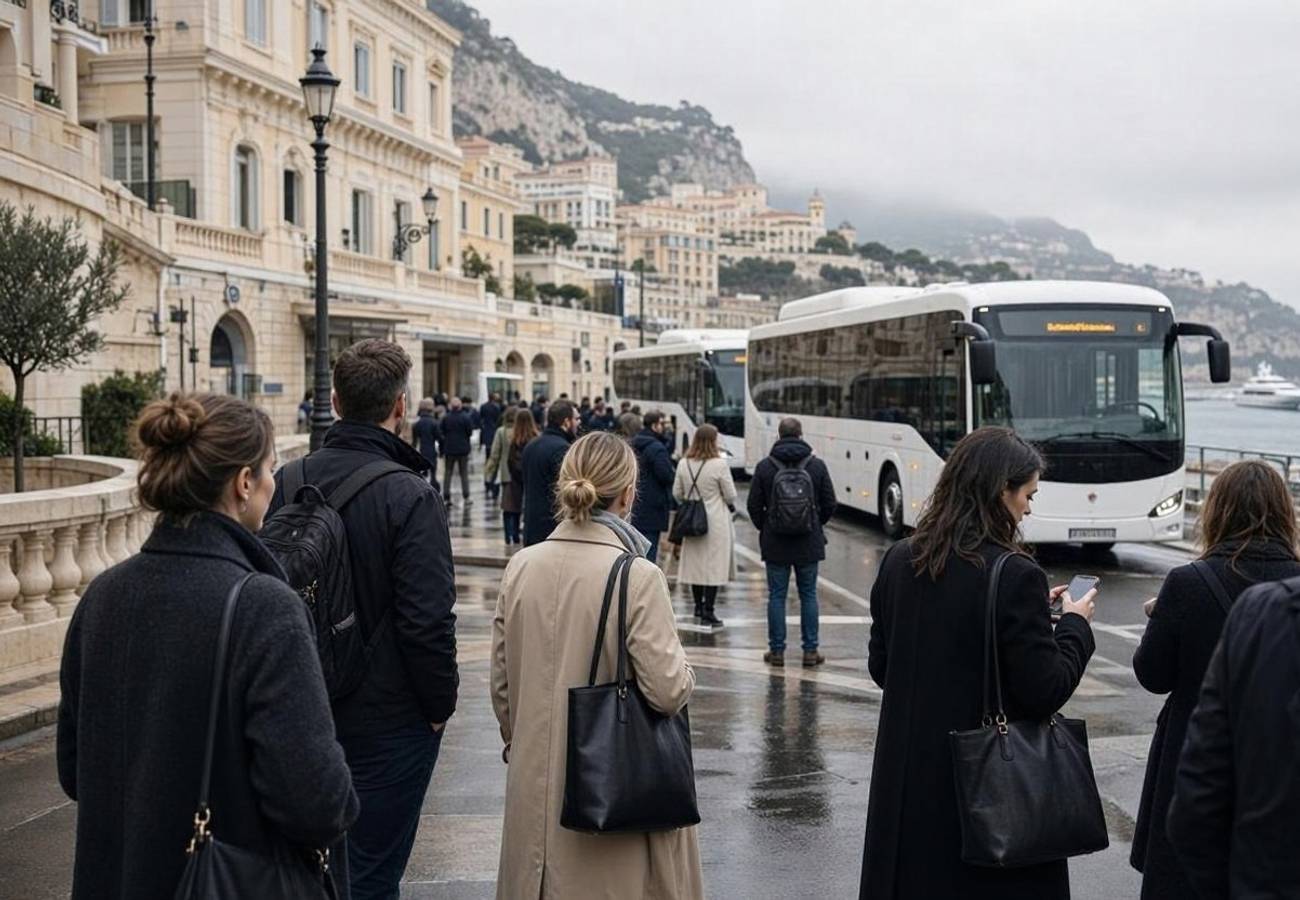
Image generated by AI
Regional rail connectivity in the French Riviera typically maintains a high-frequency cadence, yet for 48 hours this November, capacity will plummet as the Nice–Monaco–Menton–Ventimiglia corridor ceases operation. This total suspension, scheduled for November 10 and 11, 2026, represents a complete halt of one of Europe's most critical cross-border transit arteries, shifting the burden of transport from high-capacity electric trains to limited-seat diesel coaches.
The Logistics of the November Shutdown
The disruption is the result of extensive infrastructure upgrades managed by SNCF Réseau, the entity responsible for the French rail network. According to official municipal decrees and SNCF Voyageurs, the shutdown will be absolute across the primary coastal corridor and the secondary Nice–Breil–Tende line.
The timeline for the outage is precise: services are suspended for the entirety of Tuesday, November 10, and will remain offline through Wednesday, November 11, with a projected restoration of service at approximately 5:30 pm on Wednesday. This window creates a critical bottleneck for international visitors and the thousands of daily cross-border workers who facilitate the Principality's economy.
Comparative Transit Capacity: Rail vs. Replacement
The transition from rail to road during this period creates a significant disparity in passenger throughput. While a standard regional train can move hundreds of passengers in a single trip, the replacement coach system operates on a much smaller scale.
| Metric | Standard Rail Service | Replacement Coach Service (Peak) | Replacement Coach (Off-Peak) |
|---|---|---|---|
| Frequency | High-Frequency Regional | Every 15 Minutes | Every 30 Minutes |
| Capacity | High (Full Train Sets) | Severely Limited (Bus Seats) | Severely Limited (Bus Seats) |
| Primary Hubs | Monaco-Monte-Carlo | Parvis Sainte-Dévote / Monte-Carlo Exit | Parvis Sainte-Dévote / Monte-Carlo Exit |
| Route Reach | Nice $\rightarrow$ Ventimiglia | Selected Stops Only | Selected Stops Only |
The replacement strategy utilizes specific access points to prevent congestion at the Monaco-Monte-Carlo station. Arrivals will be concentrated at the Monte-Carlo exit, while all departing passengers must migrate to the Parvis Sainte-Dévote exit. This bifurcation of traffic is a necessity given the narrow geography of the station's surroundings.
What This Means for Travelers
For those operating within the French Riviera or crossing into Italy, the data suggests that standard transit times will be tripled or quadrupled due to road congestion and limited seating.
1. Airport Transfers: Travelers arriving at Nice Côte d'Azur Airport who typically take the train to Monaco must now factor in significant delays. The replacement coaches stop at Nice Grand-Arénas and Nice-Vauban, but these will likely reach capacity quickly. If you have a flight departure on November 11, leave Monaco at least 4-5 hours earlier than usual.
2. Road Access Restrictions: Municipal Order No. 2026-5769 has effectively closed the Sainte-Dévote and Débarcadère tunnels to all general vehicle traffic. Only authorized SNCF replacement buses and emergency services are permitted. If you are using a rental car or taxi, these primary arteries are unavailable, which will likely lead to gridlock on alternative surface streets.
3. Alternative Transit Options: To avoid the limited-capacity SNCF coaches, travelers should look toward the [ZOU! regional bus network](https://www. transposeurs.fr), specifically the 600 service and the 601 Noctambus. These provide a parallel alternative for the Nice–Monaco–Menton stretch, though they are not designed to handle the full volume of a suspended railway.
Forward Projection: The Infrastructure Pivot
This shutdown is not an isolated incident but part of a broader trend of "intensive maintenance windows" across European rail networks. As the International Union of Railways (UIC) pushes for modernized, high-speed cross-border integration, older coastal lines like the Riviera corridor require systemic overhauls to support higher frequencies and heavier loads.
The decision to completely suspend service rather than implement a reduced timetable indicates the scale of the work being performed by SNCF Réseau. We expect similar "hard closures" to become more common in the 2026-2027 cycle as the network prepares for increased tourist volumes and the integration of more sustainable propulsion systems.
FAQ: Monaco Rail Disruption 2026
Will train tickets be valid on the replacement buses? Yes, SNCF has introduced special arrangements for train pass holders and ticket holders to utilize the replacement coach services, though seating remains first-come, first-served.
Which tunnels are closed to private cars? The Sainte-Dévote and Débarcadère tunnels are strictly prohibited for general vehicle circulation until the rail services resume on Wednesday evening.
When exactly does the train service return? Services are expected to resume around 5:30 pm on Wednesday, November 11, 2026.
Are there alternatives to the replacement coaches? Yes, the ZOU! 600 and 601 Noctambus services remain operational, and the Zest L25 bus can be used for connections between Nice and Breil.
Transit volatility in the Riviera is the new baseline; plan for road-based redundancy.
Related Travel Guides
This article is for informational purposes. Flight routes, passenger regulations, visa rules, and transit advisories are subject to change by airlines and aviation authorities. Readers are advised to verify schedules and travel documentation with relevant carriers and border agencies before departure.
Related Stories

WTM London 2026: AI Booking Shifts and Global Tourism Growth Forecasts for 1.57 Billion Arrivals

Air Europa and Global MICE Forums to Converge in Tróia Portugal for Euro-American Edition 2027