
Military Aircraft United: 6 Largest Cargo Capacity Transports in 2026
Discover which military aircraft united global cargo operations with the largest payload capacity in 2026. Explore how aviation engineering defines transport limits after the Antonov An-225's destruction.

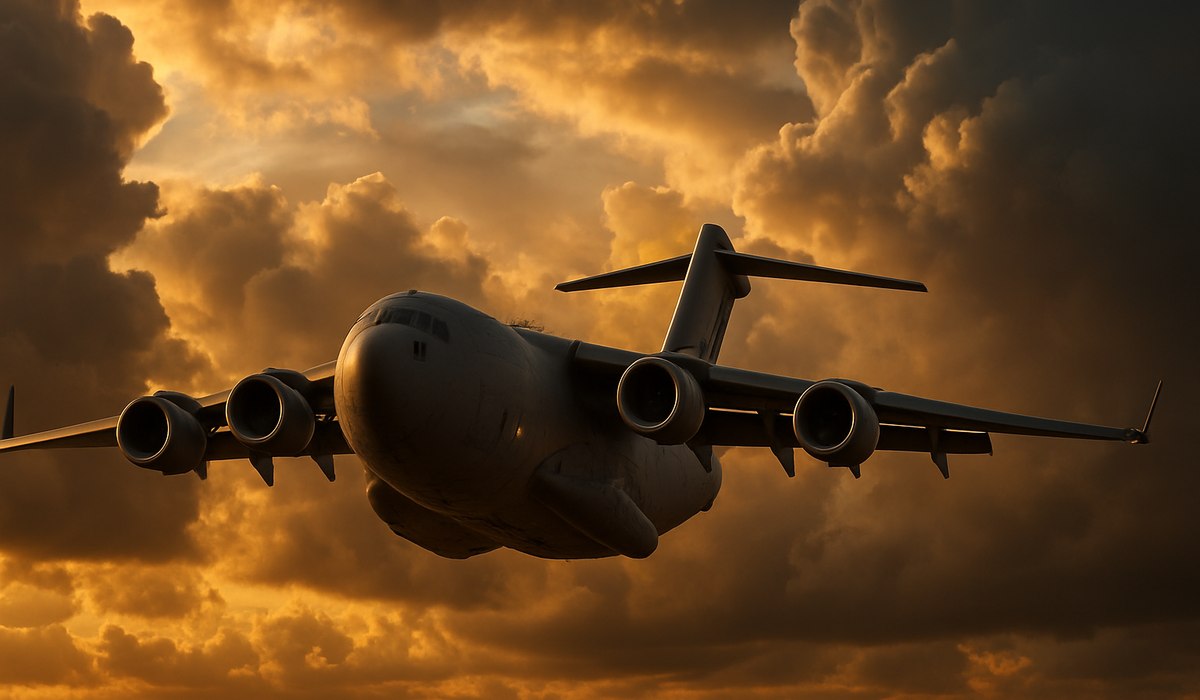
Image generated by AI
The World's Most Powerful Cargo Aircraft Revealed
Military aircraft united across nations rely on heavy-lift transport planes for critical defense and humanitarian missions. The largest payload capacity ever achieved belonged to the Antonov An-225, an engineering marvel that redefined aviation's cargo limits. When that single aircraft was destroyed in 2022, the global military transport landscape shifted dramatically. Today's operational fleet reveals competing designs that continue pushing the boundaries of what military aircraft can carry across continents and challenging terrain.
The Antonov An-225: Aviation's Lost Titan
The Antonov An-225 represented the zenith of Soviet-era aviation engineering. This legendary transport achieved a maximum payload capacity of 308,000 pounds, making it the undisputed champion of cargo aircraft. Only one prototype was ever constructed, making its loss in March 2022 irreplaceable. The aircraft's six turbofan engines and 290-foot wingspan enabled operations that no other aircraft could replicate. Its destruction eliminated an entire category of heavy-lift capability from the aviation industry. Military strategists and logistics planners across the states continue analyzing how to replace this capability gap in global transport networks.
For perspective on military aviation developments, consult FlightAware's military tracking resources.
Competing Heavy-Lift Contenders
Several aircraft narrowly missed replacing the An-225's dominance. The Antonov An-22 Antei achieved maximum payload capacity of 176,000 pounds, making it the second-largest cargo transport ever built. However, this Cold War-era design has largely retired from active service. Similarly, the McDonnell Douglas DC-10 Extended Range variant could manage 170,000 pounds of payload, yet commercial retirement claimed nearly all examples. A notable exception includes two ex-Dutch KDC-10 aircraft still operated by Omega Aerial Refueling Services, providing specialized tanker missions across multiple states.
These aircraft demonstrate how payload capacity represents just one dimension of transport effectiveness. Range, runway requirements, and operating costs fundamentally shape deployment decisions for military logistics.
Active Military Cargo Aircraft Today
Current military aircraft united operations rely on proven platforms with extensive service records. The Lockheed C-5 Galaxy maintains active duty across the United States Air Force, offering approximately 140,000 pounds of payload capacity. The aircraft's four turbofan engines and massive fuselage enable strategic airlift missions globally. The Airbus A400M represents modern European military transport, combining turboprop efficiency with tactical flexibility for regional operations.
Smaller aircraft like the Lockheed C-130 Hercules remain workhorses across allied nations. Though payload capacity reaches only 42,000 pounds, the Hercules' reliability and unprepared field capability make it indispensable for humanitarian and tactical missions worldwide.
The largest contemporary military cargo aircraft balance payload against operational practicality. Payload capacity alone cannot sustain modern military transport strategies.
Future of Military Transport Aviation
Defense agencies across the states continue developing replacement strategies for the An-225's capabilities. The U.S. Air Force evaluates heavy-lift requirements through modernization initiatives. New turbofan engine technologies promise improved efficiency without expanding airframe dimensions significantly. International partnerships between NATO allies shape collaborative procurement approaches for next-generation transport aircraft.
Commercial aerospace innovation influences military specifications directly. Airlines investing in larger freighter conversions inspire defense contractors to consider parallel development pathways. Sustainability demands push engineers toward designs using advanced composite materials reducing empty weight while maintaining structural integrity.
Military transport aviation's future depends on balancing maximum payload capacity against deployment flexibility and operational economics. The next generation may prioritize efficiency over raw lifting capacity.
Key Data Table: Military Cargo Aircraft Specifications
| Aircraft | Maximum Payload | Nation of Origin | Production Status | Primary Operator |
|---|---|---|---|---|
| Antonov An-225 | 308,000 lbs | Soviet Union | Destroyed 2022 | Historical |
| Antonov An-22 | 176,000 lbs | Soviet Union | Retired | Inactive |
| McDonnell Douglas DC-10 Extended | 170,000 lbs | United States | Retired | Omega Refueling (2 aircraft) |
| Lockheed C-5 Galaxy | 140,000 lbs | United States | Active | USAF |
| Airbus A400M | 86,000 lbs | European Consortium | Active | Multiple NATO nations |
| Lockheed C-130 Hercules | 42,000 lbs | United States | Active | Global military operators |
What This Means for Travelers
Heavy-lift military aircraft indirectly affect commercial aviation through technology transfer and infrastructure development. Understanding cargo aircraft capabilities helps travelers appreciate logistical complexities of modern air transport networks.
-
Research airport infrastructure: Military cargo operations often share civilian airports, occasionally affecting passenger flight schedules during peak activity periods.
-
Monitor flight disruptions: Check FlightAware for real-time updates when military operations coincide with scheduled commercial service.
-
Understand capacity limitations: Current operational military aircraft cannot replace An-225 capabilities instantly, potentially affecting specialized cargo routing for months or years.
-
Contact your airline directly: If traveling with cargo-sensitive equipment, verify handling through proper military or civilian channels rather than assuming standard commercial routing.
-
Document special requirements: Travelers shipping sensitive equipment should maintain detailed records and work with experienced freight forwarders familiar with military transport restrictions.
-
Stay informed on regulations: The FAA and Department of Transportation continuously update guidelines affecting cargo and military operations, potentially impacting civilian schedules.
Reference current guidelines from the U.S. Department of Transportation for comprehensive traveler protections.
FAQ
Which military aircraft united global operations with the highest payload capacity historically?
The Antonov An-225 achieved 308,000 pounds maximum payload, representing unmatched cargo capability in aviation history. Its single prototype served international markets before destruction in 2022. No replacement has achieved equivalent capacity specifications.
What military aircraft currently operates across the states with substantial cargo capacity?
The Lockheed C-5 Galaxy remains the largest active military aircraft in U.S. service, delivering approximately 140,000 pounds of payload capacity. The Air Force operates multiple examples for strategic airlift across global networks.
Why were the Antonov An-22 and DC-10 unable to continue competing?
Cold War economics favored the An-225's development over the An-22, while the DC-10's commercial retirement claimed nearly all examples. Only two ex-Dutch KDC-10 aircraft persist under Omega Aerial Refueling Services.
How does the largest modern military aircraft compare to historical predecessors?
Contemporary designs prioritize operational efficiency and sustainability over raw payload capacity. The C-5 Galaxy delivers 140,000 pounds versus the An-225's 308,000, reflecting balanced engineering philosophy toward modern military transport.
Related Travel Guides
- Thousands Stranded as Europe's Busiest Airports Report 1,900+ Flight Delays
- Force Pilots Highest Paid Ranks in 2026: US Air Force Salary Breakdown
- Austin Airport Travel Chaos: American Airlines, Spirit, Southwest Ground 7 Flights Amid Massive Delays Across Dallas, Newark, Amsterdam, Atlanta
Disclaimer
This article synthesizes publicly available information regarding military aircraft specifications current as of April 2026. Data reflects known production numbers and operational status based on defense department announcements and aviation databases. Payload capacity figures represent manufacturer specifications under optimal conditions. Military operations schedules and aircraft availability change regularly due to maintenance cycles, geopolitical factors, and strategic deployments.
For current cargo capacity information
Disclaimer
This article is for informational and educational purposes only. It does not constitute legal, financial, or professional advice. While we strive to provide accurate and up-to-date information, travel policies, regulations, and conditions change rapidly. Always verify information with official sources before making travel decisions. Nomad Lawyer makes no representations about the accuracy, reliability, completeness, or suitability of the information provided. Readers should consult qualified professionals for advice specific to their circumstances. The views expressed in this article are those of the author and do not necessarily reflect the views of Nomad Lawyer.
Preeti Gunjan
Contributor & Community Manager
A passionate traveller and community builder. Preeti helps grow the Nomad Lawyer community, fostering engagement and bringing the reader experience to life.
Learn more about our team →