
Milan Malpensa Airport (MXP) Logistics Guide 2026: Terminals, Transit and City Connections
A comprehensive logistics guide to navigating Milan Malpensa Airport (MXP) in 2026, detailing terminal layouts, Malpensa Express schedules, and strategic transit options to central Milan.

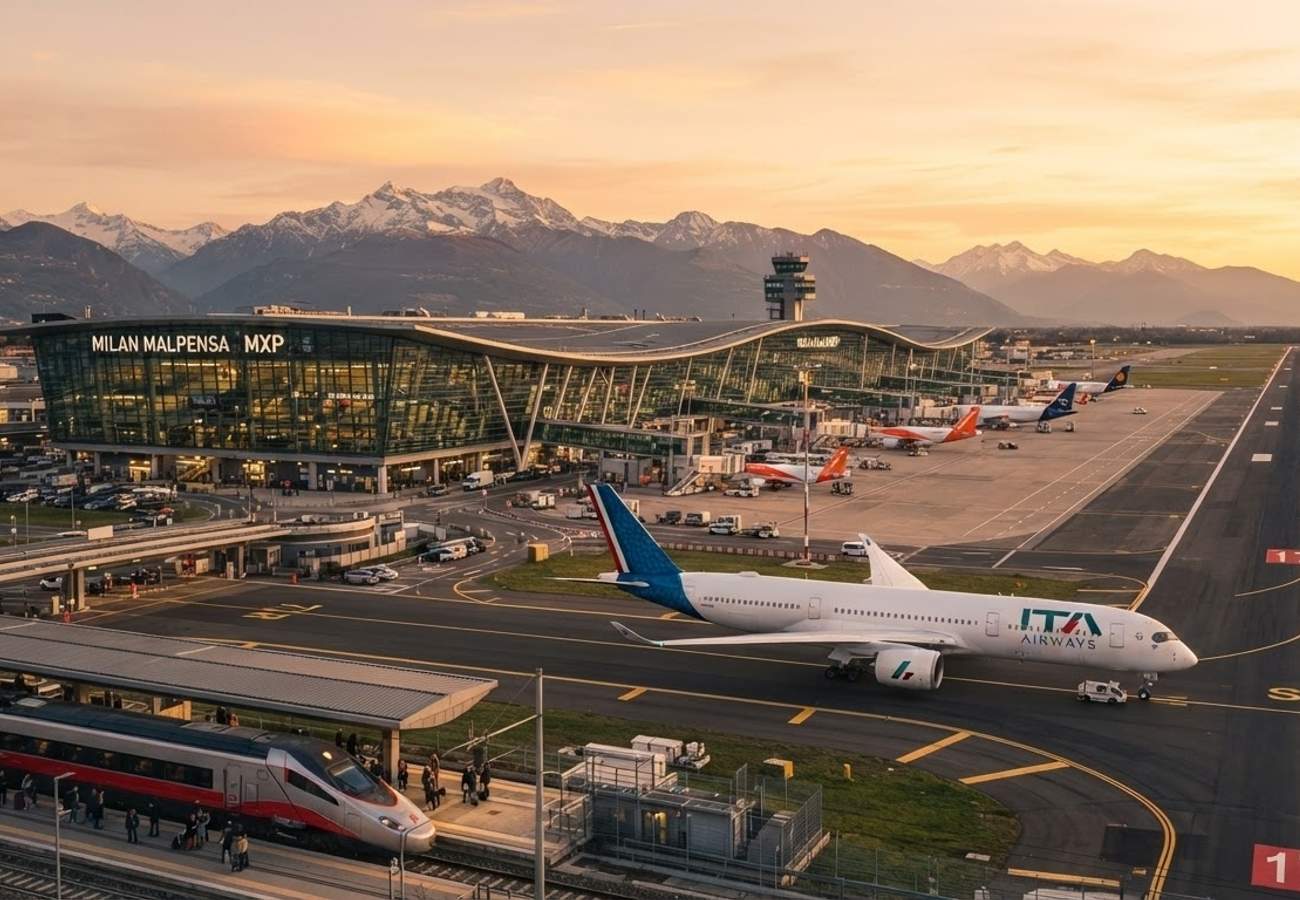
Image generated by AI
Milan Malpensa (MXP) remains the primary international gateway to Northern Italy and the Alps. For travelers landing in 2026, understanding the distinct operational split between Terminal 1 and Terminal 2 is the only way to avoid costly transit delays.
Terminal Infrastructure and Operational Split
Milan Malpensa (MXP) is positioned 45 to 50 kilometers northwest of Milan's city center. The airport operates via two distinct passenger terminals that are not within walking distance of each other.
Terminal 1 serves as the primary hub for full-service, long-haul, and intercontinental carriers. This terminal is divided into three boarding areas (A, B, and C), categorized by Schengen and non-Schengen flight paths. If you are flying with Emirates, Delta, or Singapore Airlines, or utilizing European network carriers like ITA Airways and the Lufthansa Group, your operations will be centered here.
Terminal 2 is a dedicated facility utilized almost exclusively by easyJet. The terminal is more compact but experiences high-density congestion during peak departure windows. Because easyJet schedules flights in tight clusters, security queues can escalate rapidly during early morning windows.
A free shuttle bus connects the two terminals throughout the day and night, typically running every 15 to 20 minutes during daylight hours. The shuttle stop at Terminal 1 is located on the lower level near the Sheraton Milan Malpensa Airport Hotel. Travelers who arrive at the wrong terminal should budget an additional 15 to 30 minutes for the shuttle transfer and security clearance.
Transit Specifications and Costs
Navigating the transition from the tarmac to the city center requires choosing between rail, coach, or private hire. The Malpensa Express is the gold standard for reliability.
| Transit Mode | Destination | Approx. Cost (Adult) | Travel Time | Frequency |
|---|---|---|---|---|
| Malpensa Express | Milano Centrale | €15.00 | ~50 Minutes | Every 15-30 Mins |
| Malpensa Express | Milano Cadorna | ~48 Minutes | €15.00 | Every 15-30 Mins |
| Shuttle Bus | Milano Centrale | ~€10.00 | 60-70 Minutes | Every 20-30 Mins |
| Official Taxi | City Center | Fixed Fare (High) | Variable | On-Demand |
Traveler Logistics Guide: Navigating MXP
From a ground-level perspective, the most common mistake first-time visitors make is confusing Malpensa (MXP) with Linate (LIN) or Bergamo Orio al Serio (BGY). These are three separate airports in different geographical locations. Always verify the airport code on your booking.
Optimizing the City Connection If your accommodation is located near the Duomo, Brera, or Sforza Castle, avoid the train to Milano Centrale. Instead, take the Malpensa Express to Milano Cadorna. This allows you to access metro lines M1 and M2 immediately, bypassing the heavy congestion and long walks associated with the Centrale station.
Connecting Flight Strategy If you are on a self-transfer (separate tickets) between a long-haul flight in Terminal 1 and an easyJet flight in Terminal 2, you must clear immigration and customs, collect baggage, and then take the shuttle bus. From a logistics standpoint, a minimum layover of three hours is required to mitigate the risk of flight delays and terminal transfer times.
Ground Transport Safety Always utilize the official taxi ranks located outside the arrivals hall. Avoid any unsolicited drivers operating inside the terminal building. For those renting vehicles, desks for Hertz, Avis, Europcar, and Sixt are available in both terminals, with vehicles located in the connected multi-storey car parks.
Regional Connectivity Impact
The strategic positioning of MXP makes it the ideal departure point for travelers bypassing Milan entirely. Because the airport sits adjacent to major motorways leading toward Turin, Lake Como, and the Piedmont wine region, renting a car directly from the airport is significantly more efficient than attempting to navigate a rental vehicle out of Milan's ZTL (Limited Traffic Zones).
The integration of the Malpensa Express with the city's metro system ensures that the airport remains a viable hub for high-frequency business travel and tourism, though the reliance on a two-terminal system requires precise planning by the passenger.
Precision in terminal selection is the difference between a seamless arrival and a two-hour transit headache.
Related Travel Guides
Disclaimer
This article is for informational and educational purposes only. It does not constitute legal, financial, or professional advice. While we strive to provide accurate and up-to-date information, travel policies, regulations, and conditions change rapidly. Always verify information with official sources before making travel decisions. Nomad Lawyer makes no representations about the accuracy, reliability, completeness, or suitability of the information provided. Readers should consult qualified professionals for advice specific to their circumstances. The views expressed in this article are those of the author and do not necessarily reflect the views of Nomad Lawyer.
Raushan Kumar
Founder & Lead Developer
Full-stack developer with 11+ years of experience and a passionate traveller. Raushan built Nomad Lawyer from the ground up with a vision to create the best travel and law experience on the web.
Learn more about our team →