
Middle East Peace Alert 2026: Bahrain and 6 Nations Press Iran for US-MOU Breakthrough
A powerful coalition including Bahrain, Saudi Arabia, and Qatar is pressuring Iran to sign a historic MOU with the US to end regional strikes, lift the Hormuz blockade, and revitalize global energy trade and travel.

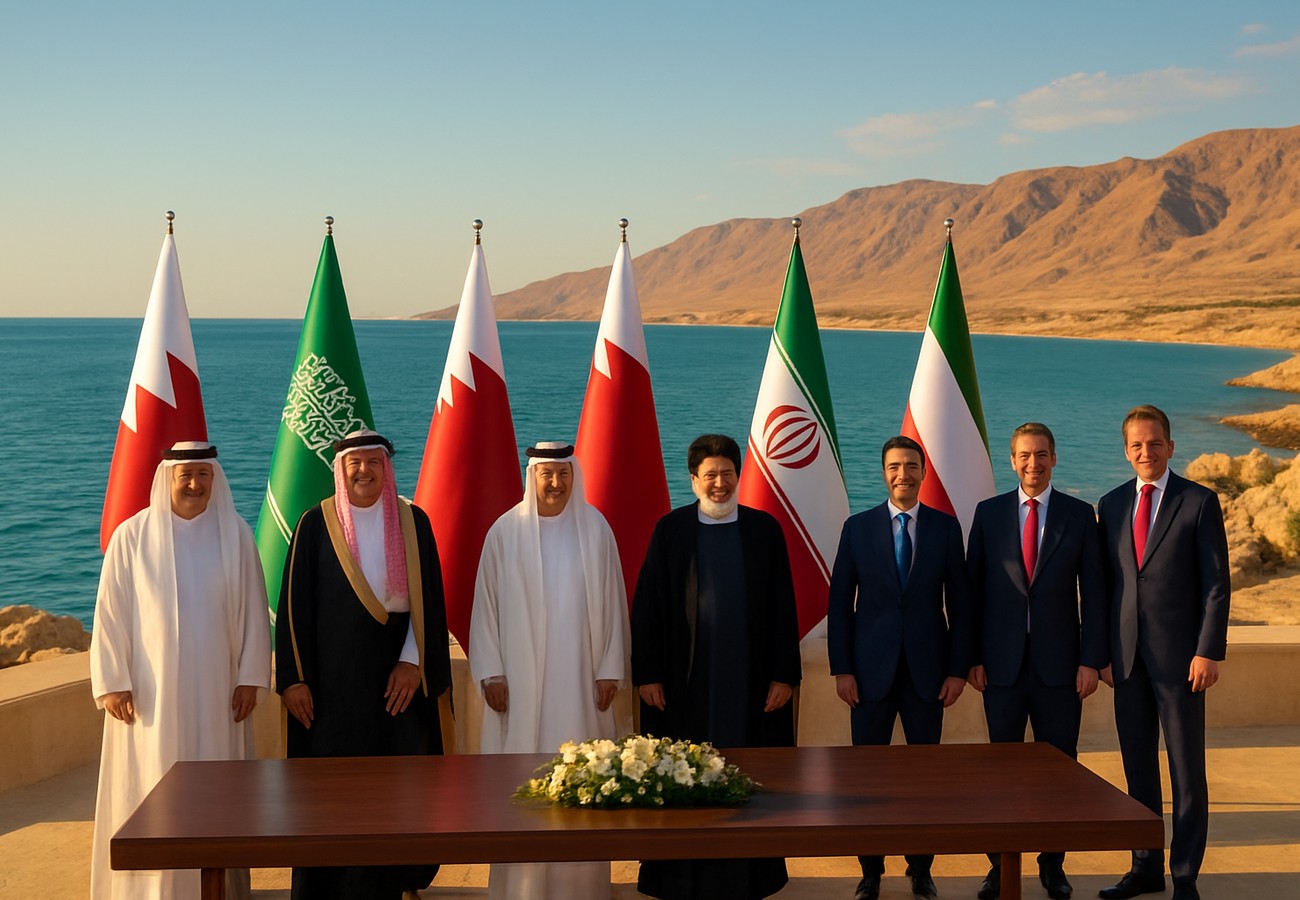
Image generated by AI
Quick Summary
- Diplomatic Pressure: Bahrain, Qatar, Turkey, Saudi Arabia, UAE, Egypt, and Iraq have formed a unified front to urge Iran to sign a Memorandum of Understanding (MOU) with the United States.
- Conflict Resolution: The MOU aims to halt all cross-border strikes, end the naval blockade of the Strait of Hormuz, and freeze nuclear enrichment for 12–15 years.
- Economic Rewards: In exchange, the US would lift primary sanctions and release billions in frozen Iranian assets, sparking a surge in LNG and LPG trade.
- Tourism Surge: The agreement is expected to revitalize regional travel corridors, restoring confidence in major hubs like Dubai, Doha, and Istanbul.
The Middle East is standing on the precipice of a generation-defining diplomatic breakthrough in May 2026. A powerful coalition of regional states—led by Bahrain, Saudi Arabia, and Qatar—has intensified a coordinated pressure campaign on Tehran to finalize a historic Memorandum of Understanding (MOU) with the United States. This landmark deal is designed to serve as a blueprint for permanent regional stability, immediately halting the cross-border strikes that have paralyzed global energy markets for months. By securing the formal reopening of the Strait of Hormuz and restoring LNG/LPG connectivity, the MOU promises to transform the region from a zone of conflict into a unified corridor of trade and high-end tourism. As leaders in Riyadh and Abu Dhabi emphasize the necessity of this pact for their long-term economic visions, the world’s energy markets are reacting with cautious optimism to the prospect of a "New Era of Gulf Cooperation."
Proposed Iran-US MOU 2026: Key Terms and Regional Benefits
The following table summarizes the core components of the diplomatic framework currently under negotiation.
| Deal Component | Term for Iran | US / Regional Commitment |
|---|---|---|
| Nuclear Stance | 12–15 Year Enrichment Freeze | Release of billions in frozen assets |
| Military Action | Cessation of all strikes | Lifting of the Hormuz naval blockade |
| Energy Trade | Resumed LNG/LPG exports | Removal of primary economic sanctions |
| Connectivity | Reopening of travel corridors | Restoration of regional aviation hubs |
| Regional Status | Diplomatic reconciliation | Integration into Gulf energy frameworks |
The MOU Framework: Halting Strikes and Lifting the Hormuz Blockade
The proposed agreement focuses on the immediate stabilization of the world's most critical transit route:
- Ending Hostilities: The primary goal is the immediate cessation of missile and drone strikes that have targeted infrastructure across the UAE and Saudi Arabia.
- Strait of Hormuz: The mutual agreement to lift the blockade is seen as the "linchpin" of the deal, essential for restoring 33% of the world's seaborne oil trade.
- Sanction Relief: The lifting of US sanctions would allow Iran to re-enter global energy markets, providing a massive liquidity boost to the region's economy.
A Unified Regional Front: National Stances from Bahrain to Egypt
Seven major nations are driving the diplomatic push:
- Bahrain’s Leadership: As a central Gulf dialogue hub, Bahrain is leveraging its neutral position to foster a "trust-building" environment between Washington and Tehran.
- Saudi Arabia’s Vision 2030: Riyadh views the MOU as essential for the stability required to achieve its economic diversification and tourism goals.
- Turkey’s Bridge Role: Ankara is advocating for the deal to unlock new trans-continental energy pipelines and boost Mediterranean-Gulf trade.
- UAE’s Hub Focus: Abu Dhabi and Dubai are prioritizing the restoration of travel corridors to ensure the continued growth of their global aviation and hospitality sectors.
Economic Transformation: Unlocking LNG, LPG, and Energy Trade
The MOU is expected to spark a massive surge in energy connectivity:
- LNG Connectivity: The agreement would allow for seamless LNG shipments from Qatar and Iran to global markets, stabilizing prices in Europe and Asia.
- LPG Trade: Resumed LPG trade would lower the cost of living and industrial production across the coalition nations, particularly in Egypt and Iraq.
- Supply Chain Restoration: The normalization of trade routes through the Gulf will allow for the development of multi-national regional supply chains that have been frozen since early 2026.
Tourism and Travel: Restoring Confidence in Global Hubs like Dubai and Doha
A stable Middle East is a prerequisite for the return of mass tourism:
- Aviation Resurgence: The end of cross-border tensions will allow major carriers like Emirates, Qatar Airways, and Turkish Airlines to restore 100% capacity.
- Safe-Travel Image: The MOU is seen as the ultimate "reassurance" for international travelers, particularly those who have avoided the region due to safety concerns.
- Cultural Exchange: Improved connectivity will facilitate a new wave of intra-regional travel, boosting heritage tourism in locations like Cairo, Petra, and AlUla.
The Role of Mediators: Qatar and Oman’s Indispensable Diplomacy
The success of the MOU hinges on the tireless efforts of regional mediators:
- Qatari Mediation: Doha has been the primary interlocutor, using its financial influence and diplomatic channels to bring both parties to a "workable consensus."
- Omani Backchannels: Oman continues to play its traditional role of providing a "quiet space" for the sensitive final-stage negotiations of the nuclear freeze.
- Iraqi Reconciliation: Baghdad is working to ensure that the agreement includes a framework for long-term security cooperation that prevents future regional proxy conflicts.
FAQ: Middle East Peace MOU 2026
What are the key terms of the proposed Iran-US MOU? The MOU proposes a 12-15 year nuclear enrichment freeze by Iran in exchange for the lifting of US sanctions, the release of frozen funds, and the reopening of the Strait of Hormuz.
How will this agreement affect travel and tourism? The cessation of strikes and the reopening of maritime and air corridors will restore global confidence, allowing aviation hubs like Dubai and Doha to return to full capacity.
Which countries are pressuring Iran to sign? A powerful regional bloc including Bahrain, Qatar, Turkey, Saudi Arabia, UAE, Egypt, and Iraq is leading the diplomatic push.
Related Travel Guides
Disclaimer
This article is for informational and educational purposes only. It does not constitute legal, financial, or professional advice. While we strive to provide accurate and up-to-date information, travel policies, regulations, and conditions change rapidly. Always verify information with official sources before making travel decisions. Nomad Lawyer makes no representations about the accuracy, reliability, completeness, or suitability of the information provided. Readers should consult qualified professionals for advice specific to their circumstances. The views expressed in this article are those of the author and do not necessarily reflect the views of Nomad Lawyer.
Kunal K Choudhary
Co-Founder & Contributor
A passionate traveller and tech enthusiast. Kunal contributes to the vision and growth of Nomad Lawyer, bringing fresh perspectives and driving the community forward.
Learn more about our team →