
Middle East Aviation Gridlock: 1,725 Delays and 121 Cancellations Hit Istanbul, Gulf Hubs, and Saudi Gateways

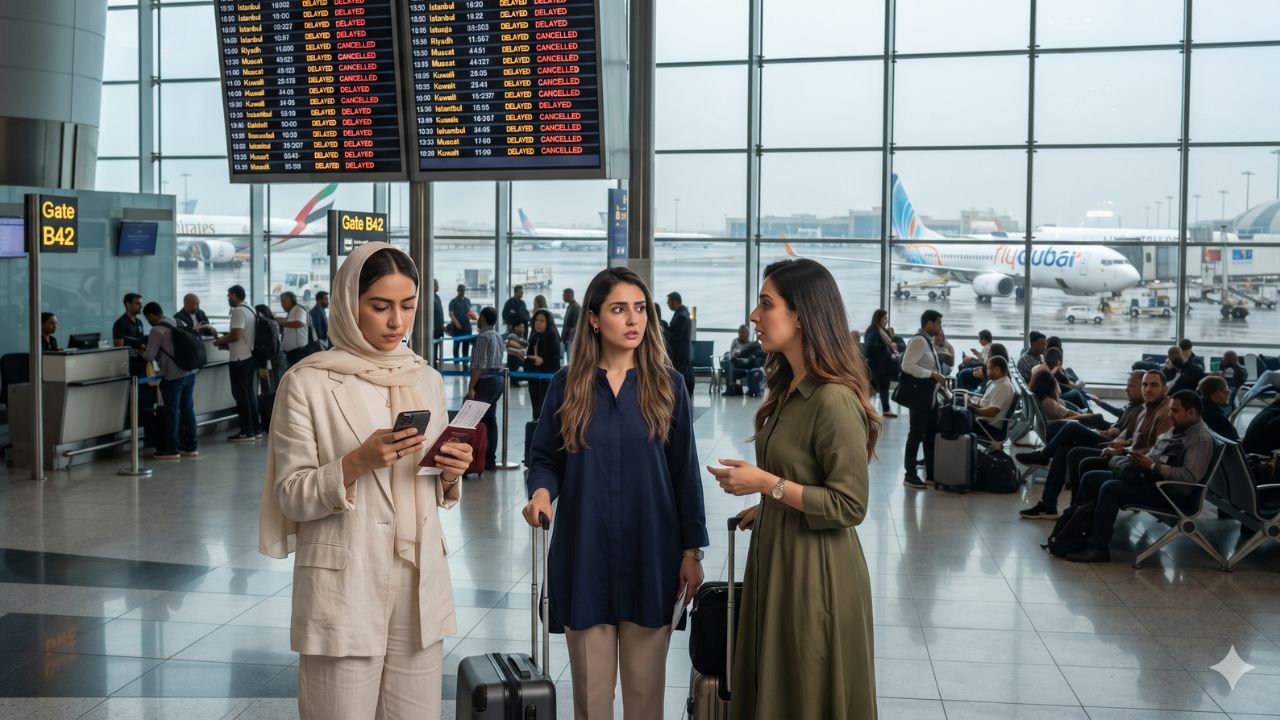
A compounding wave of 1,725 flight delays and 121 cancellations swept across 15 premier Middle Eastern aviation hubs on October 16, 2026, fracturing intercontinental transit corridors as severe meteorological storms in Turkey collided with acute airspace security restrictions over Saudi Arabia. Real-time flight tracking intelligence compiled through FlightAware as of 3:34 pm Eastern Time (ET) confirmed that Istanbul Airport absorbed the region's heaviest delay volume with 481 delayed flights and 9 cancellations, while King Abdulaziz International Airport in Jeddah logged the highest cancellation tally with 26 grounded operations. Across regional carriers, Turkish Airlines recorded 480 delays affecting 29% of its flights, while low-cost operator Air Arabia suffered a region-wide high delay rate of 38% across 90 flights.
The synchronized disruptions highlight the operational vulnerability of the world's most critical transit bridge between Europe, Asia, and Africa. Because mega-hubs like Dubai, Doha, Abu Dhabi, and Istanbul rely on tightly calibrated passenger transfer banks, external shocks—whether atmospheric gales in the Bosporus or military airspace closures across the Arabian Peninsula—rapidly cascade through flight timetables. For international business travelers, long-haul tourists, and connecting passengers, understanding the root causes of these disruptions is vital for managing layover risks and securing mandatory carrier duty-of-care protections.
Dual-Front Pressures: Bosporus Severe Storms and Arabian Peninsula Airspace Holds
The operational crisis unfolded along two distinct geographic and regulatory axes, testing airline contingency planning from the Mediterranean to the Persian Gulf.
In Turkey, severe autumnal weather systems brought torrential downpours and powerful wind gusts across the Marmara region. Istanbul Airport recorded 481 delays and 9 cancellations, while Sabiha Gökçen International Airport registered 168 delays and 10 cancellations. Together, Istanbul's dual airport network generated 649 delays and 19 cancellations. The adverse weather forced air traffic control to widen runway separation intervals, forcing incoming long-haul aircraft into extended holding patterns and triggering missed departure slots across Europe.
Concurrently, civil aviation operations across Saudi Arabia encountered severe schedule contractions driven by emerging security concerns and tactical airspace restrictions. Airlines were forced to implement pre-emptive flight halts and reroute aircraft away from restricted air corridors:
- Jeddah (King Abdulaziz International Airport): Recorded 166 delays and 26 cancellations, with an origin cancellation rate of 2% and a destination cancellation rate of 4%.
- Dammam (King Fahd International Airport): Registered 37 delays and 13 cancellations, with high cancellation rates of 6% at origin and 5% at destination.
- Riyadh (King Khalid International Airport): Logged 15 pre-emptive cancellations (4% origin, 3% destination) while operating zero delays, reflecting deliberate flight scrubbings to avoid ground holding congestion.
These airspace diversions added significant operational strain to Persian Gulf transit hubs. Dubai International Airport recorded 259 delays and 10 cancellations (1% destination cancellation rate). Hamad International Airport in Doha posted 112 delays and 16 cancellations (2% origin, 2% destination). In the United Arab Emirates, Zayed International Airport in Abu Dhabi recorded 109 delays and 2 cancellations, Sharjah International Airport logged 105 delays and 7 cancellations (1% origin, 2% destination), and Al Maktoum International Airport registered 11 delays and 1 cancellation.
Peripheral regional hubs also absorbed flight delays: Cairo International Airport logged 92 delays and 5 cancellations (1% destination), Israel's Ben Gurion Airport recorded 88 delays and 1 cancellation, Bahrain International Airport registered 40 delays and 2 cancellations, Queen Alia International Airport in Amman reported 30 delays and 3 cancellations, and Muscat International Airport recorded 27 delays and 1 cancellation.
| Airport Gateway & Location | Delays Recorded | Cancellations Recorded | Origin Cancellation Rate (%) | Destination Cancellation Rate (%) | Primary Operational Root Cause |
|---|---|---|---|---|---|
| Istanbul Airport (IST / Turkey) | 481 | 9 | 0% | 0% | Severe weather, torrential rain, and strong gusts across Marmara corridor |
| Dubai International (DXB / UAE) | 259 | 10 | 0% | 1% | Inbound transfer bank congestion and regional airspace rerouting |
| Sabiha Gökçen (SAW / Turkey) | 168 | 10 | 1% | 1% | High-density low-cost weather delays and runway flow constraints |
| King Abdulaziz (JED / Jeddah, Saudi Arabia) | 166 | 26 | 2% | 4% | Highest regional cancellations; tactical airspace holds and security curbs |
| Hamad International (DOH / Doha, Qatar) | 112 | 16 | 2% | 2% | Rerouting detours around restricted Arabian airspace; transfer bank holding |
| Zayed International (AUH / Abu Dhabi, UAE) | 109 | 2 | Negligible | Negligible | Inbound long-haul schedule recovery; gate holds on European departures |
| Sharjah International (SHJ / UAE) | 105 | 7 | 1% | 2% | High percentage budget schedule slippage across regional trunk lines |
| Cairo International (CAI / Egypt) | 92 | 5 | 0% | 1% | Levant and Red Sea route adjustments; domestic turnaround holds |
| Ben Gurion (TLV / Israel) | 88 | 1 | Negligible | Negligible | Regional airspace rerouting and military flight corridor sequencing |
| King Fahd (DMM / Dammam, Saudi Arabia) | 37 | 13 | 6% | 5% | Eastern province airspace restrictions; pre-emptive schedule cancellations |
| King Khalid (RUH / Riyadh, Saudi Arabia) | 0 | 15 | 4% | 3% | Pre-emptive tactical cancellations to protect airport ground operations |
This performance matrix confirms that schedule degradation was concentrated in hubs managing high-density regional point-to-point connections alongside intercontinental transit banks.
Carrier Performance: Fleet Utilization and Schedule Attrition
The operational breakdown placed severe pressure on carrier fleets, with low-cost carriers operating tight turnaround schedules experiencing the highest relative disruption rates.
Air Arabia registered a 38% delay rate across 90 delayed flights and 7 cancellations (3% cancellation rate), marking the highest delay rate among all reviewed airlines. Saudi flag carrier Saudia followed closely with a 35% delay rate across 85 delays and 3 cancellations (1%). Dubai-based flydubai reported 87 delays, representing a 32% delay rate, alongside 1 cancellation.
Among full-service global network carriers, Turkish Airlines bore the brunt of Istanbul's weather crisis, logging 480 delays (29% of its flights) and 8 cancellations. Low-cost Turkish operator Pegasus Airlines recorded 159 delays (21%) and 8 cancellations (1%).
Emirates reported 127 delays (24% of flights) and 2 cancellations, absorbing significant gate holds in Dubai. Qatar Airways recorded 108 delays (16%) and 16 cancellations (2%), reflecting flight realignments around Saudi airspace. Other regional carriers experienced targeted disruptions: EgyptAir logged 32 delays (12%) and 6 cancellations (2%); Oman Air reported 17 delays (15%) and 3 cancellations (2%); Saudi budget arm flyadeal registered 17 delays (8%) and 2 cancellations (1%); Royal Jordanian posted 1 delay and 2 cancellations (1%); and Syrian carrier Fly Cham suffered 2 cancellations across a small operational base, equating to a 25% cancellation rate.
Expert Analysis: Airspace Fragmentation, Transit Vulnerabilities, and Passenger Protections
For travelers booking multi-leg transit itineraries through Dubai, Doha, or Abu Dhabi, the direct consequence of regional delay rates surpassing 30% is a widespread breakdown in minimum connection times (MCT). Gulf transit hubs operate on optimized 60- to 90-minute layover buffers. When tactical airspace reroutings over Saudi Arabia add 25 to 45 minutes of detour flight time, incoming long-haul aircraft touch down after their connecting departure flights have closed boarding gates.
The operational bottleneck this creates means passengers missing onward long-haul flights to North America, Western Europe, or Southeast Asia face prolonged transit holding periods. Because commercial load factors during autumn travel peaks exceed 85%, finding available empty seats across subsequent flights often requires layovers of 24 to 48 hours.
Navigating these disruptions requires understanding the governing regulatory frameworks. Under the General Authority of Civil Aviation (GACA Saudi Arabia) passenger protection regulations, travelers facing involuntary cancellations or major delays within Saudi airspace are entitled to immediate alternate transport, full ticket refunds, and complimentary hotel accommodation and meals during prolonged delays, provided the cause is within carrier control. However, when cancellations stem from verified airspace security restrictions or extreme meteorological hazards, airlines cite extraordinary circumstances (force majeure), which legally limits cash compensation while preserving statutory duty-of-care obligations.
According to carriage standards established by the International Air Transport Association (IATA), passengers holding single through-tickets remain fully protected: the issuing airline must rebook the passenger on the next available service at no additional expense and provide transit accommodation during overnight delays. Conversely, travelers holding unbundled, separately booked tickets (self-connecting between low-cost carriers like Air Arabia or Pegasus and long-haul airlines) bear the full financial liability of misconnecting. If an incoming flight is delayed, downstream carriers classify the traveler as a no-show, forfeiting the ticket balance.
Passengers navigating current Middle Eastern flight disruptions should adopt disciplined defensive measures:
- Continuously verify flight radar status and airline app notifications prior to departing for the airport.
- For connecting itineraries involving different airlines, confirm baggage interline transfer agreements at initial check-in to avoid re-checking bags during tight transfers.
- Secure formal written confirmation of delay causes from station managers to support comprehensive travel insurance claims.
- Retain all itemized receipts for hotel rooms, meals, and emergency ground transport incurred during involuntary transit layovers.
Key Takeaways
- Widespread Regional Gridlock: Over 1,725 flight delays and 121 cancellations impacted 15 major airports across Turkey, Saudi Arabia, the UAE, Qatar, Egypt, Israel, Bahrain, Jordan, and Oman on October 16, 2026.
- Dual Disruptive Drivers: Operational breakdowns were caused by severe storms in Istanbul (649 combined delays across IST and SAW) and tactical airspace security holds across Saudi Arabia.
- Jeddah and Riyadh Groundings: King Abdulaziz Airport in Jeddah led regional cancellations with 26 flights scrubbed, while Riyadh logged 15 pre-emptive cancellations.
- High Carrier Delay Rates: Air Arabia posted a regional high delay rate of 38%, followed by Saudia at 35% and flydubai at 32%, underscoring fleet turnaround strain.
- Single-Ticket Protection Imperative: Connecting passengers on unified airline tickets are entitled to free rebooking and transit hotel care, whereas self-connecting travelers risk total ticket forfeiture upon missing onward departures.
FAQ: Middle East Flight Cancellations and Delays 2026
What caused the flight delays and cancellations across Middle Eastern airports?
Disruptions were caused by severe weather storms, heavy rain, and high wind gusts across Istanbul, combined with security-related airspace restrictions that altered flight paths across Saudi Arabia.
Which airport recorded the highest number of flight delays?
Istanbul Airport recorded the highest delay count in the region, with 481 delayed flights and 9 cancellations due to adverse weather holding patterns.
Are airlines required to provide hotel accommodation during weather or airspace delays?
Under international aviation carriage rules, airlines operating single through-tickets must provide duty-of-care support, including transit hotel accommodations and meals, when delays force overnight layovers.
What should self-connecting passengers do if their first flight is delayed?
Passengers traveling on separate tickets should contact their onward airline immediately. Because separate tickets lack misconnection protection, travelers must rely on comprehensive travel insurance to claim rebooking expenses.
By anticipating airspace bottlenecks and leveraging statutory carrier protections, international travelers can navigate Middle Eastern aviation disruptions with minimal financial risk.
Related Travel Guides
Disclaimer
This article is for informational and educational purposes only. It does not constitute legal, financial, or professional advice. While we strive to provide accurate and up-to-date information, travel policies, regulations, and conditions change rapidly. Always verify information with official sources before making travel decisions. Nomad Lawyer makes no representations about the accuracy, reliability, completeness, or suitability of the information provided. Readers should consult qualified professionals for advice specific to their circumstances. The views expressed in this article are those of the author and do not necessarily reflect the views of Nomad Lawyer.
Naina Thakur
Contributor & Travel Specialist
Travel enthusiast and legal writer covering visa regulations, responsible tourism, and cultural journeys across global destinations.
Learn more about our team →