
Middle East Flight Disruptions 2026: Emirates 70%, Etihad 65%, Qatar Airways Expanding Post-Ceasefire
US-Iran ceasefire signed 7 April 2026 stabilizes Middle East aviation, but Emirates, Etihad, Qatar Airways operate reduced schedules. Dubai, Abu Dhabi, Doha airports face ongoing delays.

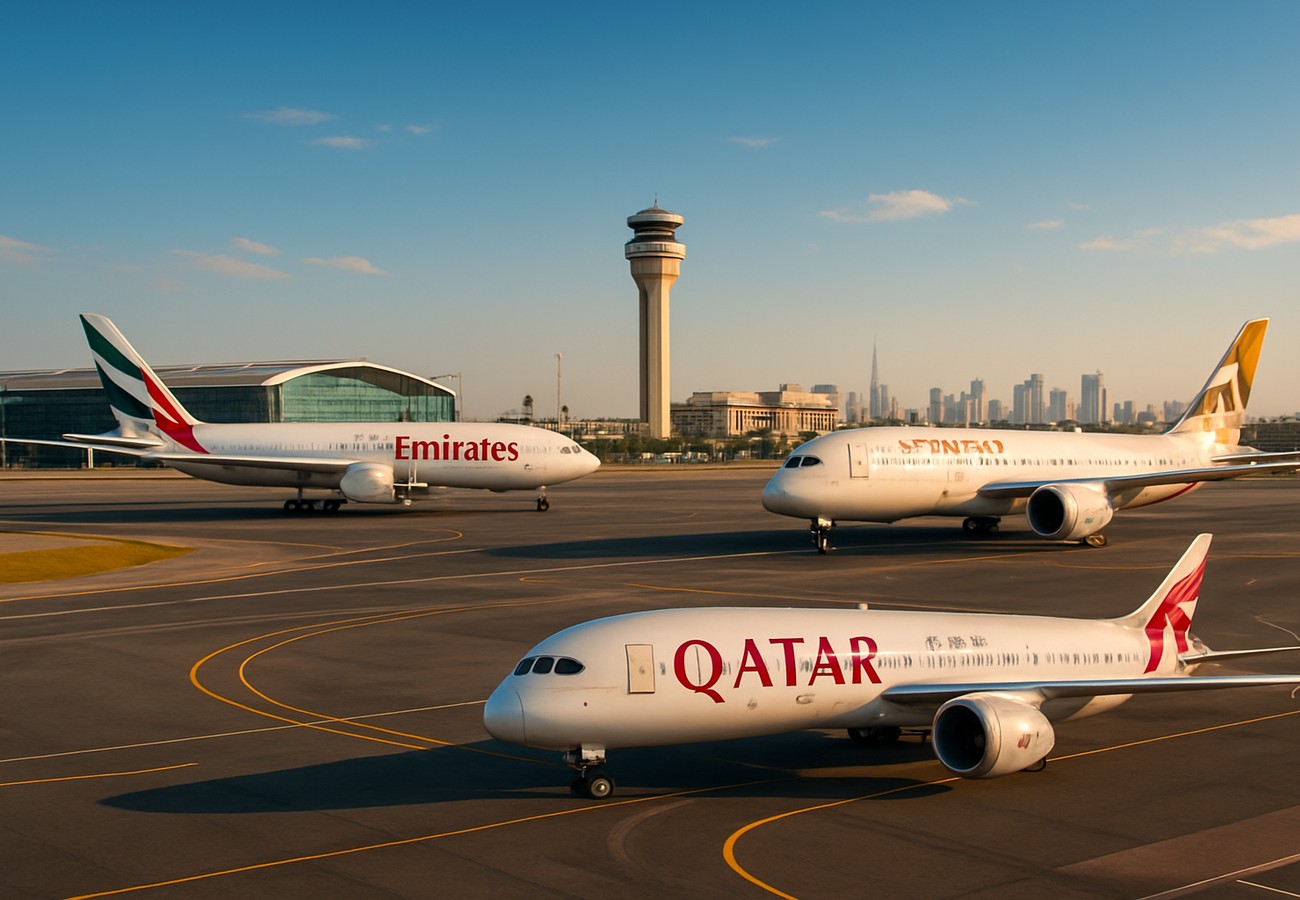
Image generated by AI
The ceasefire promised relief, but Middle Eastern aviation hubs remain in operational chaos—Emirates operating at just 70% capacity, Etihad Airways at 65%, and passengers navigating a landscape of cancellations, reroutes, and hidden delays even as the US-Iran ceasefire agreement signed 7 April 2026 theoretically stabilizes the region.
Why This Matters
The US-Iran ceasefire agreement, signed on 7 April 2026, reopened Bahrain and Iraq's airspace for the first time since conflict onset, allowing carriers like Gulf Air and Iraqi Airways to resume limited operations. Yet critical airspace in Iran and Kuwait remains closed to commercial flights, leaving major hubs—Dubai International Airport (DXB), Abu Dhabi's Zayed International Airport (AUH), and Doha's Hamad International Airport (DOH)—trapped in operational limbo.
The aviation industry remains in flux despite the ceasefire's symbolic progress. Travelers heading to or from the Middle East face unpredictable disruptions throughout this stabilization period, with no clear timeline for full recovery.
Airlines and Airports Affected: The Capacity Crisis
| Airline | Current Capacity | Destinations Served | Status |
|---|---|---|---|
| Emirates | 70% of normal schedule | Reduced network | Operating with delays |
| Etihad Airways | 65% of pre-crisis schedule | 80 destinations | Limited services |
| Qatar Airways | Expanding operations | 120+ destinations | Gradual ramp-up |
| flydubai | Reduced schedule | Regional routes | Fluid operations |
| Air France | 0% (suspended) | All Middle East routes | Until 3 May 2026 |
| British Airways | Significantly reduced | Doha, Dubai suspended | Winter season impact |
| Lufthansa | Canceled routes | Riyadh, Dammam, others | Until late May 2026 |
Emirates, one of the region's most prominent carriers, has been operating at just 70% of its normal schedule, with passengers urged to check flight statuses even after checking in. Etihad Airways has scaled back operations to 65% of its pre-crisis schedule with limited services to 80 destinations. Qatar Airways is gradually ramping up, currently providing flights to more than 120 destinations, with plans to expand as conditions stabilize.
flydubai has resumed operations with a reduced schedule; passengers must confirm flights before heading to the airport. Gulf Air has resumed services to select destinations but adjusted schedules based on current airspace conditions.
Airspace Closures and European Carrier Suspensions
Kuwait Airways and Jazeera Airways have halted operations from Kuwait International Airport (KWI), forcing passengers to reroute through Dammam, Saudi Arabia. Operational flights are being rerouted through longer paths, adding extra hours and requiring technical stops and fuel adjustments—particularly for low-cost carriers from Dubai and Abu Dhabi.
European carriers face severe restrictions. Air France has suspended all flights to Middle Eastern destinations until 3 May 2026. British Airways has slashed its schedule and suspended flights to Doha and Dubai for the remainder of the winter season. Lufthansa has canceled flights to Riyadh, Dammam, and other key Middle Eastern cities until late May. These cancellations disrupt long-haul travelers connecting through Middle Eastern hubs, forcing exploration of alternative routes.
What Travelers Get
- Emirates rebooking flexibility: No penalties for date or route changes; confirm status even after check-in due to ongoing schedule volatility.
- Etihad's 80-destination network: Limited but operational services; expect 35% capacity reduction and potential technical stops.
- Qatar Airways expansion: 120+ destinations currently served with gradual increases; most reliable option for Middle East connectivity.
- Air France suspension window: All Middle East routes suspended until 3 May 2026; rebooking to alternative carriers required.
- Rerouting surcharges: Longer flight paths via Saudi Arabia and alternative hubs may incur additional fuel charges for budget carriers.
What This Means for Travelers
Book with airlines offering maximum flexibility—Qatar Airways currently provides the most stable schedule with 120+ destinations. Verify flight status 24 hours before departure, not just at check-in, as Middle Eastern airspace remains subject to immediate closure. Consider rerouting through European hubs (London, Paris, Frankfurt) rather than Dubai or Abu Dhabi if your final destination is Europe; this avoids the Middle Eastern bottleneck entirely. Allow 4-6 extra hours for journey duration due to longer flight paths and technical stops. Monitor IATA official guidance and ICAO airspace updates for real-time airspace status before finalizing travel plans.
FAQ: Middle East Flight Disruptions 2026
Q: When will Emirates and Etihad return to full capacity? A: No official timeline exists. Emirates operates at 70%, Etihad at 65%. Recovery depends on sustained airspace reopenings beyond the ceasefire agreement signed 7 April 2026.
Q: Can I get a refund if my flight to Dubai is canceled? A: Most airlines offer rebooking without penalties or full refunds. Contact your airline directly; policies vary by carrier and booking class.
Q: Which Middle Eastern airports are safest to transit through right now? A: Doha (DOH) via Qatar Airways is most stable with 120+ destinations. Dubai (DXB) and Abu Dhabi (AUH) face 30-35% capacity reductions.
Related Travel Guides
Disclaimer
This article is for informational and educational purposes only. It does not constitute legal, financial, or professional advice. While we strive to provide accurate and up-to-date information, travel policies, regulations, and conditions change rapidly. Always verify information with official sources before making travel decisions. Nomad Lawyer makes no representations about the accuracy, reliability, completeness, or suitability of the information provided. Readers should consult qualified professionals for advice specific to their circumstances. The views expressed in this article are those of the author and do not necessarily reflect the views of Nomad Lawyer.
Kunal K Choudhary
Co-Founder & Contributor
A passionate traveller and tech enthusiast. Kunal contributes to the vision and growth of Nomad Lawyer, bringing fresh perspectives and driving the community forward.
Learn more about our team →