
Middle East Aviation Disrupted as Airports Record 1,261 Delays and 59 Cancellations
Airspace rerouting and network congestion caused 1,261 flight delays and 59 cancellations across Middle East hubs including Dubai, Riyadh, and Abu Dhabi.

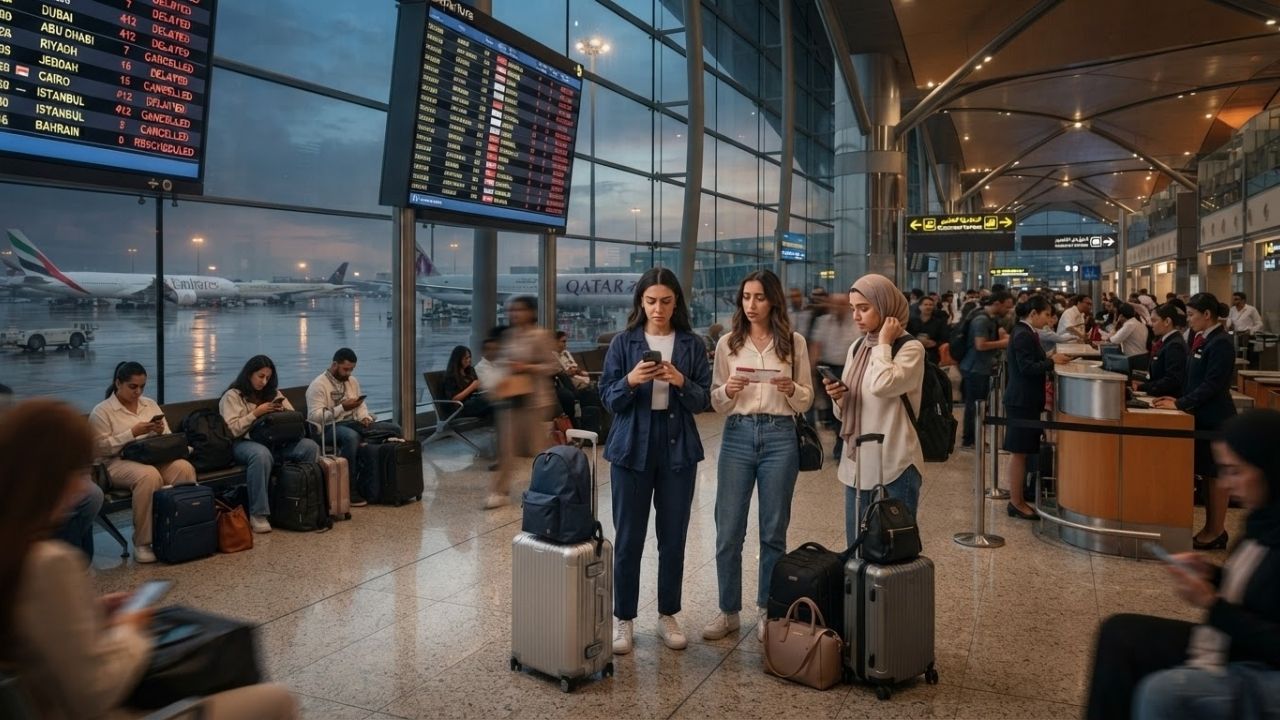
Image generated by AI
Commercial aviation across the Middle East faces ongoing schedule pressures, with real-time flight tracking data recording 1,261 delays and 59 cancellations across 11 primary airports. Major transit gateways—including Dubai, Abu Dhabi, Riyadh, Jeddah, Cairo, and Istanbul—experienced significant operational backlogs.
UAE Transit Gateways Experience High Delay Volume: Dubai, Abu Dhabi, and Sharjah
[DUBAI, United Arab Emirates] — Flight tracking data compiled on August 31, 2026, highlights operational pressure across primary Middle Eastern connecting hubs. Regional airspace rerouting, indirect flight paths, tight turnaround windows, and hub congestion contributed to widespread delays.
Airports in the United Arab Emirates recorded the highest total delay volume:
- Dubai International Airport (DXB): Recorded 412 delays and 7 cancellations, single-handedly accounting for nearly one-third of all delays in the regional dataset. Flydubai registered 145 delayed flights—a 43 percent delay rate across its schedule—alongside 2 cancellations.
- Abu Dhabi International Airport (AUH): Logged 178 delays and 1 cancellation. Flag carrier Etihad Airways recorded 135 delayed flights, representing 38 percent of its operating schedule, alongside 1 cancellation.
- Sharjah International Airport (SHJ): Reported 78 delays and 3 cancellations, with low-cost operator Air Arabia logging 63 delays (24% delay rate) and 3 cancellations.
Combined, the three UAE hubs recorded 668 delays and 11 cancellations.
Saudi Arabia Accounts for 75% of Regional Flight Cancellations
While UAE airports recorded the highest delay numbers, airports in Saudi Arabia experienced the majority of schedule cancellations. The five listed Saudi airports collectively reported 207 delays and 44 cancellations—representing nearly three-quarters of all cancellations in the regional dataset.
Disruption metrics across Saudi Arabian gateways demonstrate distinct patterns between major hubs and regional airports:
- Major Hubs: King Khalid International Airport in Riyadh recorded 99 delays and 12 cancellations, while King Abdulaziz International Airport in Jeddah recorded 85 delays and 12 cancellations.
- Southern Regional Airports: Gizan Regional Airport recorded 8 cancellations with zero delays, Najran Domestic Airport registered 6 cancellations with zero delays, and Abha Regional Airport recorded 23 delays and 6 cancellations.
- Carrier Impact: National carrier Saudia recorded 22 cancellations (3% cancellation rate) and 41 delays (7% delay rate), representing the highest cancellation total among all listed regional airlines.
The schedule removals at Gizan and Najran reflect tactical fleet consolidation by airlines managing aircraft rotation issues and regional airspace restrictions.
Operations Across Istanbul, Cairo, and Bahrain International Airports
Major connecting hubs across neighboring transit corridors also experienced cascading delays from late-arriving aircraft and altered routings:
- Istanbul Airport (IST, Türkiye): Recorded 215 delays and 1 cancellation, registering the second-highest delay total in the region after Dubai. As a primary bridge between Europe, Asia, and the Middle East, flight holding in Istanbul impacts connecting itineraries worldwide.
- Cairo International Airport (CAI, Egypt): Logged 147 delays and 1 cancellation, influenced by late incoming long-haul aircraft and rerouted flight paths across the Red Sea corridor.
- Bahrain International Airport (BAH, Bahrain): Recorded 24 delays and 2 cancellations, with home carrier Gulf Air logging 11 delayed services (7% delay rate) and 2 cancellations.
The table below provides a full breakdown of recorded flight delays and cancellations across 11 key Middle Eastern airport gateways:
| Airport Gateway | Country | Recorded Flight Delays | Recorded Flight Cancellations | Primary Disruption Profile |
|---|---|---|---|---|
| Dubai International Airport (DXB) | United Arab Emirates | 412 Delays | 7 Cancellations | Highest regional delay volume & connecting hub congestion |
| Istanbul Airport (IST) | Türkiye | 215 Delays | 1 Cancellation | High transit delay volume on Europe–Asia–Middle East routes |
| Abu Dhabi International (AUH) | United Arab Emirates | 178 Delays | 1 Cancellation | Network delay cascading & aircraft rotation delays |
| Cairo International Airport (CAI) | Egypt | 147 Delays | 1 Cancellation | Late inbound arrivals & Red Sea corridor rerouting |
| King Khalid International (RUH) | Saudi Arabia (Riyadh) | 99 Delays | 12 Cancellations | Major hub cancellations & schedule consolidation |
| King Abdulaziz International (JED) | Saudi Arabia (Jeddah) | 85 Delays | 12 Cancellations | High cancellation volume & domestic connection drops |
| Sharjah International Airport (SHJ) | United Arab Emirates | 78 Delays | 3 Cancellations | Regional low-cost carrier delays |
| Bahrain International Airport (BAH) | Bahrain | 24 Delays | 2 Cancellations | Moderate regional delays & route adjustments |
| Abha Regional Airport (AHB) | Saudi Arabia | 23 Delays | 6 Cancellations | Regional schedule cancellations & reduced rotations |
| Gizan Regional Airport (GIZ) | Saudi Arabia | 0 Delays | 8 Cancellations | Direct schedule cancellations without operational delays |
| Najran Domestic Airport (EAM) | Saudi Arabia | 0 Delays | 6 Cancellations | Direct schedule cancellations without operational delays |
The table below outlines carrier-specific flight cancellations, cancellation rates, delayed sector counts, and overall delay percentages:
| Operating Airline | Country Base | Cancelled Flights | Cancellation Rate (%) | Delayed Flights | Delay Rate (%) | Operational Impact Summary |
|---|---|---|---|---|---|---|
| Saudia | Saudi Arabia | 22 Cancellations | 3% | 41 Delays | 7% | Highest overall regional cancellation volume |
| Flydubai | UAE | 2 Cancellations | 0% | 145 Delays | 43% | Highest overall delay volume & 43% delay rate |
| Etihad Airways | UAE | 1 Cancellation | 0% | 135 Delays | 38% | High operational delay rate on long-haul routes |
| Air Arabia | UAE | 3 Cancellations | 1% | 63 Delays | 24% | Regional low-cost schedule delays |
| Gulf Air | Bahrain | 2 Cancellations | 1% | 11 Delays | 7% | Lowest overall delay volume among listed carriers |
Action Plan for Disrupted Travelers
Passengers traveling through Middle Eastern airports can take proactive steps to safeguard their travel plans:
- Verify Flight Status Early: Check official carrier mobile applications and airline websites before departing for the airport, as departure gates and times change rapidly.
- Utilize Digital Rebooking Tools: Access self-service online tools to confirm alternative flight options immediately if a flight is cancelled or faces a severe delay.
- Secure Documentation: Keep copies of boarding passes, disruption notifications, and out-of-pocket receipts for meals or hotel stays to submit for insurance claims.
- Allow Buffer Time: Ensure extended layover buffers when booking connecting flights through Dubai, Abu Dhabi, Riyadh, Jeddah, Cairo, or Istanbul.
Why This Matters for Passengers and Middle East Flyers
For international passengers connecting through major Middle Eastern hubs, minor inbound delays can quickly jeopardize tight layover windows. Knowing that carriers like Flydubai and Etihad are experiencing delay rates near 40 percent helps travelers plan longer connection buffers. Requesting written disruption statements at the gate ensures smooth processing for hotel accommodations or travel insurance claims.
Frequently Asked Questions
What caused the 1,261 flight delays and 59 cancellations across Middle East airports?
The disruptions stem from a combination of security-related airspace reroutings, indirect flight paths, compressed ground turnaround windows, and heavy hub congestion at major airports.
Which airport recorded the highest number of flight delays?
Dubai International Airport (DXB) recorded the highest delay count in the region, with 412 delays and 7 cancellations, accounting for nearly one-third of all regional delays.
Which country recorded the highest number of flight cancellations?
Saudi Arabia accounted for nearly 75 percent of all regional cancellations, with 44 cancellations across Riyadh, Jeddah, Abha, Gizan, and Najran airports.
Related Travel Guides
Middle East Airport Transit and Layover Connection Guide
Dubai and Abu Dhabi Flight Delay Survival Guide
10 Essential Tips for Navigating Overseas Airport Disruptions
Disclaimer
This article is for informational and educational purposes only. It does not constitute legal, financial, or professional advice. While we strive to provide accurate and up-to-date information, travel policies, regulations, and conditions change rapidly. Always verify information with official sources before making travel decisions. Nomad Lawyer makes no representations about the accuracy, reliability, completeness, or suitability of the information provided. Readers should consult qualified professionals for advice specific to their circumstances. The views expressed in this article are those of the author and do not necessarily reflect the views of Nomad Lawyer.
Raushan Kumar
Founder & Lead Developer
Full-stack developer with 11+ years of experience and a passionate traveller. Raushan built Nomad Lawyer from the ground up with a vision to create the best travel and law experience on the web.
Learn more about our team →