
Middle East Conflict: 48% of Australians Reconsidering 2026 Trips
Nearly half of Australian travellers planning 2026 overseas trips have reconsidered their plans amid Middle East conflict disruptions. Survey data reveals generational divides, with Gen Z most affected while luxury travel remains resilient.

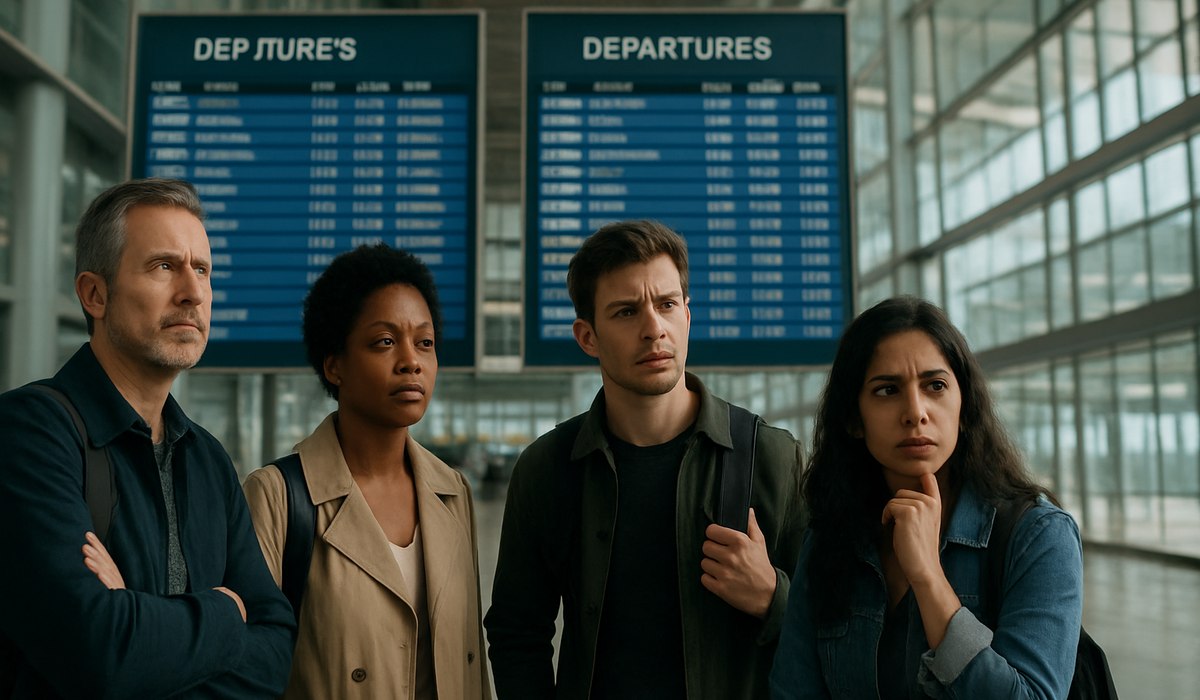
Image generated by AI
Lede
Nearly one in two Australian travellers planning international trips in 2026 have reconsidered, delayed, or cancelled their plans due to the middle east conflict and resulting airspace closures, according to recent research. The disruption is particularly impacting routes through Gulf nations destined for the United Kingdom and Europe, yet industry leaders maintain that rerouting—rather than outright cancellation—remains the prudent response. Luxury travel segments demonstrate notable resilience, suggesting that well-informed travellers can navigate geopolitical uncertainty effectively.
Survey Results: How Middle East Conflict Is Reshaping Australian Travel Plans
A comprehensive consumer study reveals that 48 per cent of Australians with confirmed 2026 overseas travel plans have modified their itineraries since the middle east conflict intensified. The data breaks down into meaningful segments: one-quarter delayed their journeys, 12 per cent cancelled outright, and 11 per cent adjusted destinations, routes, or layover cities. Conversely, 52 per cent of respondents indicated they would proceed with original 2026 travel arrangements unchanged.
This polarisation underscores the conflict's substantial but uneven impact across the travelling public. Those reconsidering trips represent a significant market shift, with travel advisors and booking platforms experiencing increased request volumes for alternative routing. The Australian Travel Industry Association and Council of Australian Tour Operators have jointly advocated for strategic rerouting, emphasising that most international destinations remain safely accessible via alternative corridors. Understanding these patterns helps travellers make informed decisions rather than abandoning 2026 plans prematurely.
For detailed information on affected routes, consult the ATIA travel advisory portal.
Generation Gap: Why Gen Z and Millennials Are Most Affected
Generational analysis reveals stark contrasts in how Australians respond to the middle east conflict travel uncertainty. Gen Z faces the highest alteration rate at 61 per cent, followed closely by Millennials at 57 per cent. Gen X shows moderate impact with 43 per cent changing plans, while Baby Boomers demonstrate the greatest stability, with only 36 per cent reconsidering their 2026 travel.
Conversely, older cohorts display greater travel commitment: 64 per cent of Baby Boomers and 57 per cent of Gen X maintain their original itineraries unchanged. Younger generations—39 per cent of Gen Z and 43 per cent of Millennials—show stronger reluctance to proceed with planned trips. This generational divide likely reflects differing risk tolerances, digital fluency in researching alternatives, and financial flexibility to reschedule bookings without penalty.
Travel advisors note that younger clients increasingly seek personalised guidance to understand viable alternative routes, demonstrating that education and expert support can mitigate concern-driven cancellations among demographics most prone to reconsidering their 2026 departure dates.
Reroute Not Cancel: Industry Guidance and Luxury Travel Resilience
Industry consensus firmly advocates rerouting over cancellation as the optimal response to the middle east conflict disruptions. Major advisory bodies emphasise that viable alternative flight paths exist for nearly all originally planned destinations. Significantly, the luxury travel segment demonstrates remarkable resilience, with only 7 per cent of premium clients cancelling bookings outright.
Premium cruise operators report cancellation rates described as "very low," suggesting that high-value travellers possess both the resources and determination to modify itineraries rather than forfeit 2026 travel plans entirely. This resilience contrasts with broader consumer hesitation, indicating that informed decision-making and professional guidance substantially reduce cancellation likelihood.
Travel advisors stressed that travellers should engage specialist support rather than unilaterally cancelling. Rerouting typically adds minimal time to journeys while avoiding financial penalties associated with cancellations. The message resonates particularly strongly among business travellers and premium leisure segments, where travel continuity holds paramount importance.
For booking modifications and alternative route exploration, visit Booking.com's flight search tool.
Route Changes and Cost Implications for 2026 Travellers
Among survey respondents whose 2026 travel plans included middle east conflict-affected regions, 46 per cent had originally routed trips through the Middle East as either a destination or essential transit point. The remaining 54 per cent had already identified alternative routing options, suggesting substantial pre-existing geographic flexibility among Australian travellers.
Route modifications carry tangible financial consequences. Extended flight paths involving alternative hubs—such as routing via Southeast Asian gateways instead of Gulf corridors—typically increase ticket costs by 8–15 per cent depending on origin and destination. However, these incremental expenses often prove substantially lower than rebooking penalties and cancellation losses incurred through outright plan abandonment.
Travellers reconsidering 2026 trips should request detailed cost comparisons from travel advisors before finalising cancellations. Price-protected rebooking options offered by major airlines and travel agencies can offset additional routing expenses. Early action—before peak 2026 travel season approaches—provides maximum negotiating leverage for favourable alternative arrangements without premium surcharges.
Key Data Table: Australian Travel Response to Middle East Conflict
| Metric | Percentage | Population |
|---|---|---|
| Changed, delayed, or cancelled 2026 plans | 48% | Travellers reconsidering |
| Delayed trip departure | 25% | Rescheduled for later 2026 |
| Cancelled plans outright | 12% | Abandoned 2026 travel |
| Changed destination/route/layover | 11% | Modified itinerary only |
| Proceeding with original plans | 52% | Unchanged 2026 bookings |
| Gen Z altering plans | 61% | Youngest demographic |
| Millennials reconsidering | 57% | Under 45 age group |
| Baby Boomers maintaining plans | 64% | Over 65 age group |
| Luxury clients cancelling | 7% | Premium travel segment |
| Originally routed via Middle East | 46% | Transit/destination focus |
| Pre-identified alternatives | 54% | Flexible routing availability |
What This Means for Travelers
The middle east conflict impact on 2026 Australian travel extends beyond simple yes-or-no destination decisions. Strategic responses enable confident, cost-effective international travel despite current geopolitical uncertainties. Consider these actionable approaches:
-
Engage professional guidance immediately. Travel advisors possess real-time routing intelligence and can identify cost-neutral alternatives tailored to your specific origin, destination, and schedule preferences. Professional support statistically reduces cancellation rates and financial losses.
-
Request cost-comparison analyses before deciding. Extended routing via Southeast Asian or European hubs may prove surprisingly cost-competitive compared to Middle East transit, especially when factoring potential cancellation penalties and rebooking surcharges.
-
Explore flexible rebooking options. Major airlines and travel agencies increasingly offer protected rebooking provisions allowing modification without substantial penalties, providing insurance against unexpected disruptions while maintaining 2026 travel plans.
-
Monitor official travel advisories continuously. Geopolitical situations evolve; route closures may ease or stabilise differently than current expectations suggest. Regular advisory monitoring ensures your 2026 plans incorporate current reality rather than outdated assessments.
-
Consider travel insurance upgrades. Comprehensive travel protection covering geopolitical disruptions provides financial security for committed 2026 bookings, enabling confidence despite ongoing middle east conflict uncertainties.
FAQ
Q: Will the middle east conflict affect all 2026 overseas travel from Australia?
A: No. The middle east conflict primarily impacts flights transiting Gulf nation airspace destined for Europe and the United Kingdom.
Disclaimer
This article is for informational and educational purposes only. It does not constitute legal, financial, or professional advice. While we strive to provide accurate and up-to-date information, travel policies, regulations, and conditions change rapidly. Always verify information with official sources before making travel decisions. Nomad Lawyer makes no representations about the accuracy, reliability, completeness, or suitability of the information provided. Readers should consult qualified professionals for advice specific to their circumstances. The views expressed in this article are those of the author and do not necessarily reflect the views of Nomad Lawyer.
Preeti Gunjan
Contributor & Community Manager
A passionate traveller and community builder. Preeti helps grow the Nomad Lawyer community, fostering engagement and bringing the reader experience to life.
Learn more about our team →