
Hundreds Passengers Grounded: Middle East Faces 480 Flight Disruptions Today
480+ flights cancelled or delayed across Middle East airports today as Bahrain, UAE, Qatar, Oman face largest 2026 disruption affecting thousands of passengers.

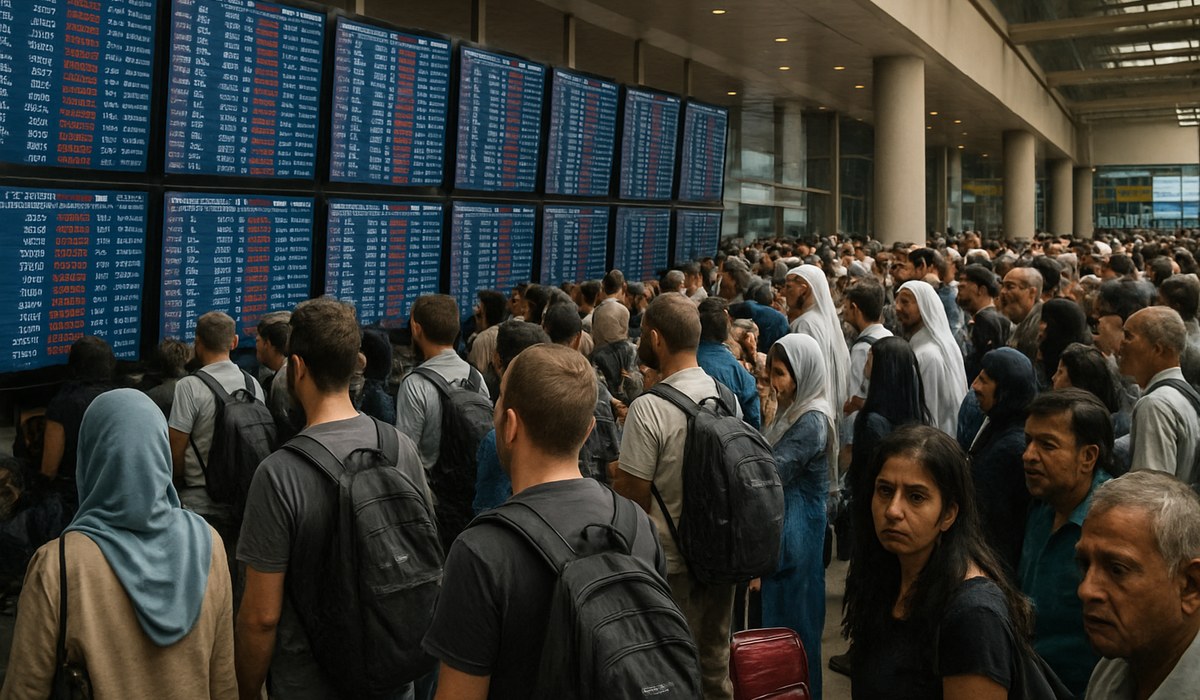
Image generated by AI
Quick Summary • 160 flights cancelled and 320 delayed across five Gulf nations on March 28, 2026 • Major carriers including Emirates, Saudia, Gulf Air, and KLM affected • Hub airports in Dubai, Jeddah, Doha, Muscat, and Manama experience cascading delays • Passengers entitled to rebooking, meals, and potential compensation under regional aviation laws
Over 480 flights were disrupted across the Middle East today, stranding thousands of passengers in Dubai, Jeddah, and other major hubs as a perfect storm of operational challenges hit Gulf carriers. According to FlightAware's live delay statistics, the region is experiencing its largest single-day aviation disruption of 2026, with 160 complete cancellations and 320 significant delays impacting travelers across five nations.
The chaos unfolded rapidly between 6:00 AM and noon Gulf Standard Time, overwhelming airline customer service centers and airport rebooking desks from Bahrain to Oman. This marks a stark departure from the typically efficient operations Middle Eastern carriers are known for, with some airlines reporting wait times exceeding four hours for passenger assistance.
Travelers connecting through Gulf hubs to European destinations including Athens and Frankfurt face particularly severe complications, as the disruptions create ripple effects throughout the global aviation network. This incident follows a pattern of increasing operational challenges in 2026, including Spain's strike-related travel disruptions earlier this month that affected thousands of international passengers.
What Caused Today's Mass Middle East Flight Disruptions
Aviation authorities have identified three converging factors behind today's unprecedented grounding of hundreds of passengers across the Middle East region. Unseasonable weather patterns brought unexpected sandstorms and low visibility conditions to multiple Gulf airports simultaneously, forcing air traffic controllers to implement strict spacing protocols that reduced runway capacity by approximately 40 percent.
Air traffic congestion reached critical levels at Dubai International Airport (DXB) and King Abdulaziz International Airport in Jeddah (JED), where slot coordination challenges created bottlenecks affecting both departures and arrivals. Technical issues with ground handling equipment at Hamad International Airport in Doha (DOH) compounded the situation, leaving several wide-body aircraft stuck at gates without proper servicing capabilities.
Regional aviation coordination mechanisms struggled to redistribute affected flights across alternative airports, as nearby facilities in Kuwait and Abu Dhabi were already operating near maximum capacity due to seasonal demand. The compounding effect of these factors created what industry analysts are calling the most significant operational failure in Gulf aviation since 2023.
Unlike technological disruptions seen with SriLankan Airlines' AI-powered system improvements, today's crisis stems from environmental and infrastructure limitations rather than digital failures. Meteorological offices had issued advisories, but the simultaneous impact across multiple countries exceeded contingency planning assumptions.
Airlines and Routes Most Affected by Cancellations
Emirates Airline suspended 47 departures from its Dubai hub, predominantly affecting flights to European destinations including London Heathrow, Paris Charles de Gaulle, and Frankfurt. The carrier's entire morning schedule for Asian routes to Bangkok, Singapore, and Kuala Lumpur experienced delays ranging from two to seven hours.
Saudia (Saudi Arabian Airlines) cancelled 38 flights originating from Jeddah and Riyadh, with connections to North African cities bearing the heaviest impact. Passengers bound for Cairo, Casablanca, and Tunis faced particular difficulties as alternative routing options remained limited throughout the afternoon.
Gulf Air, Bahrain's national carrier, grounded 22 flights from Bahrain International Airport (BAH), stranding passengers traveling to regional destinations across the Arabian Peninsula. The airline's short-haul network to Kuwait City, Muscat, and Doha saw complete service suspensions during peak morning hours.
Oman Air reported 18 cancellations from Muscat International Airport (MCT), primarily affecting flights to Indian subcontinent destinations including Mumbai, Delhi, and Karachi. European carrier KLM Royal Dutch Airlines cancelled nine inbound and return services connecting Amsterdam Schiphol to Gulf cities.
Qatar Airways, while experiencing fewer outright cancellations with 14 flights suspended, faced extensive delays affecting 78 services through Doha's hub. The airline's premium business travel routes to New York JFK, London, and Melbourne saw delays averaging 4.3 hours according to operational data.
Athens International Airport and Frankfurt Airport reported severe knock-on effects, with inbound Gulf flights arriving up to six hours behind schedule, disrupting connection banks for thousands of passengers. Travelers checking recent travel warnings and alerts should note heightened operational risks when transiting through Middle Eastern hubs during this period.
Passenger Rights and Compensation Options
Travelers stranded by today's disruptions hold specific entitlements under Gulf Cooperation Council aviation regulations and individual airline policies. Airlines operating within UAE, Saudi Arabia, Bahrain, Qatar, and Oman must provide affected passengers with duty-of-care provisions including meals, refreshments, and accommodation when delays exceed specific thresholds.
For cancellations classified as within airline control, passengers qualify for full refunds or alternative transportation to their final destination at no additional cost. The International Air Transport Association guidelines establish that carriers must offer rebooking on the next available flight, including services operated by competing airlines when necessary to minimize passenger inconvenience.
Compensation amounts vary significantly based on flight distance and delay duration. Short-haul regional flights (under 1,500 kilometers) cancelled with less than 14 days' notice typically qualify for compensation between $200-$400 USD equivalent. Long-haul international services exceeding 3,500 kilometers may entitle passengers to $600 USD or more under certain circumstances.
Weather-related disruptions often fall under "extraordinary circumstances" clauses that limit direct financial compensation, though duty-of-care obligations remain fully enforceable. Passengers should document all expenses related to accommodation, meals, and alternative transportation, as reimbursement claims require detailed receipts and communication records.
Travel insurance policies covering trip interruption typically activate when delays exceed six hours or require overnight stays. Policyholders should notify their insurers within 24 hours and retain all boarding passes, cancellation notices, and receipts to support claims processing.
Credit card travel protections may provide additional coverage for passengers who purchased tickets using premium cards offering trip delay insurance. Cardholders should contact their issuing banks to understand specific coverage parameters and claim submission procedures.
How to Rebook and Track Your Delayed Flight
Passengers facing disruptions should immediately access airline mobile applications rather than joining physical customer service queues, as digital rebooking tools process changes significantly faster during mass disruption events. Most Gulf carriers enable self-service modifications through their apps, allowing travelers to secure seats on alternative flights before availability diminishes.
Real-time flight status monitoring through FlightAware's live delay statistics provides more accurate information than airport departure boards during fluid operational situations. Setting up automated alerts for specific flight numbers delivers instant notifications when departure times change or gates are reassigned.
Travelers holding connecting itineraries should contact airlines proactively if initial segments face delays that risk missed connections. Most carriers protect passengers by rebooking subsequent flights automatically, but direct communication ensures optimal routing and minimizes extended delays.
Hotel vouchers for overnight delays require specific requests at airline service desks, as automatic distribution does not occur universally. Passengers should clearly state their need for accommodation and reference applicable passenger rights regulations when airline staff initially decline assistance.
Alternative routing through non-affected hubs may offer faster travel options than waiting for service restoration on original routes. Checking award seat availability and requesting voluntary changes to different routings can significantly reduce total delay time, particularly for leisure travelers with flexible schedules.
Eurocontrol traffic management data provides valuable insights into European airspace congestion affecting connections through Athens and Frankfurt, helping passengers assess whether continuing through Gulf hubs or securing direct alternative flights presents the better option.
European passengers holding EU261 rights on connecting itineraries originating or terminating in European Union airports maintain compensation eligibility regardless of delay location, provided their entire journey operates under a single booking reference.
FAQ: Middle East Flight Disruptions
Which airports are experiencing the most severe delays right now? Dubai International Airport (DXB) and King Abdulaziz International Airport in Jeddah (JED) currently show the highest disruption rates, with average delays exceeding 4.5 hours. Hamad International in Doha (DOH) and Muscat International (MCT) face moderate delays around 2-3 hours, while Bahrain International (BAH) is gradually recovering with delays averaging 90 minutes.
Can I get a full refund if my Gulf carrier flight was cancelled today? Yes, passengers hold unconditional refund rights when airlines cancel flights regardless of the underlying cause. You can choose between a full refund to your original payment method or rebooking on the next available service at no additional cost, with the airline covering any necessary routing changes.
Do weather-related cancellations qualify for monetary compensation? Weather disruptions typically qualify as extraordinary circumstances that exempt airlines from cash compensation requirements, though duty-of-care obligations including meals, accommodation, and communication access remain mandatory. However, if airlines failed to provide adequate advance notice or reasonable rebooking options, compensation claims may still succeed depending on specific circumstances.
How long should I expect delays to continue affecting Middle East flights? Aviation authorities project gradual service normalization throughout March 28-29, 2026, with most operations returning to standard schedules by March 30. However, aircraft and crew positioning challenges may create residual delays for 48-72 hours as airlines work through the backlog of stranded passengers and repositioning requirements.
What should I do if my travel insurance company denies my claim? Document all communication with the insurance provider and request detailed written explanations for claim denials. Most travel insurance policies include formal appeals processes that allow policyholders to submit additional evidence and challenge initial decisions. Consumer protection agencies in your country of residence can provide guidance on disputing unfair claim rejections when coverage terms clearly apply to your situation.
Related Articles:
Disclaimer
This article is for informational and educational purposes only. It does not constitute legal, financial, or professional advice. While we strive to provide accurate and up-to-date information, travel policies, regulations, and conditions change rapidly. Always verify information with official sources before making travel decisions. Nomad Lawyer makes no representations about the accuracy, reliability, completeness, or suitability of the information provided. Readers should consult qualified professionals for advice specific to their circumstances. The views expressed in this article are those of the author and do not necessarily reflect the views of Nomad Lawyer.
Raushan Kumar
Founder & Lead Developer
Full-stack developer with 11+ years of experience and a passionate traveller. Raushan built Nomad Lawyer from the ground up with a vision to create the best travel and law experience on the web.
Learn more about our team →