
Middle East Aviation Crisis 2026: 611 Delays and 66 Cancellations Hit Dubai and Major Hubs
Massive flight disruptions across the Middle East have left hundreds of passengers stranded, with 611 delays and 66 cancellations impacting major hubs in Dubai, Doha, and Saudi Arabia.

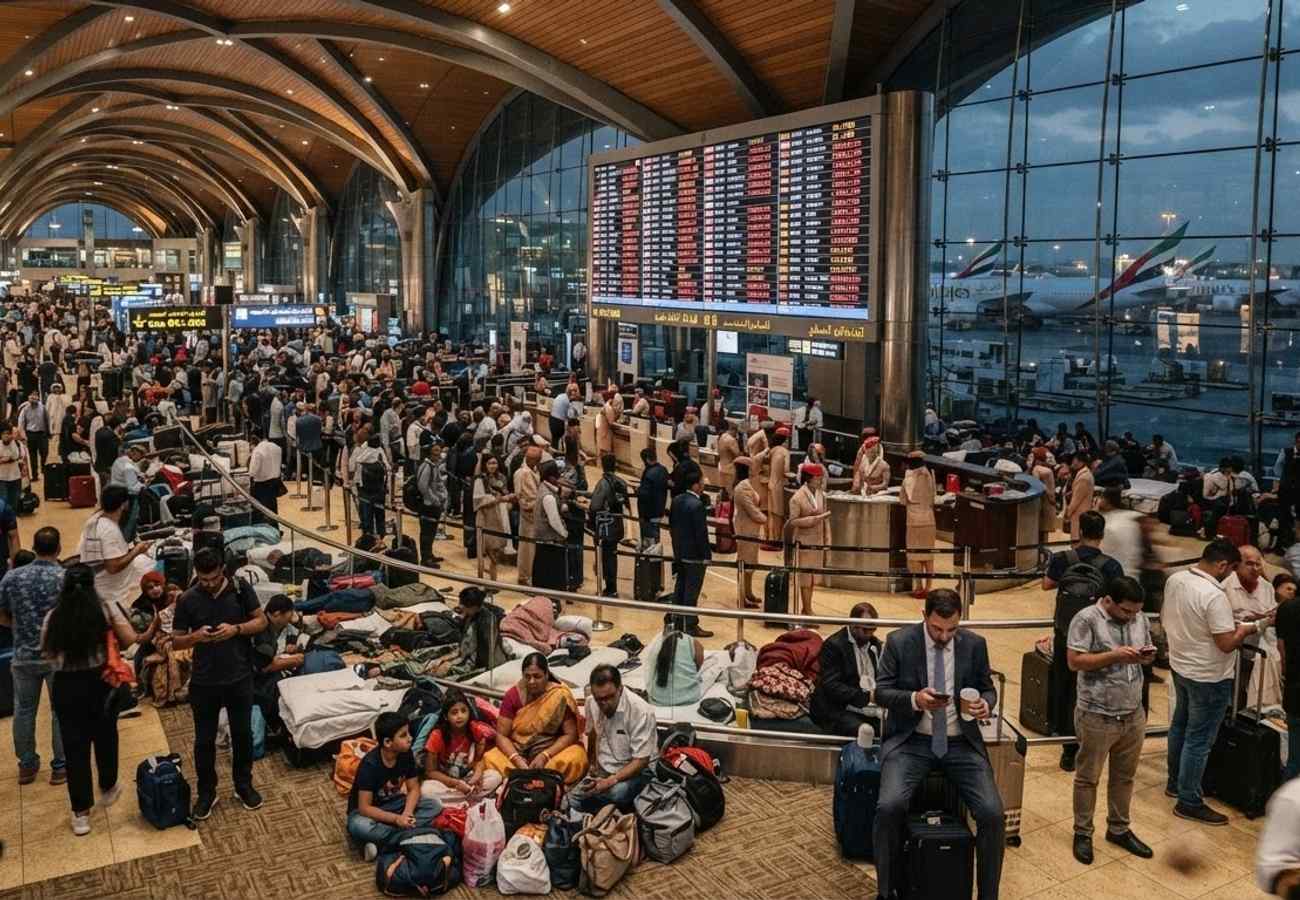
Image generated by AI
Hundreds of travelers are facing significant itinerary disruptions across the Middle East following a surge of 611 flight delays and 66 cancellations recorded across the UAE, Qatar, Jordan, and Saudi Arabia. The operational turmoil is centered on primary transit hubs, specifically impacting passengers traveling through Dubai, Doha, Amman, and several Saudi Arabian cities.
The disruption is widespread, affecting a variety of regional and international carriers. Industry data indicates that Qatar Airways, Emirates, flydubai, Saudia, flynas, Air Arabia, and Royal Jordanian are the airlines most heavily impacted by the current schedule volatility.
Major Hubs Hit by Severe Schedule Volatility
The scale of the disruptions varies by city, with some airports experiencing massive delays while others face a higher volume of total cancellations.
Dubai International Airport has emerged as the epicenter of the delays, recording 197 separate delay incidents and 1 cancellation. The burden of these disruptions fell largely on the region's biggest carriers; Emirates recorded 74 delays, while flydubai followed closely with 70.
In Qatar, Hamad International Airport in Doha saw 148 delays and 3 cancellations. The vast majority of these issues were tied to Qatar Airways, which accounted for 130 of the delays. Other carriers affected at the Doha hub included flynas, Kam Air, and flydubai, each recording 2 delays.
Saudi Arabia's aviation network has faced the most severe cancellations. King Abdulaziz International Airport in Jeddah recorded 83 delays and 12 cancellations. Notably, Saudia was responsible for all 12 of those cancellations and 29 of the delays, while flynas added another 12 delays to the total.
Similarly, King Khalid International Airport in Riyadh reported 76 delays and 16 cancellations. In this instance, flynas recorded 28 delays, while Saudia accounted for 22 delays and all 16 cancellations.
Other regional airports also reported significant issues. Sharjah International Airport saw 50 delays and 9 cancellations, with Air Arabia recording 36 delays and all 9 cancellations. Air India Express also recorded 8 delays at this location. Meanwhile, Queen Alia International Airport in Amman reported 42 delays and 1 cancellation, with Royal Jordanian accounting for 24 delays and the single cancellation.
Detailed Airline Performance and Disruption Metrics
The following data outlines the specific impact on the region's primary airlines based on flight tracking records from August 26, 2026.
| Airline | Total Delays | Total Cancellations | Primary Impact Location |
|---|---|---|---|
| Qatar Airways | 133 | 0 | Hamad International (130 delays) |
| Saudia | 59 | 52 | King Khalid & King Abdulaziz Airports |
| flydubai | 75 | 0 | Dubai International (70 delays) |
| Emirates | 74 | 0 | Dubai International |
| flynas | 45 | 0 | King Khalid International |
| Air Arabia | 39 | 12 | Sharjah International |
| Royal Jordanian | 24 | 1 | Queen Alia International |
Analyzing the Saudi Arabian Cancellation Surge
While delays are widespread across the UAE and Qatar, the cancellation trend is heavily concentrated within Saudi Arabia. Saudia has been the primary driver of this volatility, recording a total of 52 cancellations.
These cancellations were distributed across several domestic and international hubs:
- King Khalid International Airport: 16 cancellations
- King Abdulaziz International Airport: 12 cancellations
- Abha Regional Airport: 10 cancellations
- Gizan Regional Airport: 8 cancellations
- Najran Domestic Airport: 6 cancellations
This concentration suggests localized operational challenges within the Saudi network, contrasting with the UAE's experience, where Dubai International Airport faced nearly 200 delays but managed to avoid mass cancellations.
Operational Triggers Behind Middle East Flight Chaos
Industry observers indicate that these disruptions are rarely the result of a single event but rather a cascade of operational failures. Aviation logistics are highly interdependent; a delay in a single aircraft's early morning rotation often creates a "domino effect" for every subsequent flight that aircraft is scheduled to operate.
Several factors are currently contributing to the instability:
- Crew Scheduling: Limitations in crew duty hours mean that if a flight is delayed, the crew may "time out," necessitating a replacement or a total cancellation.
- Aircraft Availability: Maintenance requirements or unexpected technical faults can pull a plane from service, leaving no spare aircraft to cover the route.
- Airport Capacity: Congestion at major hubs like Dubai and Doha can lead to holding patterns and revised arrival times.
- Connecting Movements: Because the Middle East operates on a "hub-and-spoke" model, a delay in an incoming flight from Europe or Asia can delay dozens of departing connections.
Why This Matters: The Passenger Experience and Legal Implications
For the traveler, these numbers represent more than just statistics—they represent missed connections, lost hotel bookings, and significant stress. From a logistical standpoint, the concentration of delays in Dubai and Doha is particularly problematic because these cities serve as the primary bridges between the East and West. A three-hour delay in Dubai can result in a missed connection to London or New York, potentially stranding a passenger for 24 hours or more.
From a legal and consumer rights perspective, passengers should be aware that their entitlements vary by airline and jurisdiction. While some carriers provide immediate rebooking and hotel vouchers, others may require passengers to file formal claims.
To mitigate the impact of these disruptions, passengers are advised to:
- Verify Status Independently: Do not rely solely on airport screens; check the airline's official app or flight tracking software before leaving for the airport.
- Secure Documentation: Keep all boarding passes and booking confirmations digitally and physically to support potential compensation claims.
- Proactive Rebooking: Contact the airline immediately via social media or phone the moment a delay is announced to secure a seat on the next available flight before they fill up.
- Baggage Coordination: In the event of a cancellation, explicitly confirm with ground staff whether luggage will be transferred to the new flight or must be collected.
Travelers are urged to remain vigilant and maintain constant communication with their carriers as operational volatility continues across the region.
Related Travel Guides
Disclaimer
This article is for informational and educational purposes only. It does not constitute legal, financial, or professional advice. While we strive to provide accurate and up-to-date information, travel policies, regulations, and conditions change rapidly. Always verify information with official sources before making travel decisions. Nomad Lawyer makes no representations about the accuracy, reliability, completeness, or suitability of the information provided. Readers should consult qualified professionals for advice specific to their circumstances. The views expressed in this article are those of the author and do not necessarily reflect the views of Nomad Lawyer.
Raushan Kumar
Founder & Lead Developer
Full-stack developer with 11+ years of experience and a passionate traveller. Raushan built Nomad Lawyer from the ground up with a vision to create the best travel and law experience on the web.
Learn more about our team →