
Middle East Aviation Crisis 2026: 1,108 Flight Delays Hit Antalya and Dubai Hubs
Severe operational disruptions across Middle East aviation networks have resulted in 1,108 delays and 25 cancellations, primarily impacting Antalya, Dubai, and Cairo airports.

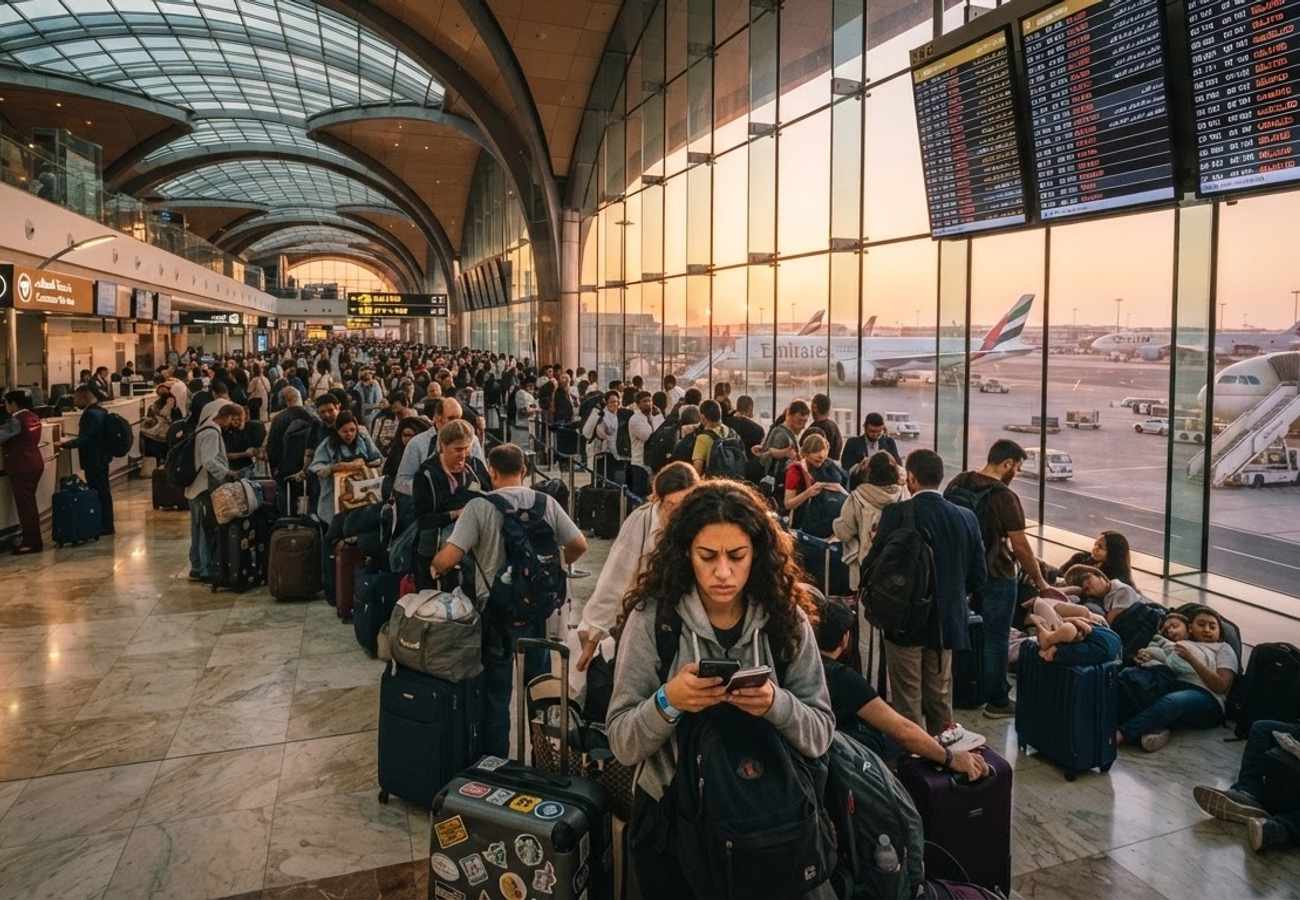
Image generated by AI
Regional aviation networks are under severe strain with 1,108 delays and 25 cancellations recorded across six major Middle East gateways. Antalya Airport has emerged as the primary flashpoint for these disruptions.
Operational instability is currently gripping key aviation hubs in Türkiye, the UAE, Saudi Arabia, and Egypt. Data indicates that a combination of regional airspace adjustments, security concerns, and peak summer passenger volumes has created a cascade of scheduling failures.
The disruption is not isolated to a single carrier or city but represents a systemic pressure point across the Mediterranean and Gulf regions.
Regional Airport Impact Analysis
The scale of the disruption varies by hub, with tourism-heavy gateways and international transit points bearing the brunt of the delays.
- Antalya Airport (Türkiye): The most severely impacted site, recording 318 delays and 10 cancellations.
- Dubai International (UAE): A critical global connector experiencing 255 delays and 3 cancellations.
- Cairo International (Egypt): Facing 189 delays and 2 cancellations.
- King Abdulaziz International (Jeddah, KSA): Reporting 128 delays and 3 cancellations.
- King Khalid International (Riyadh, KSA): Recording 126 delays and 2 cancellations.
- Sharjah International (UAE): Experiencing 92 delays and 5 cancellations.
Airport Disruption Statistics (August 15, 2026)
| Airport | City | Country | Delays | Cancellations |
|---|---|---|---|---|
| Antalya Airport | Antalya | Türkiye | 318 | 10 |
| Dubai International Airport | Dubai | United Arab Emirates | 255 | 3 |
| Cairo International Airport | Cairo | Egypt | 189 | 2 |
| King Abdulaziz International Airport | Jeddah | Saudi Arabia | 128 | 3 |
| King Khalid International Airport | Riyadh | Saudi Arabia | 126 | 2 |
| Sharjah International Airport | Sharjah | United Arab Emirates | 92 | 5 |
Carrier-Specific Operational Failures
Airlines operating within these hubs are reporting significant aircraft availability issues and scheduling conflicts. SunExpress is currently the most affected carrier by a wide margin.
| Airline | Country | Cancelled | Delayed |
|---|---|---|---|
| SunExpress | Türkiye | 10 | 220 |
| Air Arabia | UAE (Sharjah) | 5 | 80 |
| Saudia | Saudi Arabia | 3 | 56 |
| Yemenia, Yemen Airways | Yemen | 3 | 1 |
| Royal Jordanian | Jordan | 2 | 32 |
| Oman Air | Oman | 1 | 24 |
Why This Matters: Industry Analysis
From a logistical perspective, the concentration of delays at Antalya and Dubai reveals a dangerous vulnerability in the "leisure-transit" loop. When a tourism hub like Antalya fails, it creates a ripple effect that clogs transit hubs like Dubai, which must then manage the overflow of displaced passengers.
Our analysis of the flight data suggests that these are not mere weather-related glitches. The correlation between airspace restrictions and the high volume of delays indicates that airlines are being forced into longer, less efficient flight paths. For the traveler, this means "hidden" delays—where the flight is technically on time for departure but arrives late due to route diversions.
Furthermore, the high cancellation rate for SunExpress relative to its size suggests a critical failure in crew scheduling or aircraft rotation, likely exacerbated by the high seasonal demand of August.
Forward Outlook
Expect continued volatility through the remainder of the summer peak. Until airspace restrictions are eased or route planning is permanently adjusted for the current regional security environment, the "buffer time" between flights at major hubs like Dubai and Cairo will remain insufficient.
Travelers should anticipate:
- Extended Ground Times: Higher passenger volumes at security and check-in as delayed flights overlap with scheduled departures.
- Route Volatility: Sudden changes in flight paths leading to unpredictable arrival times.
- Rebooking Bottlenecks: Limited seat availability on alternative carriers due to region-wide capacity constraints.
Real-time data confirms that Middle East aviation remains in a state of high operational fragility.
Related Travel Guides
Disclaimer
This article is for informational and educational purposes only. It does not constitute legal, financial, or professional advice. While we strive to provide accurate and up-to-date information, travel policies, regulations, and conditions change rapidly. Always verify information with official sources before making travel decisions. Nomad Lawyer makes no representations about the accuracy, reliability, completeness, or suitability of the information provided. Readers should consult qualified professionals for advice specific to their circumstances. The views expressed in this article are those of the author and do not necessarily reflect the views of Nomad Lawyer.
Preeti Gunjan
Contributor & Community Manager
A passionate traveller and community builder. Preeti helps grow the Nomad Lawyer community, fostering engagement and bringing the reader experience to life.
Learn more about our team →