
Austin Airport Flight Crisis: Delta and United Ground Three Flights, Impacting 40+ US and International Destinations
Austin-Bergstrom International Airport experienced significant operational disruptions as Delta Air Lines and United Airlines cancelled three flights, creating cascading delays affecting major hubs including Boston, Atlanta, Denver, and transcontinental destinations.

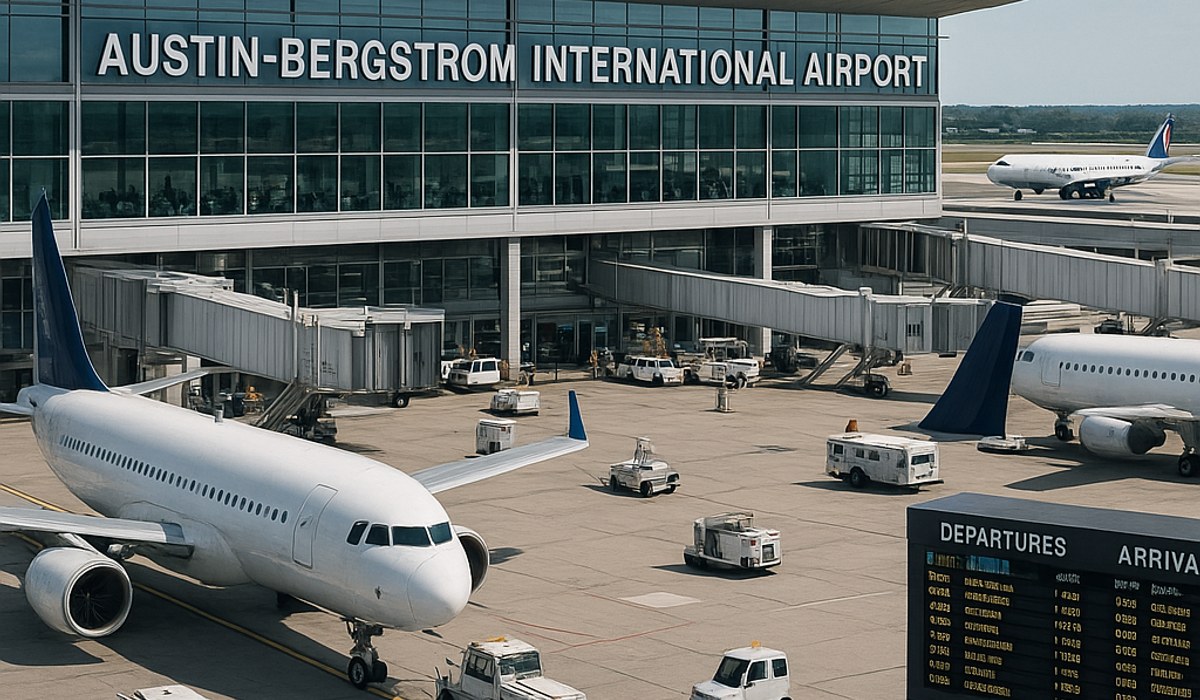
Image generated by AI
Austin Airport Flight Cancellations Trigger Widespread Delays Across 40+ Destinations Nationwide
Quick Summary:
- Delta Air Lines and United Airlines cancelled 3 combined flights at Austin-Bergstrom International Airport
- 9 additional delayed flights reported at the primary disruption hub
- Cascading delays rippled across 40+ destinations including Boston, Atlanta, Denver, and international gateways
- Boston Logan experienced heightened proportional impact with 20% cancellation rate
- American hub resilience prevented system-wide failure despite localized strain
Austin-Bergstrom International Airport ground to a temporary halt as operational disruptions from Delta Air Lines and United Airlines reverberated across the nation's domestic aviation network. The cancellation of three flights triggered cascading delays that spread from Texas to Boston, Denver, and beyond—stranding passengers and testing airline recovery protocols across multiple time zones. The disruption demonstrated how even limited cancellations at a major regional hub can destabilize connectivity patterns affecting millions of potential passengers.
The operational strain centred on Austin revealed the vulnerability of tightly-scheduled aviation networks when key airports experience disruptions.
Understanding the Austin Disruption: Three Cancellations Across Two Major Carriers
Delta Air Lines and United Airlines together cancelled three flights departing from or transiting through Austin-Bergstrom International Airport. Delta grounded two flights, while United cancelled one flight. Though numerically limited, these cancellations represented targeted operational failures rather than widespread system breakdown.
The cancellation rate at Austin remained proportionally modest at 0-2% of daily operations, reflecting the airport's substantial flight frequency. However, this statistic understated the operational impact. Nine additional flights experienced delays at Austin—a 3:1 ratio suggesting each cancellation triggered multiple downstream delays.
When an airline cancels a flight, that aircraft becomes unavailable for subsequent legs. Crews reach federal duty time limits and become legally unavailable. Passengers miss connections. Scheduled departures become delayed as replacement aircraft are sourced and repositioned. The cascading effect creates a multiplier impact far exceeding the initial cancellation count.
Geographic Reach: 40+ Destinations from Coast to Coast and Beyond
The disruption's geographic footprint stretched across North America, affecting destinations from Atlantic to Pacific and into Canada and Mexico.
Major US Destinations Impacted:
- Northeast: Boston, Newark, Philadelphia, Baltimore, Washington D.C.
- Southeast: Atlanta, Miami, Fort Lauderdale, Charlotte, Nashville, Orlando, Tampa, Raleigh
- South-Central: Dallas, Houston, New Orleans
- Mountain West: Denver, Albuquerque, Amarillo, Salt Lake City, Phoenix
- Southwest: Las Vegas, Phoenix, El Paso, Taos, Reno, Long Beach, Ontario, San Francisco
- Midwest: Chicago, Minneapolis, Milwaukee, Columbus
International Destinations:
- Toronto (Canada)
- London (United Kingdom)
- Cancun, Los Cabos, Monterrey (Mexico)
More than 40 destinations experienced either direct disruption or cascading connectivity failures. Passengers booked through Austin faced the highest impact, watching tight connections disappear. Even passengers with loose connections faced delays as aircraft repositioning stretched throughout the day.
The transcontinental reach—from Boston to Los Angeles, Austin to Toronto—demonstrated how a single hub disruption propagates through interconnected networks serving thousands of daily passengers.
Comparing Impact Severity: Austin vs. Boston vs. Hub Resilience
While Austin-Bergstrom served as the primary disruption center, secondary impacts varied significantly across other major hubs based on operational structure and scheduling flexibility.
Austin-Bergstrom: The Primary Hub The three cancellations occurred at Austin, but the airport's high-frequency operations meant the percentage impact remained minimal (0-2%). However, the nine delayed flights reflected substantial operational strain during recovery attempts.
Boston Logan International Airport: Heightened Vulnerability Boston experienced a notably higher proportional impact with one cancellation representing approximately 20% of affected flight frequency. This dramatic percentage—far exceeding Austin's impact—revealed Boston's tighter scheduling margins. Lower daily flight frequency means less operational flexibility to absorb disruptions. What constitutes an isolated incident at a mega-hub becomes a crisis at Boston's operational scale.
Bush Intercontinental (Houston): Secondary Strain George Bush Intercontinental Airport recorded one cancellation representing 8% of affected operations, indicating moderate impact but greater resilience than Boston due to higher flight volumes.
Major Hubs Demonstrate Resilience Hartsfield-Jackson Atlanta International Airport, Los Angeles International Airport, and Chicago O'Hare International Airport—despite serving as connection points for disrupted passengers—recorded zero cancellations. Their massive daily flight frequencies allowed them to absorb incoming delays without cascading into new cancellations. Scale provided protection.
Impact Taxonomy: Why Cancellations Spread Into Delays
Understanding how three cancellations affected nine additional flights requires examining airline operational dynamics.
Airlines operate aircraft on rotations where a single aircraft operates 5-8 flights daily:
- Early morning flight to one destination
- Return flight
- Mid-morning flight to another destination
- Return flight
- Afternoon flight to third destination
When one aircraft is cancelled, it's unavailable for 3-5 subsequent flights that day. Crews reach federal work-hour limits and become legally grounded. Replacement aircraft must be sourced from other routes, accepting delays on lower-priority flights to maintain high-demand connections.
The result: Three cancellations cascaded into nine delays as airlines scrambled to maintain schedule integrity across the network.
Recovery Operations: Airlines Working to Restore Service
Faced with operational disruption, airlines implemented targeted recovery strategies:
Aircraft Redeployment: Airlines repositioned available aircraft from other routes to replace grounded equipment, accepting delays on lower-demand flights.
Crew Repositioning: Overnight crews and crews from other bases were expedited to Austin to replace crews who'd exceeded duty limits.
Passenger Rebooking: Automated systems identified affected passengers and rebooked them on subsequent flights, with popular routes filling quickly.
Schedule Compression: Airlines adjusted turnaround times, reducing gate dwell times to compress schedule slack and accelerate recovery.
Inter-Carrier Coordination: Where possible, airlines arranged reciprocal rebooking agreements to move passengers more quickly toward their destinations.
Full network recovery from Austin's disruption typically required 4-6 hours as aircraft gradually repositioned and operational rhythms normalized.
What This Disruption Reveals About Aviation Vulnerability
The Austin situation illustrated three critical truths about modern air travel:
First, operational efficiency creates fragility. Airlines maximize aircraft utilization to minimize per-seat costs. That efficiency leaves minimal schedule slack. There are few backup aircraft, limited crew reserves, virtually no excess capacity. When failures occur, recovery becomes challenged.
Second, interconnection amplifies impact. Modern aviation relies on same-day connections across multiple flights. A delayed arrival cascades into missed connections, forcing rebooking chaos across the system.
Third, hub size determines resilience. Small-to-medium hubs like Boston lack the operational flexibility of mega-hubs. Limited daily flights mean each flight carries disproportionate weight. A single cancellation becomes a crisis.
FAQ: Understanding Austin Airport Disruptions
Q: Why would airlines cancel flights rather than delay them? A: Cancellation occurs when estimated delay would cascade beyond recovery time, or when aircraft or crew become unavailable due to duty limits. Sometimes one cancellation prevents multiple cascading cancellations.
Q: How long does recovery typically take? A: Full network normalization from localized hub disruptions usually requires 4-6 hours as aircraft reposition and subsequent flights gradually normalize.
Q: Why did Boston experience higher proportional impact than Austin? A: Boston operates lower daily flight frequency than Austin. Fewer flights means less flexibility. A cancellation affecting a smaller denominator produces higher percentage impact.
Q: What passenger protections exist for cancellations? A: US airlines must offer rebooking on the next available flight or refunds. EU regulations mandate compensation up to €600. Specific protections vary by jurisdiction and airline policy.
Last updated: March 30, 2026. Information sourced from FlightAware operational data, airline statements, and aviation industry reporting. For real-time flight status, consult official airline websites and airport operations centers.
Disclaimer
This article is for informational and educational purposes only. It does not constitute legal, financial, or professional advice. While we strive to provide accurate and up-to-date information, travel policies, regulations, and conditions change rapidly. Always verify information with official sources before making travel decisions. Nomad Lawyer makes no representations about the accuracy, reliability, completeness, or suitability of the information provided. Readers should consult qualified professionals for advice specific to their circumstances. The views expressed in this article are those of the author and do not necessarily reflect the views of Nomad Lawyer.
Raushan Kumar
Founder & Lead Developer
Full-stack developer with 11+ years of experience and a passionate traveller. Raushan built Nomad Lawyer from the ground up with a vision to create the best travel and law experience on the web.
Learn more about our team →