
Middle East Geopolitical Meltdown: Emirates, Qatar Airways, and Etihad Face Massive Flight Cancellations and Travel Chaos Across Dubai, Doha, and Abu Dhabi Hubs
Escalating Middle East tensions have triggered 43 flight cancellations and 244 delays across Dubai, Doha, and Abu Dhabi, causing massive global travel chaos.

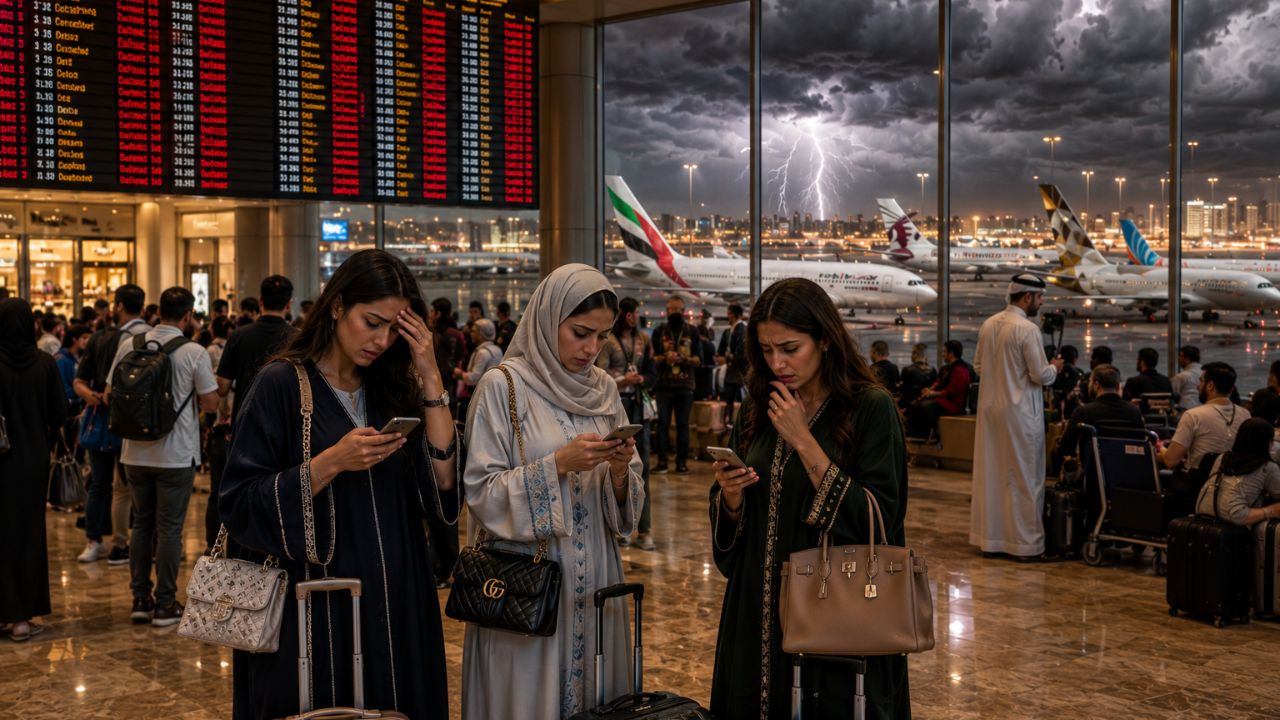
Image generated by AI
In a harrowing escalation of geopolitical instability that has effectively severed the world’s most critical transcontinental "Air Bridge," the Middle East is currently gripped by a state of total aviation paralysis. This major airline news update, breaking this May 16, 2026, confirms that 43 flight cancellations and 244 significant delays have struck the primary hubs of Dubai (DXB), Abu Dhabi (AUH), and Doha (DOH) in the last 24 hours alone. Driven by rapid airspace closures involving Iran, Israel, and coalition forces, the region’s three "Super-Connectors"—Emirates, Etihad, and Qatar Airways—are facing a logistical meltdown of unprecedented proportions. As thousands of passengers remain stranded in a sea of travel chaos, the cumulative tally of flight cancellations since late February has now surged past the 2,000 mark, triggering systemic airport disruptions that are rippling across the Europe-Asia-Africa corridors.
Breaking: The 'Geopolitical Gridlock' and the Airspace Shutdown
The crisis reached a new peak this weekend as civil aviation authorities across the UAE, Qatar, Saudi Arabia, Kuwait, and Jordan issued a series of urgent NOTAMs (Notices to Airmen). These official directives have effectively shuttered civilian air corridors due to the extreme safety risks posed by escalating military movements. With safe passage through regional airspace now deemed impossible for many scheduled routes, carriers have been forced to implement emergency flight cancellations on a global scale.
Aviation analysts suggest that this is a critical aviation update for the 2026 travel cycle. The sudden closure of the "Gulf Skyway" means that flights originally connecting via Middle Eastern hubs are being diverted to significantly longer, more expensive polar or southern routes. For the passenger, this translates into an era of unpredictable travel chaos, where a simple connection in Dubai can now result in a multi-day delay or a total itinerary collapse.
Expanded Overview: Assessing the Scale of the Hub Meltdown
The scale of the disruption is staggering. At Dubai International (DXB), the world’s busiest international gateway, the sight of hundreds of "Cancelled" and "Delayed" markers on the departure boards has become a symbol of the current airport disruptions. Similarly, Hamad International (DOH) and Zayed International (AUH) are operating at a fraction of their capacity, with government-issued safety advice preventing scheduled commercial services from resuming until the airspace is declared secure.
The crisis is not limited to the "Big Three." Regional carriers like Flydubai, Air Arabia, and Gulf Air have also seen their networks decimated, with Flydubai alone recording 185 cancellations in recent operations. The impact has also reached Jeddah and Riyadh, where Saudia is struggling to maintain domestic and regional connectivity amidst the shifting NO-FLY zones.
Section-Wise Breakdown: Evaluating the Middle East Strategic Crisis
Dubai International (DXB): The Epicenter of Disruption
DXB has issued an official "Terminal Warning," advising passengers to check their flight status exclusively via airline apps before traveling to the airport. The "Global Gateway" is currently a bottleneck for transcontinental travel, with reroutes adding hours to flight times and exhausting crew duty-limits, leading to further cascading flight cancellations.
Doha Hamad (DOH): Qatari Airspace in Lockdown
Qatar Airways has publicly reaffirmed that operations will remain restricted until the Qatari Civil Aviation Authority provides clearance. The airline, which has recorded a region-high 219 cancellations, is currently managing a massive backlog of transit passengers who are stranded in the terminal as the travel chaos prevents onward departures to Europe and North America.
Abu Dhabi (AUH): Etihad’s Repatriation Focus
While scheduled commercial services at Abu Dhabi have been severely reduced, limited repatriation flights continue under strict military and civil coordination. Etihad Airways, with 90 cancellations, is prioritizing passenger safety over schedule recovery, adhering to the "Official Safety Guidance" issued by the UAE ministry.
Saudi Arabia and Oman: Regional Ripple Effects
In Jeddah, Riyadh, and Muscat, airport operators are working around the clock with local aviation ministries to normalize services. However, the closure of neighboring airspace means that many flights originally destined for Saudi Arabia are either being grounded at their origin or diverted to secondary regional hubs, fueling further airport disruptions.
Flight Details: Major Middle East Airlines Cancellations & Service Status
The following tables provide the confirmed operational data and official advisories as of May 16, 2026.
Major Middle East Airlines Cancellations & Service Status
| Airline | Confirmed Cancellations (Recent Ops) | Current Operational Status |
|---|---|---|
| Emirates (EK) | 197 | Significant global network disruption |
| Etihad Airways (EY) | 90 | Suspended or limited operations |
| Flydubai (FZ) | 185 | Substantial service disruption |
| Qatar Airways (QR) | 219 | Operations restricted by airspace closure |
| Air Arabia (G9) | 21 | Reduced service frequency |
| Gulf Air (GF) | 59 | Impacted by regional NOTAMs |
| Kuwait Airways (KU) | 39 | Routes affected across Gulf corridors |
| Saudia (SV) | 26 | Strategic cancellations / Reroutes |
| Royal Jordanian (RJ) | 16 | Cross-region ripple effects |
| Others | Minor / Targeted | Varies by individual operator |
Airline Travel Advisory Summary
| Airline | Official Advisory Message |
|---|---|
| Emirates | Scheduled operations limited; verify status via app |
| Etihad Airways | Flights suspended or limited; safety guidance prioritized |
| Qatar Airways | Operations halted pending Civil Aviation clearance |
| Air Arabia | Reduced frequencies; cancellations notified via official portals |
| Gulf Air | Rebooking and refund guidance issued for affected routes |
| Saudia | Advisory issued for flexible rebooking / Rescheduling |
Passenger Impact: Navigating the Geopolitical Gridlock
For the hundreds of thousands of travelers caught in the Middle East meltdown, the situation is increasingly desperate.
- Sanctuary from Airport Disruptions: Authorities are urging passengers NOT to travel to the airport without a confirmed flight operation. Terminals at DXB and DOH are currently at maximum capacity, and additional arrivals only worsen the travel chaos.
- Antidote to Cancellations: Refund and rebooking rights apply under international aviation frameworks (like Montreal Convention and regional laws). Airlines are expanding flexibility to allow for reroutes via Asia or the Americas where possible.
- Verification is Key: Use only official airline web portals and mobile apps. Third-party aggregators are struggling to keep pace with the rapid aviation updates and may show outdated "On Time" statuses.
- Ripple Effects: Travelers in London, Paris, Singapore, and Bangkok should prepare for delayed arrivals and short-notice flight cancellations if their aircraft is currently stuck in a Gulf hub.
Industry Analysis: The 'Fragility' of the Hub-and-Spoke Model
Aviation specialists believe this crisis exposes the "Single-Point-of-Failure" risk of the Gulf hub model.
- Airspace Vulnerability: When the "Mid-World" corridors close, the entire global aviation system loses its primary efficiency engine. Reroutes not only add fuel costs but also disrupt the delicate crew-rotation cycles of the super-connectors.
- Safety Sovereignty: The reliance on Civil Aviation Ministry bulletins and NOTAMs proves that in 2026, geopolitical safety outweighs commercial scheduling. No airline is willing to risk a civilian aircraft in an active conflict zone.
- The Connectivity Backlog: Once airspace reopens, the industry will face a "Logistical Tsunami" as airlines attempt to move the backlog of 2,000+ canceled flights worth of passengers, potentially extending the travel chaos for weeks.
Conclusion: A Region in Suspended Animation
The ongoing closure of Middle Eastern airspace is a definitive aviation update that confirms the region is in a state of suspended animation. While Emirates, Etihad, and Qatar Airways attempt to manage the fallout of 43 cancellations today and a total of 2,000+ since February, the zero-fatality outcome of these safety-first decisions remains the only priority. As Dubai, Doha, and Abu Dhabi wait for the signal from their respective Civil Aviation Ministries, the message to global travelers is one of extreme caution. The travel chaos of 2026 is no longer a localized issue—it is a global phenomenon driven by the shifting sands of the Middle East.
Key Takeaways
- Stats: 43 cancellations and 244 delays today; 2,000+ cancellations cumulative since Feb 2026.
- Impact: Emirates (197), Qatar (219), and Flydubai (185) are the hardest hit carriers.
- Cause: Airspace closures (NOTAMs) due to Iran-Israel-Coalition military tensions.
- Hubs: Dubai (DXB), Doha (DOH), and Abu Dhabi (AUH) are operating at severely limited capacity.
- Advice: Verify status via official airline apps; do NOT go to the airport without confirmation.
- Rights: Refund and rebooking rights are in effect; expect massive backlogs for several weeks.
- Status: Ongoing regional gridlock with global ripple effects on Europe-Asia corridors.
Related Travel Guides
Disclaimer
This article is for informational and educational purposes only. It does not constitute legal, financial, or professional advice. While we strive to provide accurate and up-to-date information, travel policies, regulations, and conditions change rapidly. Always verify information with official sources before making travel decisions. Nomad Lawyer makes no representations about the accuracy, reliability, completeness, or suitability of the information provided. Readers should consult qualified professionals for advice specific to their circumstances. The views expressed in this article are those of the author and do not necessarily reflect the views of Nomad Lawyer.
Kunal K Choudhary
Co-Founder & Contributor
A passionate traveller and tech enthusiast. Kunal contributes to the vision and growth of Nomad Lawyer, bringing fresh perspectives and driving the community forward.
Learn more about our team →