
Mexico and Quintana Roo Convert Sargassum Seaweed into Sustainable Concrete for Tourism Infrastructure
Mexican researchers and Quintana Roo authorities are converting sargassum seaweed waste into sustainable concrete and asphalt to protect Caribbean tourism.

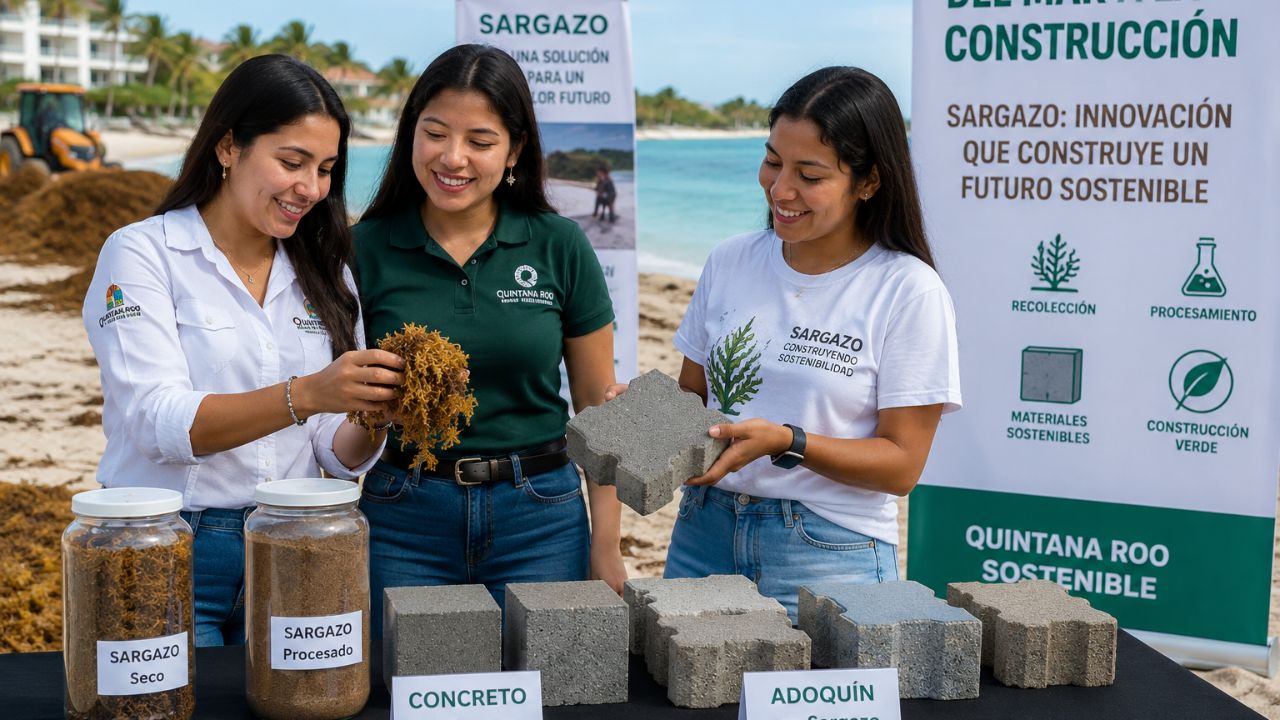
Image generated by AI
Mexican researchers and Quintana Roo state authorities have developed a circular economy technology that converts recurring sargassum seaweed blooms into sustainable concrete and asphalt for public infrastructure.
[CANCÚN, Mexico] — Government environmental agencies and scientific researchers in Mexico have initiated a industrial innovation program that processes harvested sargassum seaweed into eco-friendly construction materials. Facing annual seaweed blooms that impact Caribbean beaches across Cancún, Playa del Carmen, Tulum, and the Riviera Maya, researchers from the National Autonomous University of Mexico (UNAM) have engineered processing methods to integrate sargassum biomass into concrete and asphalt mixtures. The technology transforms a major coastal pollution challenge into construction inputs for public sidewalks, curbs, and municipal infrastructure while safeguarding Quintana Roo's beach tourism economy.
Sargassum Influx Pressures Mexican Caribbean Beach Corridors
The seasonal accumulation of floating sargassum seaweed has posed a persistent challenge for Mexico’s Caribbean coastline.
Destinations spanning Cancún, Playa del Carmen, Tulum, and the broader Riviera Maya require extensive municipal resources to collect and clear tone volumes of washed-up marine biomass. Untreated sargassum on beaches creates unpleasant odors, degrades coastal marine habitats, and increases municipal maintenance expenditures for resort communities.
Managing beach cleanliness is a primary economic priority for Quintana Roo, where millions of international and domestic vacationers arrive annually for beach and eco-resort travel.
Sargassum Management Challenge & Transition:
├── Historical Approach: Municipal beach collection, offshore barriers & landfill disposal
├── Emerging Model: Circular economy industrial processing of harvested biomass
└── End Products: Sargassum-infused eco-concrete & asphalt mixtures for civic infrastructure
UNAM Scientific Research and Biomass Processing Technology
Scientists affiliated with the National Autonomous University of Mexico (UNAM) led the research initiative to process raw sargassum biomass into structural building materials.
The proprietary processing method treats raw sargassum to neutralize corrosive marine salts and organic decomposition gases. Once stabilized, the processed organic fiber is blended as an aggregate ingredient into traditional concrete and asphalt formulations.
The resulting sargassum-infused building materials meet structural strength and durability standards required for municipal public works projects.
UNAM Sargassum-to-Concrete Process:
├── Step 1: Beach & offshore mechanical harvesting of floating sargassum
├── Step 2: Desalination, organic stabilization & thermal drying of biomass
├── Step 3: Processing biomass into standardized organic aggregate fibers
└── Step 4: Blending with concrete/asphalt for public sidewalks, curbs & paving
Public Infrastructure Applications and Local Economic Benefits
Deploying sargassum-based concrete into public works projects creates a multi-industry circular economy along the Riviera Maya.
The eco-friendly concrete is being integrated into public municipal projects, including pedestrian walkways, street curbs, public parks, and coastal paving applications across Quintana Roo.
By substituting traditional raw construction inputs with processed marine biomass, municipal governments reduce landfill waste and lower carbon emissions associated with conventional cement production.
Developing local collection, processing, and manufacturing hubs establishes new regional employment in green manufacturing and environmental technology across Quintana Roo.
Quintana Roo Lead Benchmark and Sustainable Tourism Strategy
Quintana Roo serves as the primary testing ground for industrial sargassum utilization due to its position as Mexico's leading international leisure gateway.
| Operational Indicator | Baseline Sargassum Impact | Sustainable Concrete Solution |
|---|---|---|
| Target Regions | Cancún, Playa del Carmen, Tulum, Riviera Maya | Municipal public works across Quintana Roo |
| Research Lead | National Autonomous University of Mexico (UNAM) | Industrial biomass aggregate engineering |
| Primary Material Outputs | Eco-concrete blocks, asphalt paving, curbs, sidewalks | High-durability public infrastructure inputs |
| Environmental Benefit | Reduced beach pollution & lower landfill waste | Carbon reduction & circular economy model |
| Tourism Sector Impact | Cleaner public beaches & restored marine clarity | Increased visitor confidence & eco-resort appeal |
Converting sargassum into building aggregates supports Quintana Roo’s broader destination management strategy, which emphasizes environmental conservation alongside tourism growth.
Global Implications for Caribbean and Coastal Destinations
Mexico’s sargassum-to-concrete initiative provides a scalable model for coastal destinations facing marine biomass blooms across the Caribbean and West Africa.
International travelers increasingly evaluate environmental practices and beach management when booking island and resort vacations. Destination management organizations that invest in circular environmental solutions protect coastal ecosystems while reinforcing brand reputation among eco-conscious travelers.
Expanding industrial sargassum processing across neighboring Caribbean nations could establish regional green construction standards while mitigating seasonal beach disruption.
Why This Matters for Vacationers, Resort Operators, and Municipalities
Analyzing Mexico's sargassum construction technology demonstrates key benefits for Caribbean travel and local communities:
- For Caribbean Vacationers: Industrial seaweed harvesting ensures cleaner, odor-free white sand beaches across Cancún, Tulum, and Playa del Carmen without resorting to coastal landfills.
- For Resort & Hotel Operators: Reusing harvested sargassum into construction aggregates lowers long-term beach clearance costs and supports sustainability certifications for Riviera Maya properties.
- For Municipal Planners: Transforming marine waste into public sidewalks and curbs turns an annual environmental cleanup expense into durable, low-carbon public infrastructure.
Related Travel Guides
Disclaimer
This article is for informational and educational purposes only. It does not constitute legal, financial, or professional advice. While we strive to provide accurate and up-to-date information, travel policies, regulations, and conditions change rapidly. Always verify information with official sources before making travel decisions. Nomad Lawyer makes no representations about the accuracy, reliability, completeness, or suitability of the information provided. Readers should consult qualified professionals for advice specific to their circumstances. The views expressed in this article are those of the author and do not necessarily reflect the views of Nomad Lawyer.
Raushan Kumar
Founder & Lead Developer
Full-stack developer with 11+ years of experience and a passionate traveller. Raushan built Nomad Lawyer from the ground up with a vision to create the best travel and law experience on the web.
Learn more about our team →