
Severe Travel Chaos Engulfs Mexico as Cancún, Mexico City, and Monterrey Suffer Massive 81-Flight Disruption Wave, Stranding Thousands of International Passengers: Latest Airline News
Mexico's busiest aviation hubs are buckling under severe operational pressure as a massive wave of 70 delays and 11 cancellations sweeps through Cancún, Mexico City, and Monterrey, triggering widespread travel chaos.

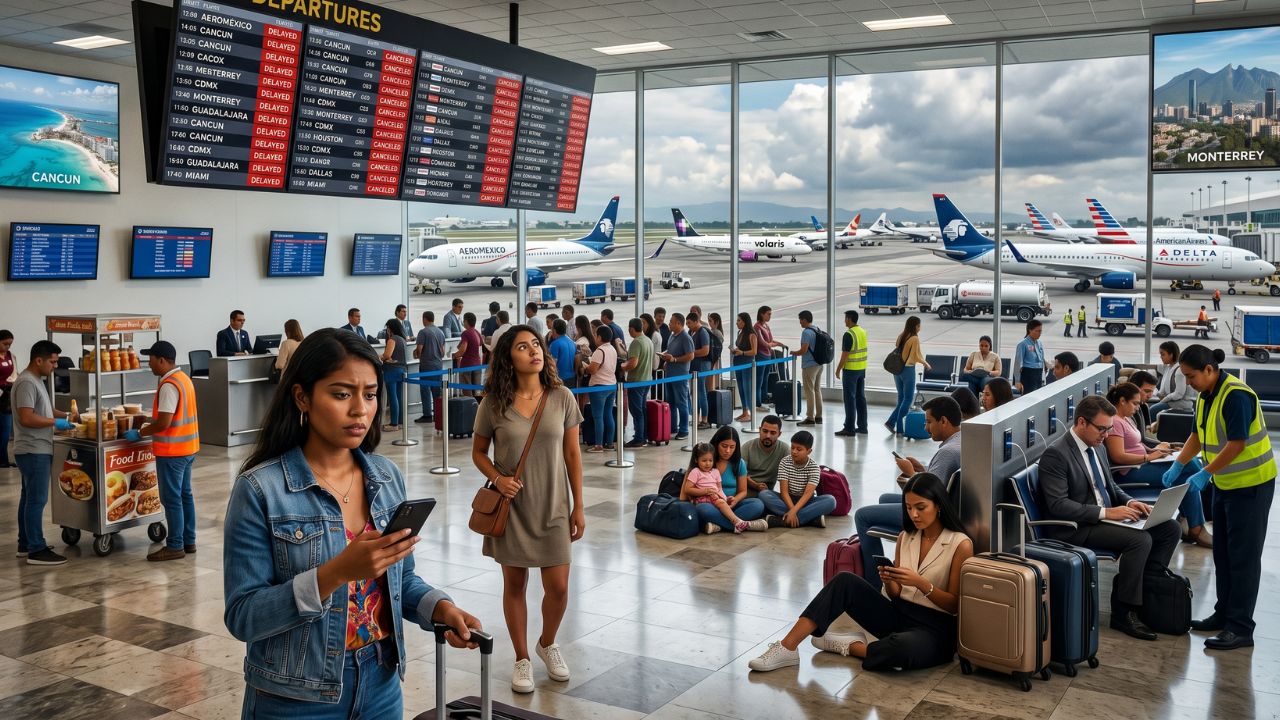
Image generated by AI
In a massive operational breakdown that is currently severely fracturing Latin America's busiest aviation network, thousands of passengers are completely stranded across Mexico as a highly damaging wave of airport disruptions paralyzes three primary mega-hubs. Over the current reporting period, Cancún International Airport, Mexico City’s Benito Juárez, and Monterrey's Mariano Escobedo have been overwhelmed by a catastrophic cascade of exactly 70 flight delays and 11 outright cancellations. As domestic and international airlines struggle to contain the mounting travel chaos, furious passengers bound for North America, Europe, and South America are trapped in sprawling, overcrowded terminals. This systemic infrastructure failure, driven by a brutal combination of air traffic congestion and logistical breakdowns, represents the premier headline in today's breaking airline news and essential global aviation updates.
By introducing direct passenger coordination and dynamic scheduling backups, the regional aviation hubs target growing passenger demand across vital commerce sectors. The choice to coordinate flight departures in phases helps to manage gate capacity, supporting the country's broader regional transportation network.
Context: The Collapse of the Mexican Aviation Corridor
Mexico operates the most critical, high-volume aviation system in Latin America, serving as the definitive bridge connecting the Americas to Europe.
Because the network operates at absolute maximum capacity, there is literally zero margin for error. When operational disruptions hit Mexico City (the nation's primary transit artery) and Cancún (the crown jewel of global tourism) simultaneously, the entire system instantly buckles. The current wave of 81 total interrupted flights is not an isolated incident; it is a symptom of a chronically overstressed infrastructure. Aircraft sequencing algorithms are failing to cope with the sheer volume of arrivals, while severe weather cells and rolling ground operation failures (such as baggage handling collapses and fueling delays) are creating massive, uncontrollable ripple effects. For the thousands of stranded travelers, these delays mean blown international connections, ruined vacations in the Riviera Maya, and massive financial losses for corporate passengers utilizing the Monterrey industrial corridor.
To view live flight schedules, real-time terminal maps, or check-in rules at the primary Mexican gateway, travelers can consult the official Mexico City International Airport (MEX) directory. For direct booking access, specific baggage rules, and delay compensation protocols, passengers must check the official Aeroméxico portal or their respective operating carrier. To explore live flight tracking and monitor the exact severity of the Mexican airspace congestion, passengers can consult the official FlightAware tracking service.
Section-Wise Breakdown of the Nationwide Disruption
Mexico City (MEX): The Delay Epicenter
Lic. Benito Juárez International Airport remains the undisputed bottleneck of the current crisis. The facility recorded the highest volume of congestion, suffering a staggering 29 flight delays alongside 3 cancellations. Because MEX acts as the central nervous system for almost all domestic and international transfers in the country, these 29 delayed flights mathematically guarantee that thousands of passengers will miss their subsequent connections to Europe and South America, trapping them in the capital overnight.
Cancún (CUN): The Tourism Meltdown
Cancún International Airport, the vital economic engine serving the Riviera Maya and Yucatán Peninsula, is facing severe operational degradation. The hub recorded 24 flight delays and 2 cancellations. As heavily loaded wide-body jets from the United States and Europe circle the airspace waiting for gate availability, the terminal buildings are swelling with anxious tourists, creating highly volatile, high-stress environments at baggage claim and immigration checkpoints.
Monterrey (MTY): The Cancellation Ground Zero
While Mexico City suffered the highest volume of delays, General Mariano Escobedo International Airport in Monterrey suffered the most devastating logistical blow. As Northern Mexico's primary industrial and business hub, Monterrey recorded 16 flight delays and a crippling 7 outright cancellations. For corporate travelers relying on rapid turnaround times, these 7 canceled flights represent millions of dollars in delayed commerce and severed regional business links.
Technical Roster: Mexico Airport Disruption Matrix
To ensure absolute factual accuracy regarding the specific scale of this systemic aviation failure, the following table details the exact operational metrics across the three crippled Mexican mega-hubs:
| Airport / Aviation Hub | Operational Disruption Metric | Primary Travel Market Impact |
|---|---|---|
| Mexico City (MEX) | 29 Delays / 3 Cancellations | Epicenter of delays; destroys massive international transit flows |
| Cancún (CUN) | 24 Delays / 2 Cancellations | Devastates premium tourism traffic bound for the Riviera Maya |
| Monterrey (MTY) | 16 Delays / 7 Cancellations | Highest cancellation rate; paralyzes northern industrial/corporate travel |
| Total System Impact | 70 Total Delays | Triggers massive, uncontrollable ripple effects across Latin America |
| Total System Attrition | 11 Total Cancellations | Strands thousands of passengers requiring immediate hotel re-accommodation |
Passenger Impact: The Brutal Reality of the Tarmac Hold
For the everyday traveler currently trapped in Mexico's aviation network, the psychological and financial toll is immense.
Because Mexican airports are operating near maximum capacity, a 3-hour delay in Cancún rarely means simply sitting in the terminal. Frequently, passengers are boarded onto the aircraft and forced to endure grueling "tarmac holds" without air conditioning while air traffic control desperately attempts to find a departure slot. If a flight is ultimately canceled—as experienced heavily in Monterrey—passengers face an absolute nightmare attempting to secure rebooking. Airline customer service desks are massively understaffed to handle the sudden surge of thousands of angry travelers, and nearby airport hotels are instantly selling out, leaving many families and business executives to sleep on the terminal floors while desperately refreshing their airline mobile apps.
Industry Analysis: A Network Under Siege
Aviation industry analysts view the current breakdown across Mexico City, Cancún, and Monterrey as a critical warning sign regarding the fragility of Latin American aviation infrastructure.
While adverse weather is frequently cited as the initial trigger, the true culprit is the absolute lack of operational slack in the system. When a single thunderstorm stalls operations at MEX for 45 minutes, the airport physically lacks the gate space and runway bandwidth to catch up. Aircraft are forced into holding patterns, burning highly expensive jet fuel, while flight crews rapidly approach their legally mandated maximum duty hours. If a crew "times out" while waiting for a gate, the airline is forced to cancel the flight entirely—a primary factor driving the severe cancellation rate in Monterrey. Analysts note that until the Mexican government aggressively expands runway capacity and upgrades air traffic control sequencing software, these massive, multi-hub disruption events will only become more frequent.
Actionable Advice for Surviving the Mexican Airspace
If you are a traveler with an active itinerary routing through Cancún, Mexico City, or Monterrey during this massive disruption wave, execute this extreme survival checklist immediately:
- Never Relinquish Control of Your Booking: Do not stand in a 400-person line at the Mexico City customer service desk. If your flight is canceled, immediately call the airline's international contact center (via Skype or Wi-Fi calling) while simultaneously using the airline's mobile app to secure the last available seat on the next departure.
- Beware the Tarmac Hold: Because gate congestion is severe in Cancún, always purchase heavy amounts of bottled water and snacks before boarding your aircraft. You may be trapped on the tarmac for over two hours awaiting takeoff clearance, and flight attendants cannot legally serve beverages while the aircraft is taxiing.
- Pad Your Layovers Aggressively: If you are booking a connection through MEX, a one-hour layover is mathematically suicidal in the current environment. Ensure your itinerary has a minimum of 3 to 4 hours built in between flights to absorb the highly probable inbound delay.
- Leverage Airport Lounges: If you hold elite status or a premium travel credit card, abandon the chaotic main terminal immediately. Gain entry to an airline lounge; the agents inside have direct access to the reservation system and can rebook your canceled Monterrey flight significantly faster than the agents at the main concourse desks.
FAQ: Mexico Airport Disruptions 2026
How severe are the current flight disruptions across Mexico?
The situation is highly critical, with three major mega-hubs (Mexico City, Cancún, and Monterrey) suffering a combined total of 70 flight delays and 11 outright cancellations during the reporting period.
Which Mexican airport is experiencing the worst operational breakdown?
Mexico City (MEX) suffered the highest volume of congestion with 29 delays, while Monterrey (MTY) suffered the highest attrition rate with a crippling 7 cancellations.
What is driving this massive wave of delays and cancellations?
Aviation experts cite a toxic combination of severe air traffic congestion, adverse weather, aircraft sequencing failures, and complex airline operational challenges including crew timeouts and ground handling delays.
The Breaking Point of Latin American Aviation
The catastrophic wave of 81 delayed and canceled flights ravaging Cancún, Mexico City, and Monterrey proves definitively that Mexico's aviation infrastructure is currently operating at its absolute breaking point. By funneling millions of passengers through severely congested, over-stressed hubs, the system has stripped away all operational resilience, meaning a single weather delay instantly triggers a nationwide logistical collapse. Until massive infrastructural upgrades are executed to expand runway bandwidth and gate capacity, global travelers utilizing the Mexican corridor must brace for a brutal reality: in 2026, arriving at your destination on time is no longer a guarantee, but a highly unpredictable gamble against a deeply fractured aviation network.
Key Takeaways
- Massive 81-Flight Breakdown: Mexico's busiest aviation network is paralyzed, recording exactly 70 flight delays and 11 cancellations across three primary mega-hubs.
- Mexico City Congestion: Lic. Benito Juárez International Airport (MEX) is the epicenter of the delay crisis, suffering 29 delayed flights and destroying international transit connections.
- Monterrey Cancellations: General Mariano Escobedo International Airport (MTY) suffered the most severe logistical blow, recording 7 cancellations and paralyzing corporate travel.
- Cancún Tourism Strain: Cancún International Airport (CUN) recorded 24 delays, severely straining operations at Mexico's premier Riviera Maya tourism gateway.
- Systemic Infrastructure Failure: Analysts confirm the disruptions are driven by chronic air traffic congestion, weather events, and severe operational fragility within the Mexican airspace.
Related Travel Guides
Spain Faces Catastrophic Aviation Meltdown Across Major Airports
Seattle-Tacoma Airport Eradicates Transit Chaos With C Concourse Expansion
Disclaimer
This article is for informational and educational purposes only. It does not constitute legal, financial, or professional advice. While we strive to provide accurate and up-to-date information, travel policies, regulations, and conditions change rapidly. Always verify information with official sources before making travel decisions. Nomad Lawyer makes no representations about the accuracy, reliability, completeness, or suitability of the information provided. Readers should consult qualified professionals for advice specific to their circumstances. The views expressed in this article are those of the author and do not necessarily reflect the views of Nomad Lawyer.
Kunal K Choudhary
Co-Founder & Contributor
A passionate traveller and tech enthusiast. Kunal contributes to the vision and growth of Nomad Lawyer, bringing fresh perspectives and driving the community forward.
Learn more about our team →