Bypassing Manila's Gridlock: The NAIA Terminal 3 Subway Link and Metro Transit Guide 2026

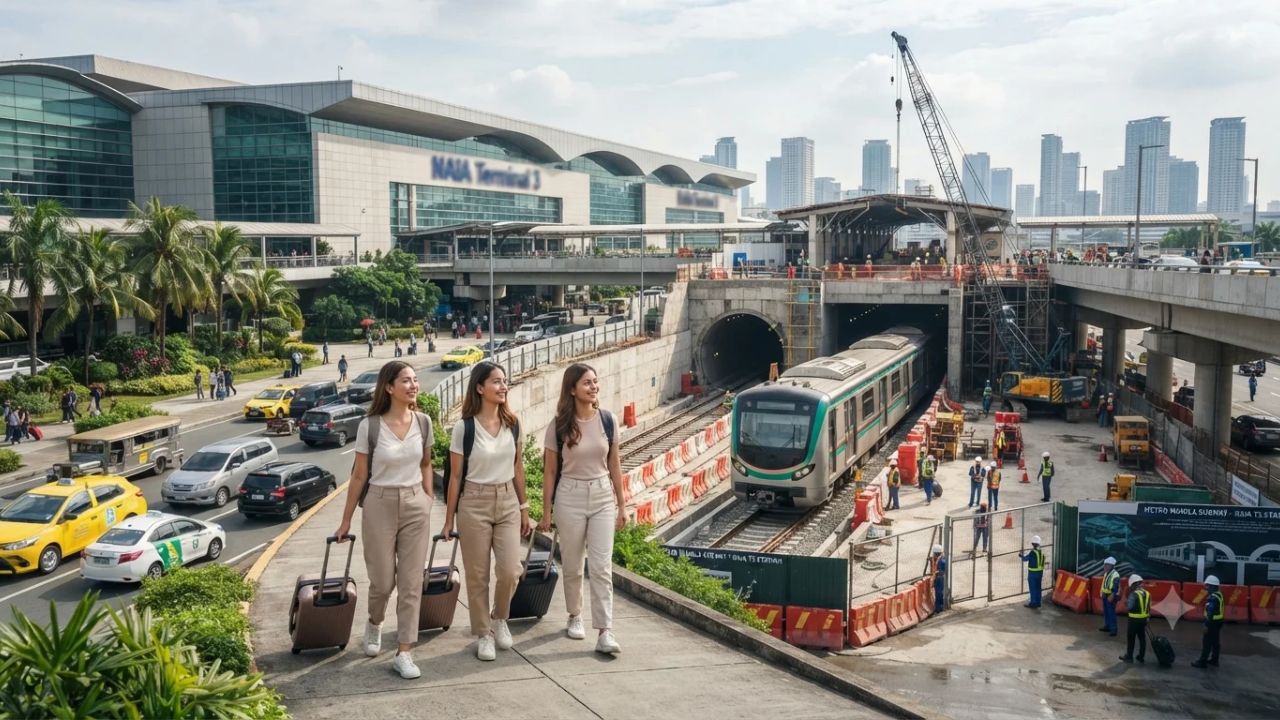
Connecting northern Metro Manila directly to the country's main international gateway in just 40 minutes—compared to the grueling one hour and 35 minutes currently spent navigating surface gridlock—construction has officially begun on the dedicated Ninoy Aquino International Airport (NAIA) Terminal 3 underground subway station. As the anchor element of Contract Package 109 within the larger 33-kilometer Metro Manila Subway Project, this subterranean rail spur brings modern underground mass transit to an aviation hub that has long challenged international travelers with unpredictable roadway delays.
For decades, navigating the journey between Manila's airport terminals and key districts like Bonifacio Global City (BGC), Makati, and Quezon City meant enduring the unpredictable traffic of Epifanio de los Santos Avenue (EDSA) and the South Luzon Expressway. The construction of the NAIA Terminal 3 subway link introduces a high-speed transit spine across 17 stations, providing a direct connection between domestic and international flight gates and the wider capital region.
Engineering the 33-Kilometer Underground Airport Spine
The NAIA Terminal 3 subway development spans approximately 2.413 kilometers of underground alignment, incorporating twin bored tunnels, multi-level passenger concourses, and direct subterranean walkways into the terminal building. The station is engineered to absorb substantial growth as Philippine aviation and international tourism continue expanding over the coming decades.
The infrastructure scope and projected operational capacity reflect massive urban transit demand:
| Project Metric & Component | Specification | Practical Traveler Impact |
|---|---|---|
| Total Subway Network Length | 33 kilometers across 17 stations | Unified north-south underground transit across Metro Manila |
| Airport Station Alignment | 2.413 kilometers (Contract Package 109) | Direct underground boarding beneath NAIA Terminal 3 |
| Travel Time from Valenzuela City | Reduced from 95 minutes to 40 minutes | More than 57% reduction in total airport transit time |
| Daily Passenger Volume (2035) | Projected 70,000 passengers per day | Reliable airport commutes for travelers and aviation staff |
| Daily Passenger Volume (2045) | Projected 74,000 passengers per day | Long-term high-capacity infrastructure for megacity growth |
By establishing grade-separated underground tracks, the subway isolates airport travelers from surface traffic jams, flash-flood road closures, and peak-hour vehicle queues, ensuring predictable arrival times for departing flights.
What Sets Manila's Airport Transit Transformation Apart
Metro Manila is a sprawling polycentric metropolis of over 14 million residents, where business districts, historic colonial quarters, and international hotel enclaves are dispersed across separate administrative cities. Historically, NAIA operated without direct heavy rail or subway connections, forcing millions of arriving tourists to rely exclusively on airport taxis, app-based ride-hailing, or point-to-point buses.
The inclusion of NAIA Terminal 3 into the 17-station subway network integrates the airport directly with key destination districts:
- Bonifacio Global City (BGC): The capital's modern financial and lifestyle hub, filled with pedestrian high streets, contemporary art galleries, and upscale dining.
- Ortigas and Quezon City: Major commercial centers housing government offices, shopping complexes, and creative hubs.
- Historic Old Manila: Heritage enclaves like the 16th-century walled city of Intramuros and Rizal Park, accessible via transfers to the existing LRT and MRT lines.
Travelers can track national transport infrastructure updates and airport guidelines via the Department of Transportation (DOTr) and the official Manila International Airport Authority.
Visitor Insider Tips for Navigating NAIA Terminal Transfers
Until the full subway network opens for revenue passenger service, seasoned travelers rely on these proven operational tactics to navigate Manila's airport ecosystem:
- Know Your Terminal Before You Land: NAIA consists of four separate terminals (T1, T2, T3, and T4) that are not physically connected by walking concourses. Double-check your departure terminal on your ticket; Terminal 3 handles major international carriers and domestic flights operated by Cebu Pacific and AirSWIFT.
- Use the Elevated NAIA Expressway (NAIAX): When taking a taxi or ride-hail vehicle between terminals or heading toward Makati and BGC, request that your driver use the elevated NAIAX tollway. Paying the modest toll saves 30 to 45 minutes of surface traffic during afternoon peak hours.
- Book Ride-Hailing via Grab: Skip informal airport taxi touts at the arrival curbside. Download the Grab mobile app or visit the official Grab booking booths located outside the Terminal 3 arrivals hall for fixed-rate, metered transport with transparent pricing.
- Base Yourself in Newport City for Short Layovers: If you have an overnight connection, stay in Newport City directly across from Terminal 3. You can walk across the air-conditioned Runway Manila pedestrian footbridge spanning over the highway without setting foot in traffic.
- Taste Classic Filipino Flavors at Terminal 3: Sample comforting local specialties before your flight, including garlic-fried rice with cured beef (tapsilog), rich peanut oxtail stew (kare-kare), and sweet iced coconut desserts (halo-halo). Explore more regional travel ideas on the Philippines Department of Tourism portal.
Cultural and Environmental Context of Metro Manila Transit
The transition toward electric underground rail marks a significant turning point in Metro Manila's environmental strategy. For decades, vehicle emissions from millions of idling cars, utility vans, and traditional jeepneys contributed to severe air pollution along the EDSA ring road.
By shifting tens of thousands of daily motorized journeys into energy-efficient subway tunnels, the Metro Manila Subway Project will cut urban carbon emissions while reducing diesel particulates in dense residential neighborhoods.
At the community level, direct airport mass transit fosters economic inclusivity. Airport service personnel, hospitality workers, and small business owners who previously spent three to four hours daily commuting on crowded buses will gain access to affordable, climate-controlled rail, improving quality of life across the capital region while presenting international visitors with a clean, welcoming gateway to the Philippines.
FAQ: Manila Airport and Subway Travel 2026
How fast will the new subway travel from northern Manila to NAIA Terminal 3? The trip between Valenzuela City and NAIA Terminal 3 will take approximately 40 minutes, down from the current travel time of around one hour and 35 minutes.
How many stations will the Metro Manila Subway system have? The subway network extends across 33 kilometers and includes 17 stations, directly serving major business districts, residential hubs, and NAIA Terminal 3.
Can I walk between NAIA terminals? No, the terminals are located around the airfield perimeter. You must use airport shuttle buses, taxis, or ride-hailing services to transfer between Terminals 1, 2, 3, and 4.
What is the best way to travel from NAIA Terminal 3 to BGC or Makati today? Taking a Grab ride-hail car or official metered airport taxi via the elevated NAIA Expressway (NAIAX) is the fastest and most reliable option during current subway construction.
Beneath the lively energy of Manila's streets, a modern underground artery is quietly rising to make every Philippine journey faster and smoother.
Related Travel Guides
This article is for informational purposes. Flight routes, passenger regulations, visa rules, and transit advisories are subject to change by airlines and aviation authorities. Readers are advised to verify schedules and travel documentation with relevant carriers and border agencies before departure.
Related Stories

European Mass Protests Disrupt Travel Across France, Italy, Belgium, and Turkey in 2026

Storm Bruna 2026: Iberia Faces 200mm Rainfall and 6m Swells Triggering Mass Travel Chaos