
MetLife Stadium World Cup Creates Transit Crisis as 50,000 Train Tickets Unsold in New Jersey
World Cup crowds threaten rail gridlock in New York-New Jersey as designated event trains sit empty. Transit authorities scramble as 50,000 unsold tickets force fans onto overcrowded commuter lines.

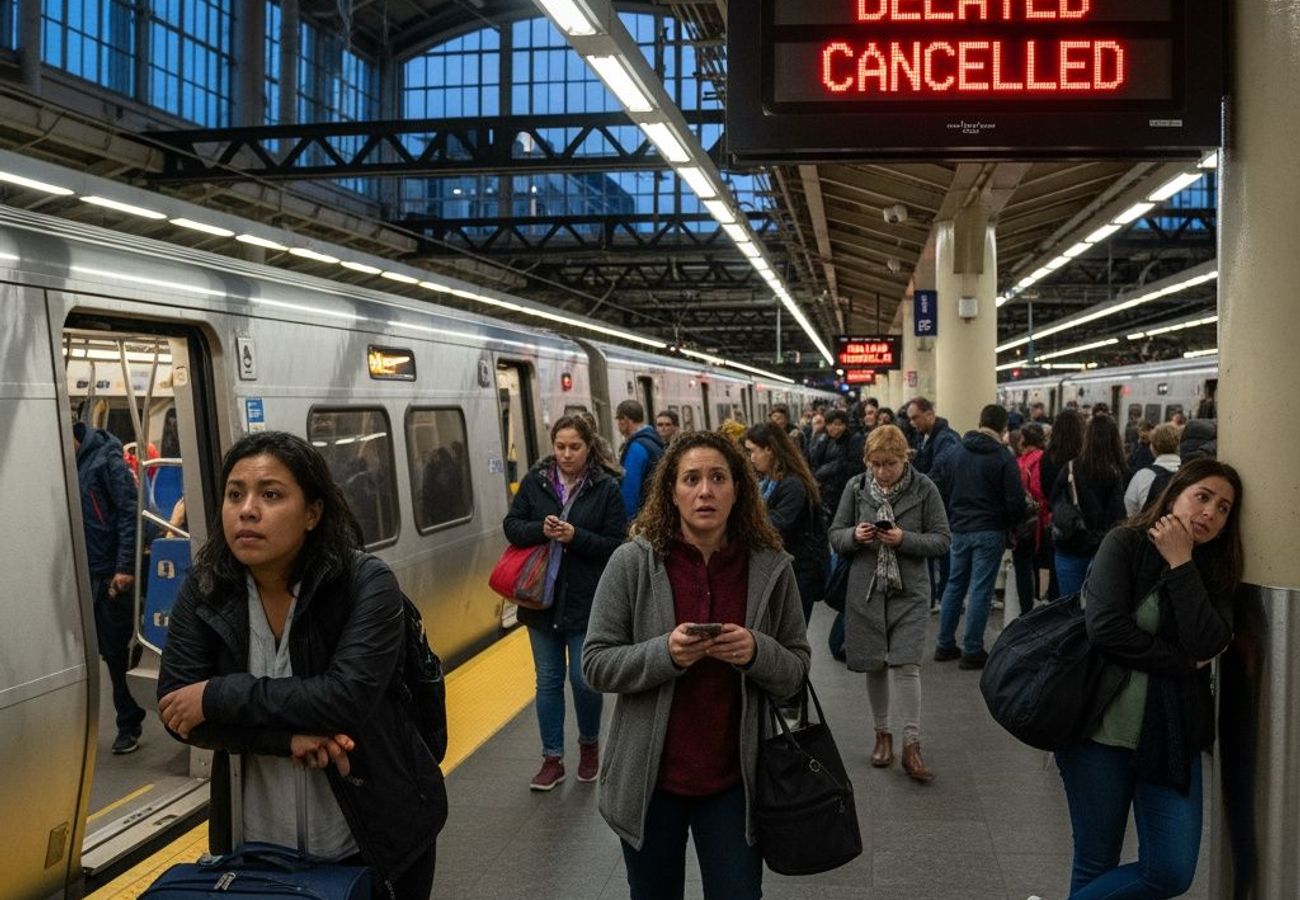
Image generated by AI
The Perfect Storm Building at MetLife Stadium
The clock is ticking for transit planners in the New York-New Jersey corridor. A dangerous capacity squeeze is forming around MetLife Stadium as World Cup match dates approach, and the culprit isn't traffic—it's a stubbornly low uptake of designated event train services.
Here's the problem: 50,000 dedicated World Cup train tickets remain unsold. These special services were engineered to move stadium crowds directly to MetLife, bypassing the region's already-strained commuter rail network. Instead, transport officials now expect those ticket holders to flood onto regular NJ Transit and MTA lines. The result? A transportation collision waiting to happen.
I've covered major sporting events before, and this particular scenario represents a textbook failure of demand management. When crowds bypass engineered solutions and revert to default infrastructure, chaos accelerates exponentially.
Why Dedicated Trains Aren't Selling
The disconnect between what transport planners built and what fans actually want is stark. NJ Transit designed these event trains with stadium crowds in mind—high capacity, predictable timing, direct routing. Yet adoption has lagged far behind projections.
Several factors explain this reluctance:
Cost Premium: Event trains typically charge above standard commuter fares. For families or groups, this adds up quickly.
Scheduling Inflexibility: Dedicated trains operate on fixed schedules that don't account for pre-match dining or stadium arrival preferences.
Digital Friction: Booking systems for special event services often lack the simplicity of regular rail apps, creating unnecessary barriers.
Commuter Rail Familiarity: Fans accustomed to standard MTA or NJ Transit lines naturally default to what they know.
Reddit: "Why would I pay extra for a train that leaves when the stadium wants it to, not when I want to get there?" — r/nyc
This behavioral reality has blindsided planners who assumed financial incentives alone would drive adoption.
The Cascade Effect on Regional Infrastructure
What happens when 50,000 additional riders suddenly load onto commuter services designed for regular weekday traffic?
Predictable chaos.
NJ Transit, the Port Authority, and the MTA operate interconnected systems that share critical chokepoints. During normal operations, these hubs function at near-capacity. Add a World Cup match day—potentially drawing 80,000+ fans—and you create a bottleneck scenario that previous fixtures have already demonstrated.
Earlier matches at MetLife showed exactly this pattern: platforms became dangerously overcrowded, boarding delays stretched to 45+ minutes, and transfer stations became gridlocked. The infrastructure didn't break—but it came perilously close.
The coordination gap between agencies compounds the problem. When multiple transit operators don't communicate seamlessly, timing mismatches at interchange stations create cascading delays. Trains fill before passengers can board, creating backups that ripple through the entire network.
The Safety Implications Nobody's Talking About
This isn't merely an inconvenience issue. Platform overcrowding at scale creates legitimate safety hazards.
Transport safety experts point to stampede risks, heat illness in packed stations, and potential falls during surges. The Port Authority has already issued warnings about capacity limits at key hubs. If passenger flows exceed rated limits—and they likely will—movement restrictions become necessary, further degrading the experience.
Control becomes impossible when you're managing human flow in spaces designed for 40% lower density. That's not speculation—that's engineering reality.
What Transit Authorities Are Actually Doing
Regional transport agencies haven't been idle. NJ Transit has expanded service frequencies for World Cup fixtures. The MTA is coordinating interchange operations. Port Authority staff are being deployed at critical stations to manage queues and direct passenger flow.
But here's the hard truth: no amount of staffing solves a structural supply problem. You can't manage your way out of 50,000 unexpected riders through heroic personnel deployment alone.
Officials are now running aggressive campaigns to boost event train ticket sales. Real-time monitoring systems are being deployed to track congestion patterns and detect pressure points early. Some agencies are even offering incentives for early booking to spread demand across multiple train departures.
The question is whether these measures can shift behavior in the remaining weeks before major fixtures.
Comparing Transportation Options: The Data Picture
The contrast between dedicated event capacity and commuter rail vulnerability is stark:
| Service Type | Design Purpose | Peak Capacity | Match-Day Risk |
|---|---|---|---|
| Dedicated Event Trains | Stadium access | High, time-controlled | Low (if fans use tickets) |
| Standard Commuter Rail | Daily mixed demand | Moderate-to-high | Very high during overlap |
| Interchange Hubs | Transfer points | Variable | Critical congestion risk |
| Shuttle/Local Links | Last-mile access | Lower volume | Moderate |
The data confirms what planners feared: commuter rail systems simply weren't architected for simultaneous event and regular passenger loads of this magnitude.
The Broader American Sports Transport Problem
MetLife's situation isn't unique. American stadiums increasingly rely on aging urban rail infrastructure to accommodate massive crowds, yet coordination between venue operators, local transit agencies, and event promoters remains fragmented.
Cities hosting major sporting events consistently underestimate demand management challenges. World Cup fixtures compound this because international audiences often aren't familiar with local transit options, leading to unpredictable behavior patterns.
The New York-New Jersey region has a particular disadvantage: it hosts one of the world's most complex multi-agency transit systems. NJ Transit, MTA, and Port Authority each operate under different governance structures, funding models, and operational protocols. Seamless coordination sounds good in theory. In practice, it's organizational chess.
What Needs to Happen Now
Transport officials face a compressed timeline to improve ticket adoption:
Communication Blitz: Stadium communications, team websites, and fan apps need crystal-clear event train messaging that emphasizes convenience, not cost.
Pricing Adjustment: Some agencies are quietly discounting event train fares. Expect more of this—margin doesn't matter if regular rails collapse.
Real-Time Capacity Messaging: Apps should display real-time crowding on both event trains and commuter rails, nudging fans toward less-congested options.
Staggered Arrival Incentives: Port Authority recommendations for non-peak arrivals need teeth—perhaps stadium perks for early arrivals.
Corporate Shuttle Coordination: Major corporations with MetLife event attendance should be contractually encouraged to book group event trains.
The uncomfortable truth: even with these measures, overcrowding is still likely during peak match days.
The Forecast for Remaining Fixtures
Future World Cup matches at MetLife will test whether these interventions actually work. Current unsold ticket levels suggest they won't—not completely anyway.
Transit chaos may simply be the cost of hosting mega-events in American cities without upgrading underlying infrastructure. Temporary band-aids through enhanced staffing and communication can only stretch existing capacity so far.
The real lesson here: 50,000 unsold tickets aren't a marketing failure. They're a infrastructure warning light.
Officials have weeks to change behavior. If they fail, the 2026 World Cup will become a case study in why American transit systems struggle with modern event demands.
The next World Cup match day at MetLife could either showcase regional coordination mastery—or become a cautionary tale about what happens when planners build capacity nobody uses.
Related Travel Guides
Disclaimer
This article is for informational and educational purposes only. It does not constitute legal, financial, or professional advice. While we strive to provide accurate and up-to-date information, travel policies, regulations, and conditions change rapidly. Always verify information with official sources before making travel decisions. Nomad Lawyer makes no representations about the accuracy, reliability, completeness, or suitability of the information provided. Readers should consult qualified professionals for advice specific to their circumstances. The views expressed in this article are those of the author and do not necessarily reflect the views of Nomad Lawyer.
Raushan Kumar
Founder & Lead Developer
Full-stack developer with 11+ years of experience and a passionate traveller. Raushan built Nomad Lawyer from the ground up with a vision to create the best travel and law experience on the web.
Learn more about our team →