
Mediterranean Autumn Storms: Crete Floods Under 440mm Deluge as Alerts Hit Cyprus and Southern France

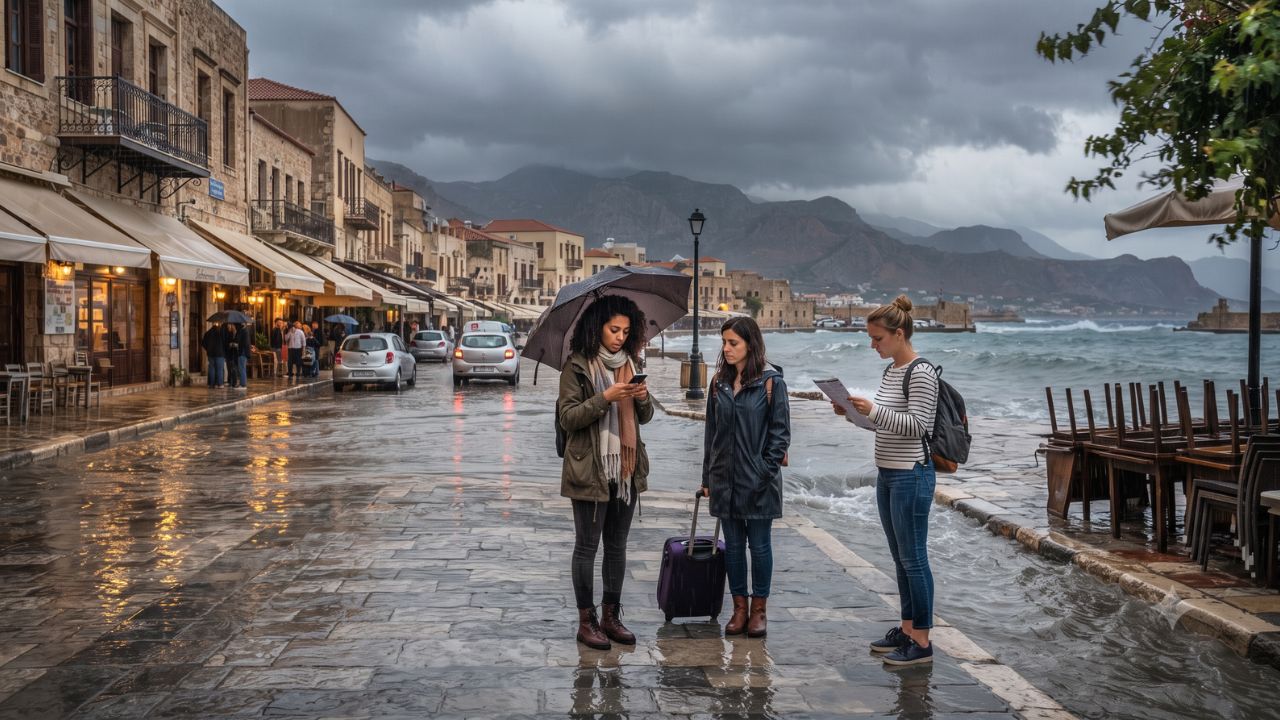
While autumn travel across the Mediterranean is celebrated for warm seas and thinner crowds, an extreme atmospheric collision dumped an unprecedented 440 millimeters of rainfall over Crete's Lasithi Plateau in just 48 hours, turning rural valleys into torrents and shutting down iconic hiking trails. The European Union's Copernicus emergency mapping service was formally activated across Greece after mudslides, damaged bridges, and swollen riverbeds cut access across Heraklion, Chania, Rethymno, and Ierapetra, leaving maintenance crews briefly stranded deep inside the Samaria Gorge.
The intense weather pattern underscores the sharp climatic divide governing Mediterranean travel between late September and early October 2026. As convective storm cells sweep from the Gulf of Lion across the Tyrrhenian Sea to the Aegean, travelers face an uneven landscape where severe hydrogeological alerts in southern France, Corsica, and Cyprus contrast sharply with tranquil autumn conditions in the Balearics and Croatian Dalmatia.
Island-by-Island Weather Impact and Flood Zones
The epicenter of the severe weather remains Crete, where torrential downpours between 30 September and early October created major travel disruptions. On the high mountain Lasithi Plateau, 440 mm of rain overwhelmed agricultural drainage systems and cut road access to traditional villages. Western Crete experienced similar intensity between 1 and 5 October, forcing the immediate closure of Samaria Gorge when flash floods swept across trail walkways. Official travel advisories coordinated by the Greek National Tourism Organisation urged visitors to avoid mountain driving and rural ravines.
In southern France, Météo-France placed the Gard and Hérault departments under rare red rain-flood vigilance as Mediterranean storm episodes flooded roads around Montpellier and Nîmes. Across the water in Corsica, sustained downpours along the eastern coast from 5 to 7 October triggered localized flash flood risks across narrow mountain passes.
Further east, the Cyprus Department of Meteorology issued a yellow thunderstorm warning on 6 October 2026, cautioning of localized precipitation rates exceeding 35 mm per hour, accompanied by hail and sudden wind gusts across the Troodos Mountains and northwest districts, documented by Visit Cyprus. In southwestern Turkey, the Turkish Meteorological Service warned of 20 to 50 kg/m² rainfall in eastern Antalya and 21 to 50 kg/m² in the Muğla resort corridor covering Bodrum, Marmaris, and Fethiye, where 40 to 60 km/h wind gusts disrupted coastal boat excursions.
| Destination Region | Country | Active Weather Period | Recorded Rainfall / Wind Metrics | Official Warning Level | Primary Tourism & Transport Impact |
|---|---|---|---|---|---|
| Lasithi Plateau & East Crete | Greece | Late Sept – Early Oct 2026 | ~440 mm rainfall over 48 hours | Copernicus Emergency Mapping Active | Inundated rural roads, farm flooding, village access cuts |
| Samaria Gorge & West Crete | Greece | 1–5 October 2026 | Intense convective mountain deluges | Greek Civil Protection Red Alert | Gorge hiking suspended; mountain trail access blocked |
| Gard & Hérault (Languedoc) | France | 29 Sept – Early Oct 2026 | Violent stationary storm cells | Météo-France Red Rain-Flood Vigilance | Montpellier & Nîmes road flooding; regional rail slowdowns |
| Eastern Corsica | France | 5–7 October 2026 | Sustained orographic mountain rain | Météo-France Yellow/Orange Alert | Mountain pass rockfalls; coastal driving hazards |
| Troodos & Northwest Cyprus | Cyprus | 6 October 2026 | >35 mm/hour rainfall rates, hail | Department of Meteorology Yellow Warning | Sudden road flooding, reduced mountain visibility |
| Antalya & Muğla (Bodrum) | Türkiye | Late Sept 2026 | 20–50 kg/m² rain, 40–60 km/h winds | Turkish Meteorological Service Warning | Dalaman transfer delays, coastal boat trip cancellations |
| Sardinia & Sicily | Italy | Early Oct 2026 | Severe thunderstorms, rough seas | Italian Civil Protection Hydrogeological Alert | Western coastal flooding, ferry crossing holds |
| Slovenian Coast (Piran/Koper) | Slovenia | Around 8 October 2026 | Forecast 25–50 mm in 24 hours | ARSO Severe Weather Alert | Surface waterlogging, coastal day-trip interruptions |
| Split & South Dalmatia | Croatia | 6 October 2026 | Calmer seas (earlier 65–100 km/h winds) | DHMZ Clear / No Active Warning | Ferry operations running on regular autumn timetables |
| Balearic Islands (Mallorca) | Spain | 6–7 October 2026 | Light convective showers | AEMET Normal / No Marine Warnings | Standard resort operations; minor brief shower delays |
What Makes Autumn Mediterranean Weather Unique
The volatility of early autumn weather in the Mediterranean stems from thermal contrast. By October, the Mediterranean Sea retains high summer surface temperatures, functioning as a massive heat and moisture engine. When cooler polar air masses descend from northern Europe across the Alps and Pyrenees, they collide with warm marine air over the sea.
This collision triggers stationary convective storm clusters that can drop months of precipitation over a single island or coastal valley in hours. Steep topography—such as the White Mountains of Crete, Mount Etna in Sicily, or the Troodos range in Cyprus—forces moisture rapidly upward, concentrating extraordinary rainfall in narrow ravines.
Conversely, coastal strips just 40 kilometers away from mountain deluges often enjoy sunny, 24-degree weather. This hyper-local variance can deceive travelers into venturing onto hiking trails or rural roads without realizing that mountain headwaters upstream are experiencing severe flash floods.
Visitor Insider Tips
When traveling across Mediterranean islands during unstable autumn weather cycles, smart navigation and safety precautions are essential:
- Never Enter Gorges or Dry Riverbeds on Overcast Days: In limestone landscapes like Crete's Samaria or Imbros gorges, rain falling miles away in the mountains can create a sudden wall of water through narrow canyon floors within 20 minutes.
- Avoid Crossing Flowing Water in Rental Vehicles: Mountain runoff across Greek and Cypriot secondary roads can conceal deep asphalt washouts or swept-away bridge footings. Turn around if water covers the roadway.
- Download Local Civil Protection Emergency Apps: Rely on national meteorological services rather than standard global weather apps. In Greece, monitor 112 emergency text alerts; in France, check the Météo-France vigilance map; in Italy, follow Protezione Civile bulletins.
- Build Ferry and Transfer Buffers: High winds and rough seas frequently ground catamaran ferry services between Crete, the Cyclades, and Italian islands. Allow at least 24 hours between an island ferry connection and a homebound international flight.
Cultural and Environmental Context
The surge in extreme Mediterranean rain episodes directly impacts traditional agricultural communities and delicate historic heritage. On Crete's Lasithi Plateau, famous for its historic white-sailed stone windmills, 440 mm of floodwater inundated heritage olive groves and vineyards, threatening winter harvests.
Furthermore, historical villages constructed in mountainous river valleys face heightened soil erosion and rockfall risks as prolonged summer droughts leave mountain soil too hard to absorb sudden deluge volumes. Local tourism cooperatives are actively working with regional civil defense authorities to build modern drainage bypasses, preserve ancient stone retaining walls, and establish real-time trail monitors to safeguard both resident communities and visiting hikers.
FAQ: Visiting the Mediterranean During Autumn Storms 2026
Is Crete safe to visit right now?
Yes, major coastal cities like Heraklion and Chania remain accessible, though mountain excursions, gorge hiking, and rural driving across the Lasithi Plateau face temporary closures and require checking local civil protection bulletins.
How do I know if hiking trails like Samaria Gorge are open?
Samaria Gorge operates under strict Greek Forest Directorate management. Official opening statuses are posted daily through local national park authorities based on rainfall forecasts and water level sensors.
Are flights and ferries running normally across the Mediterranean?
Major airports in Athens, Heraklion, Larnaca, and Nice are operating, though high wind gusts can cause brief flight holds and cancel small passenger catamaran ferry services across rough open waters.
By respecting local mountain topography and staying attuned to real-time civil alerts, travelers can safely savor the rich cultural warmth of an authentic Mediterranean autumn.
Related Travel Guides
Disclaimer
This article is for informational and educational purposes only. It does not constitute legal, financial, or professional advice. While we strive to provide accurate and up-to-date information, travel policies, regulations, and conditions change rapidly. Always verify information with official sources before making travel decisions. Nomad Lawyer makes no representations about the accuracy, reliability, completeness, or suitability of the information provided. Readers should consult qualified professionals for advice specific to their circumstances. The views expressed in this article are those of the author and do not necessarily reflect the views of Nomad Lawyer.
Raushan Kumar
Founder & Lead Developer
Full-stack developer with 11+ years of experience and a passionate traveller. Raushan built Nomad Lawyer from the ground up with a vision to create the best travel and law experience on the web.
Learn more about our team →