
Puerto Rico, Greece, and Global Tourism Hubs Face Severe Water Shortages: Traveler Impact and Emergency Controls
Puerto Rico, Greece, Cyprus, Spain, and France face historic 2026 drought conditions, prompting rotating water cuts, emergency hotel tankers, and multi-million dollar infrastructure investments.

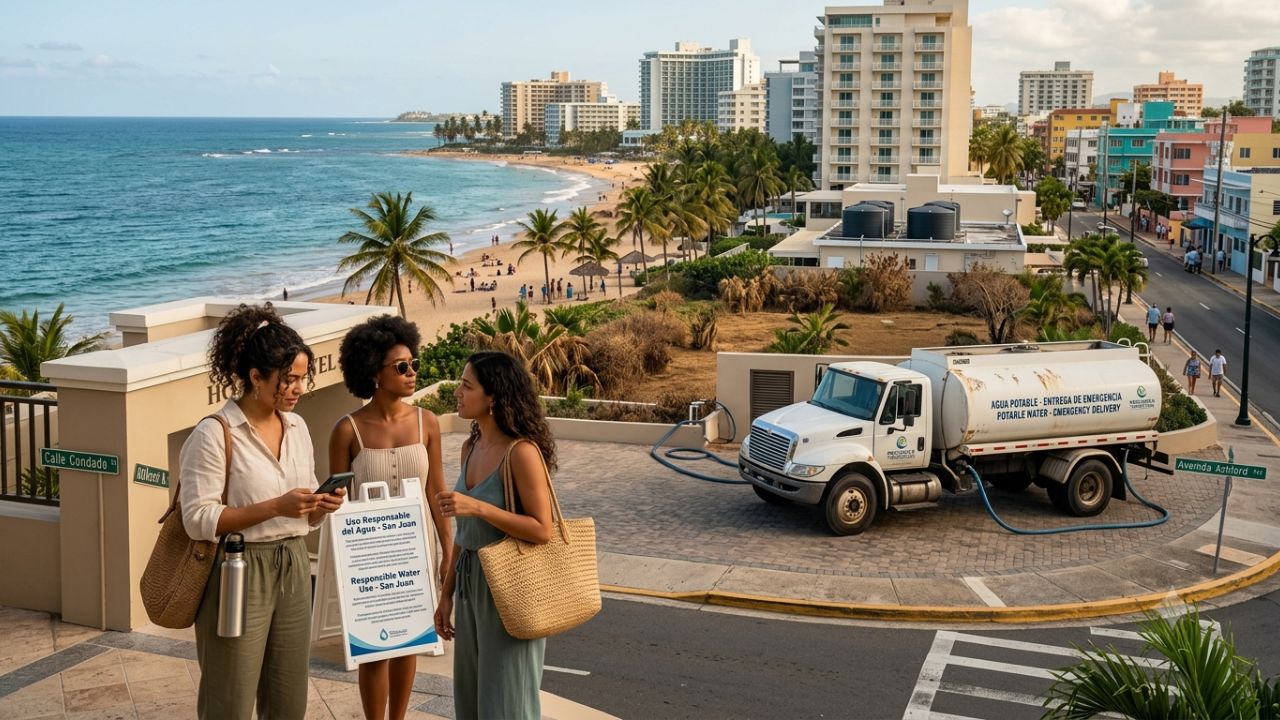
Record rainfall deficits and reservoir depletion force emergency water management across global tourism destinations.
Popular travel destinations worldwide, including Puerto Rico, Greece, Cyprus, Spain, and France, are confronting acute water shortages caused by extreme summer droughts, forcing municipal authorities to implement emergency tanker deliveries, rotating supply interruptions, and multi-million-dollar infrastructure investments.
[San Juan, PR, Oct 6, 2026] — A converging global water crisis is imposing severe operational challenges on major international tourism corridors. Puerto Rico has joined a growing list of popular travel destinations—including Mediterranean resort hubs in Greece, Cyprus, and Spain, alongside regional tourism centers in South Africa and France—that are managing depleted reservoirs and infrastructure strain during peak visitor seasons.
In Puerto Rico, an unprecedented summer heatwave combined with historic rainfall deficits severely depleted primary water reservoirs, forcing emergency relief measures for hotels, resorts, and guesthouses across San Juan, Condado, and Isla Verde. Similar environmental pressures across Europe and Africa have prompted government interventions ranging from hotel desalination permits to restrictions on non-essential water usage.
Puerto Rico Drought Emergency and Hospitality Intervention
Puerto Rico's water emergency escalated following the driest July recorded in San Juan in over 120 years. Capital rainfall measured just 0.54 inches in July—a 91% drop from the historical monthly average of 6.02 inches—accompanied by the second-hottest July temperatures on record. Surrounding ecosystems, including the El Yunque rainforest, accumulated rainfall deficits between 8 and 14 inches.
| Emergency Parameter / Metric | Official Environmental Metric | Operational & Tourism Impact |
|---|---|---|
| San Juan July Rainfall | 0.54 Inches (vs 6.02 Normal) | Driest July recorded in over 120 years |
| Drought Territorial Coverage | 25% Severe Drought / 36% Moderate | Expanded to Extreme Drought across 2026 |
| Carraízo Reservoir Deficit | 10 Million Gallons Daily Gap | Demand: 80M gal/day vs Supply: 70M gal/day |
| Residential & Commercial Cuts | 48-Hour Rotating Interruptions | Impacted 180,000 customer accounts |
| Emergency Hotel Water Deliveries | 654,000+ Gallons Delivered | 116 tanker deliveries to 33+ hotel properties |
| Tourism Business Assistance Fund | $2 Million Relief Program | Up to $10,000 per affected hospitality business |
Puerto Rico Water Emergency Response Network:
[Carraízo Reservoir (10M Gallon/Day Deficit)]
                     │
                     ├─► Municipal Grid: 48-hour rotating water cuts for 180,000 accounts
                     ├─► Hospitality Sector: 654,000+ gal tanker deliveries to 33+ hotels
                     └─► Business Relief: $2M emergency fund ($10k max grant/operator)
The primary metropolitan supply source, Carraízo Reservoir, experienced a 10-million-gallon daily deficit between required demand (80 million gallons per day) and available production (70 million gallons per day). Authorities established 48-hour rotating supply interruptions across San Juan, Carolina, Trujillo Alto, Canóvanas, Loíza, Gurabo, and Juncos. To keep the tourism economy operational, emergency services delivered over 654,000 gallons of potable water via 116 tanker dispatches to 33 key lodging properties in Old San Juan, Condado, and Isla Verde, backed by a $2 million emergency relief grant package for small hospitality operators.
International Destination Benchmark: Water Management Protocols
Tourism hubs globally are deploying structural engineering solutions and dedicated tax revenues to protect visitor infrastructure while conserving local water tables:
| Destination / Region | Drought Condition & Reservoir Status | Municipal & Infrastructure Countermeasure |
|---|---|---|
| Greece (Aegean Islands) | Island freshwater scarcity during summer | €75.5M approved for 42 projects (Paxos, Lipsi, etc.) + €65M follow-up |
| Cyprus | Persistent island-wide drought | €200M+ allocation; mobile units adding 50,000 m³/day; 14 hotel desalination permits |
| Spain (Balearic Islands) | Reserves down to 38% (Mallorca 38%, Ibiza 37%, Menorca 33%) | €39.8M allocated from Sustainable Tourism Tax for water reuse & efficiency |
| South Africa (Knysna) | Akkerkloof Dam dropped to 19% capacity | ~13 days of water supply remaining; National Water Action Plan activated |
| France | July rainfall 67% below normal | 92 departments restricted (67 at crisis level); 250,000 residents affected |
| Jordan | Summer deficit of 15 Million m³ | Reservoirs 80M m³ below prior year; national conservation & reuse programs |
Global Tourism Water Management Frameworks:
├── Cyprus & Greece ➔ Infrastructure Investment & Private Hotel Desalination Rigs
├── Spain (Balearics) ➔ Reinvesting Sustainable Tourism Tax (€39.8M) into Reuse
├── South Africa ➔ Emergency Municipal Allocation & Dam Capacity Tracking
└── France & Jordan ➔ Departmental Restrictions & Long-Term Aquifer Reclamation
Private Desalination Rigs in Cyprus
Cyprus has pioneered private hospitality water self-sufficiency. Under a government initiative, major hotels can install dedicated on-site desalination plants. Out of 15 hotel applications submitted by mid-2026, 14 received operational permits, enabling resort properties to process seawater independently without placing strain on municipal drinking water networks.
Balearic Islands Sustainable Tax Reinvestment
In Spain's Balearic Islands, where water reserves plummeted to 38% across Mallorca, Menorca, and Ibiza, authorities directed €39.8 million collected from the Sustainable Tourism Tax toward wastewater treatment, leakage reduction, and aquifer recharging projects.
Traveler Guidance and Operational Expectations
While major resort hotels equipped with large storage cisterns and commercial desalination systems remain fully operational, visitors traveling to water-stressed regions should anticipate localized conservation measures:
| Travel Setting / Activity | Expected Conservation Measure | Traveler Best Practice |
|---|---|---|
| Resorts & Large Hotels | On-site cistern backups & private desalination | Follow towel/linen reuse programs |
| Guesthouses & Boutique Lodging | Potential scheduled low-pressure hours | Minimize shower duration during peak hours |
| Swimming Pools & Landscaping | Restrictions on pool refilling & irrigation | Check facility operational updates prior to arrival |
| Dining & Local Services | Reduced water service at restaurants | Support local eco-certified hospitality businesses |
Frequently Asked Questions
Is it safe to travel to Puerto Rico during the water shortage?
Yes, tourism districts including Old San Juan, Condado, and Isla Verde remain open. Major hotels utilize private cistern backups and emergency water tanker deliveries supported by local authorities.
How are European islands like Cyprus and Greece handling tourist water demand?
Cyprus is investing over €200 million in mobile desalination and allowing hotels to operate private desalination units. Greece has approved over €140 million across 42 island infrastructure projects.
What water restrictions affect tourists traveling in France?
In France, 92 departments have faced water restrictions, which may limit hotel pool refilling, garden irrigation, vehicle washing, and non-essential municipal water usage.
Related Travel Guides
Disclaimer
This article is for informational and educational purposes only. It does not constitute legal, financial, or professional advice. While we strive to provide accurate and up-to-date information, travel policies, regulations, and conditions change rapidly. Always verify information with official sources before making travel decisions. Nomad Lawyer makes no representations about the accuracy, reliability, completeness, or suitability of the information provided. Readers should consult qualified professionals for advice specific to their circumstances. The views expressed in this article are those of the author and do not necessarily reflect the views of Nomad Lawyer.
Raushan Kumar
Founder & Lead Developer
Full-stack developer with 11+ years of experience and a passionate traveller. Raushan built Nomad Lawyer from the ground up with a vision to create the best travel and law experience on the web.
Learn more about our team →