
Delta Air Lines Reports Record Long-Haul Demand: 17 Million Passengers, 94% Capacity on Flagship Routes
Breaking airline news and aviation industry updates for 2026.

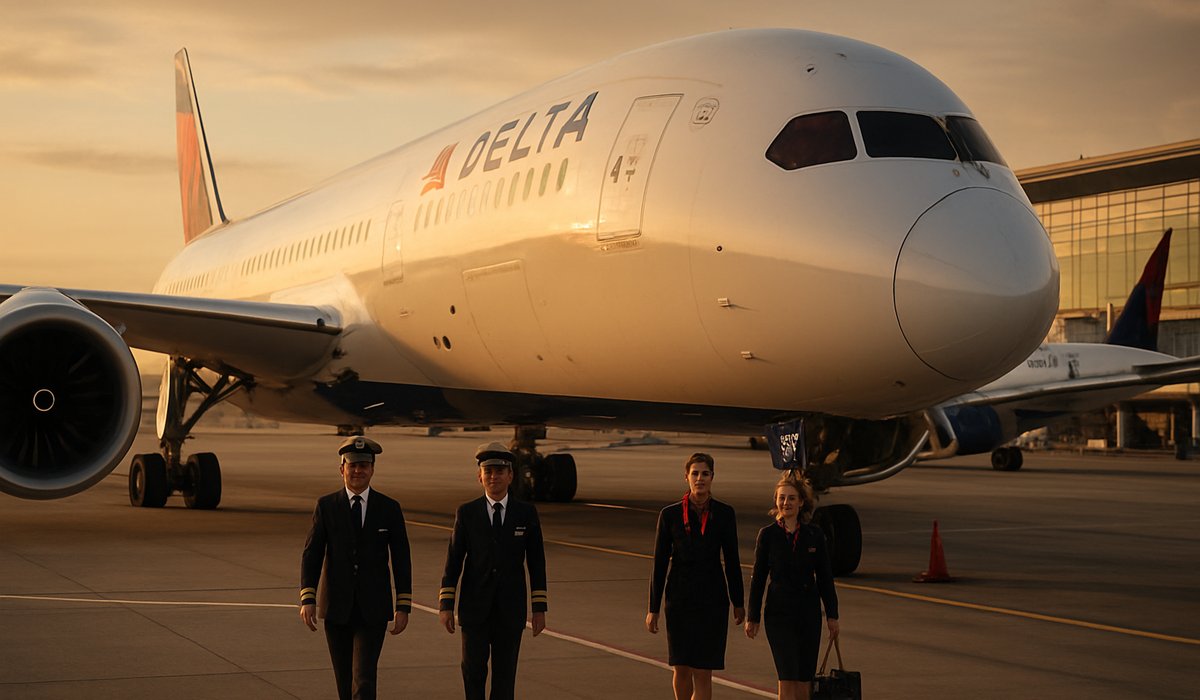
Image generated by AI
Delta Air Lines Reports Record Long-Haul Demand: 17 Million Passengers, 94% Capacity on Flagship Routes
SkyTeam carrier dominates transcontinental and international travel as global aviation recovery accelerates
Unprecedented Capacity Squeeze Signals Strong Post-Pandemic Recovery
Delta Air Lines has disclosed commanding performance metrics across its long-haul network, transporting 17 million passengers between February 2025 and January 2026—cementing its position as America's leading carrier on extended-distance routes. The Atlanta-based airline's flagship international and transcontinental services are operating at near-maximum efficiency, with its ten busiest long-haul routes achieving average load factors of 94%, indicating that seats are filled at rates rarely seen in commercial aviation.
This performance surge underscores the airline industry's continued capacity constraints and robust demand recovery following years of volatility. Delta's figures reveal that the carrier captured one in eight of all long-haul passengers departing from United States airports during the measured period, according to data released by the U.S. Department of Transportation.
Traffic Growth Outpaces Industry Trends
The 4% year-over-year increase in Delta's long-haul passenger traffic outpaces broader market growth, suggesting the SkyTeam alliance member has successfully expanded market share through strategic route deployment and capacity additions. Industry analysts attribute this momentum to several converging factors: sustained demand for premium international experiences, corporate travel recovery, and the airline's competitive pricing strategies on high-demand corridors.
The 94% capacity utilization rate on the carrier's most heavily trafficked long-haul routes reflects a tightening aviation market where available seats have become increasingly scarce and valuable. This density poses both operational opportunities and challenges—while maximizing revenue per flight, such utilization levels leave minimal buffer for operational flexibility or last-minute demand spikes.
Implications for Airline Economics and Consumer Fares
The elevated load factors carry significant implications for airfare pricing and airline ancillary revenue strategies. Airlines operating at near-capacity on premium routes typically have limited inventory for promotional fares, often resulting in higher average ticket prices and increased reliance on baggage fees, seat selection charges, and other auxiliary revenue streams to maintain profit margins amid volatile jet fuel costs and labor expenses.
Delta's robust long-haul performance contrasts with regional carriers struggling with staffing shortages and regional route profitability. The concentration of passengers and revenue among major carriers like Delta raises competitive pressures for legacy competitors including American Airlines and United Airlines, which maintain comparable long-haul networks.
FAQ: Delta Long-Haul Flights and Aviation Industry Trends
What are Delta's busiest long-haul routes? Delta operates its 10 most-traveled long-haul routes with 94% average capacity, though the airline has not publicly disclosed the specific routes in this report.
Why are airline load factors so high right now? Post-pandemic demand recovery combined with limited aircraft supply and increased fuel costs have forced carriers to optimize capacity, resulting in fewer available seats and higher load factors across the industry.
How do high load factors affect airline baggage fees and ancillary charges? Airlines operating at maximum capacity rely more heavily on ancillary revenue (baggage fees, seat selection, upgrades) to improve profitability when traditional ticket pricing faces competitive pressure.
Is Delta cheaper than competitors on long-haul routes? At 94% capacity, Delta has limited inventory for discounted fares. Consumers typically find better pricing with less-utilized carriers or during off-peak travel periods.
What does this mean for international travel costs in 2025-2026? High load factors across major carriers suggest sustained upward pressure on international airfares, particularly on premium transcontinental and transoceanic routes.
Related Travel Guides
Flight Delay Compensation Guide 2026
Understanding Airline Route Changes
Airport Security Process Updated (2026)
External Resources
Disclaimer
This article is for informational and educational purposes only. It does not constitute legal, financial, or professional advice. While we strive to provide accurate and up-to-date information, travel policies, regulations, and conditions change rapidly. Always verify information with official sources before making travel decisions. Nomad Lawyer makes no representations about the accuracy, reliability, completeness, or suitability of the information provided. Readers should consult qualified professionals for advice specific to their circumstances. The views expressed in this article are those of the author and do not necessarily reflect the views of Nomad Lawyer.
Preeti Gunjan
Contributor & Community Manager
A passionate traveller and community builder. Preeti helps grow the Nomad Lawyer community, fostering engagement and bringing the reader experience to life.
Learn more about our team →