
Major Flight Disruptions Hit Cairo as Middle East Airspace Crisis Deepens
Cairo International Airport absorbs 106 flight disruptions in 2026 as airspace closures across Iran, Iraq, Israel, Jordan, and Gulf states force carriers to reroute through Egypt's strained terminals.

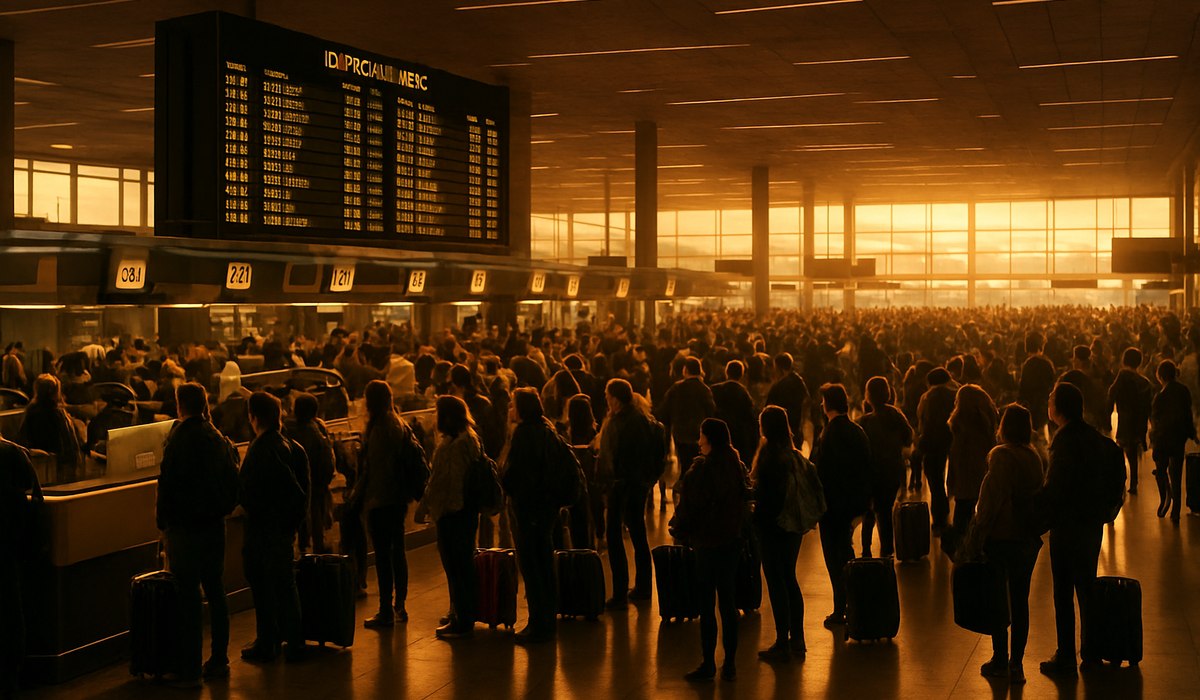
Image generated by AI
Cairo International Airport Becomes Critical Hub Amid Regional Airspace Crisis
Cairo International Airport has absorbed 106 flight disruptions in recent days as sweeping airspace closures across Iran, Iraq, Israel, Jordan, and Gulf states force international carriers to reroute operations through Egypt's increasingly overwhelmed terminals. The surge in diverted traffic reveals how fragile Egypt's role has become as a last-resort aviation corridor linking Europe, Africa, and Asia during the widening Middle East airspace crisis. Carriers including EgyptAir, Emirates, Lufthansa, and Turkish Airlines have all adjusted schedules to funnel long-haul operations through Cairo, straining ground infrastructure and pushing passenger wait times to crisis levels across check-in counters, immigration queues, and rebooking desks.
Cairo Absorbs Sharp Spike in Operational Strain
The scope of disruption at Cairo reveals the cascading impact of regional instability on global aviation networks. Flight-tracking platforms show that the 106 affected flights represent delays exceeding four hours, complete cancellations, and emergency reroutes compressed into a narrow window. Most disruptions cluster during overnight and early-morning bank windows, when diverted aircraft compete for limited runway slots and ground-handling crews work at reduced capacity.
According to aviation monitoring data, congestion peaks between midnight and 6:00 AM local time, coinciding with European departure windows that normally feed Asia-bound connections. Passengers report standing in immigration lines for 90 minutes or longer, while rebooking teams struggle to accommodate stranded travelers on already-full subsequent flights. EgyptAir ground crews have extended shifts to manage the overflow, yet infrastructure gaps remain visible across the terminal. Cairo's two main terminals—designed for approximately 42 million annual passengers—now handle emergency diversions on top of baseline traffic, creating operational bottlenecks that cascade throughout the day.
Airport authorities have not yet announced capacity expansion measures or additional ground-handling resources, leaving carriers and passengers to absorb delays through patience and schedule flexibility.
Ripple Effects Across Regional Aviation Networks
The Middle East airspace crisis originated from security developments beginning in late February 2026, when multiple nations imposed civil aviation restrictions across contested territories and military zones. International regulators—including EASA (European Union Aviation Safety Agency) and ICAO (International Civil Aviation Organization)—issued safety advisories directing carriers to avoid airspace over Iran, Iraq, Israel, Jordan, Lebanon, Qatar, the UAE, and portions of Saudi Arabia.
These restrictions eliminated the region's traditional role as a seamless intercontinental corridor. Flights that once flew direct from London to Singapore via the Persian Gulf now detour over Turkey, central Asia, or Egypt—adding 1.5 to 5 hours to journey times depending on routing. The European Union's aviation watchdog estimates that rerouting costs have climbed into billions of dollars across the industry, driven by extra fuel burn, crew hour extensions, and reduced aircraft utilization.
Major hub airports in Dubai, Abu Dhabi, Doha, and Jeddah have faced severe capacity cuts or temporary closures, forcing carriers to redistribute traffic to secondary nodes. Cairo, previously a secondary player in long-haul networks, has emerged as a critical alternative. Turkish airports (Istanbul, Ankara) absorb parallel overflow, yet neither region offers sufficient capacity to absorb the displaced volume permanently. Industry analysts predict sustained strain at Cairo through at least mid-2026 unless regional political conditions stabilize and airspace closures lift.
Terminal Congestion and Passenger Impact
Ground infrastructure at Cairo International Airport shows visible signs of strain. Terminal 3 (the newer international facility) operates at near-maximum capacity, with queues extending beyond designated holding areas during peak hours. Passengers face wait times of 60–120 minutes at passport control, compared to typical pre-crisis durations of 15–25 minutes.
Airline representatives indicate that baggage handling times have extended correspondingly. Ground crews report that aircraft turnaround times—normally 50–75 minutes between arrival and departure—have stretched to 100–150 minutes due to ramp congestion. This reduces the number of flights each aircraft can operate daily, amplifying the bottleneck.
Travelers also report limited availability of clean seating areas, water fountains, and charging stations during extended layovers. Some transit passengers have taken to sleeping near gates due to hours-long weather-related or operational delays. Catering services and retail outlets have periodically sold out during peak congestion windows. The airport's duty-free shopping zones and restaurant facilities, designed for steady baseline traffic, cannot absorb sudden spikes in stranded passengers.
Airport management has not released official capacity metrics or contingency plans, creating uncertainty for both carriers and passengers about timeline for relief.
What Travelers Should Expect When Flying Through Cairo
Passengers transiting or departing Cairo in April and May 2026 should prepare for significant delays and extended airport stays. The following framework outlines realistic expectations and tactical steps to minimize disruption to your itinerary.
Realistic timelines: Plan for a minimum of 4–5 hours of airport time for domestic departures and 5–6 hours for international flights. Overnight banks (departures between 11:00 PM and 6:00 AM) face the highest congestion and longest waits. Mid-afternoon windows (2:00 PM–5:00 PM) historically experience lighter queues.
Connection buffer: If connecting through Cairo to a onward international flight, build in a minimum 3-hour layover rather than the standard 1.5–2 hours. Mechanical delays, ramp congestion, or late-arriving inbound flights frequently consume buffer time at this airport during the current crisis.
Communication: Airlines have increased real-time rebooking phone lines and mobile app notifications, but these channels become congested during major disruptions. Contact your carrier 48 hours before departure to confirm your flight status and receive proactive updates.
Ground logistics: Cairo airport offers prayer facilities, a small business lounge network, and ATM machines, yet basic amenities can be hard to locate in congested terminals. Download the airport's mobile app in advance and locate prayer rooms, charging stations, and rest areas before arrival.
Flexibility on bookings: If booking new tickets through Cairo, select carriers with strong ground-handling operations (EgyptAir, Lufthansa, Emirates, Qatar) to maximize rebooking flexibility. Budget airlines and smaller operators may have limited rebooking options if irregular operations occur.
Traveler Action Checklist
Follow these steps before, during, and after your Cairo-connected journey to minimize disruption and assert passenger rights:
-
Verify flight status 72 hours before departure using FlightAware or your airline's official website; confirm again 24 hours prior.
-
Request flight change notifications by opting into airline text/email alerts; monitor social media for real-time operational updates from Cairo airport and your carrier.
-
Arrive at Cairo airport 6 hours early for international departures; allow 4 hours for domestic flights, and note that these minimums apply only if you have confirmed immigration or security delays do not occur.
-
Carry essential items in carry-on luggage—medications, phone chargers, change of clothes, toiletries—in case baggage is delayed or you require overnight accommodation.
-
Document all delays and cancellations with airline staff; request written confirmation of delay length, reason, and compensation eligibility under applicable law.
-
Contact your airline immediately if a connection is missed or if you are rebooked onto a flight more than 3 hours later; assert passenger rights under DOT regulations at US DOT Consumer Protections.
-
File compensation claims for qualifying delays exceeding 2 hours on EU-operated flights or US-bound flights; retain all receipts for meals, accommodation, and ground transportation.
-
**Maintain receipts for meals
Disclaimer
This article is for informational and educational purposes only. It does not constitute legal, financial, or professional advice. While we strive to provide accurate and up-to-date information, travel policies, regulations, and conditions change rapidly. Always verify information with official sources before making travel decisions. Nomad Lawyer makes no representations about the accuracy, reliability, completeness, or suitability of the information provided. Readers should consult qualified professionals for advice specific to their circumstances. The views expressed in this article are those of the author and do not necessarily reflect the views of Nomad Lawyer.
Raushan Kumar
Founder & Lead Developer
Full-stack developer with 11+ years of experience and a passionate traveller. Raushan built Nomad Lawyer from the ground up with a vision to create the best travel and law experience on the web.
Learn more about our team →