
Major Airlines Resume Gulf Flights: Cathay Pacific, Lufthansa, Delta Lead Middle East Aviation Recovery After Regional Disruptions in 2026
Cathay Pacific, Lufthansa, Delta, Air France, and Air Astana are restoring direct flights to UAE, Qatar, and Oman following months of airspace disruptions, signaling a coordinated global aviation recovery and accelerated tourism revival across the Gulf.

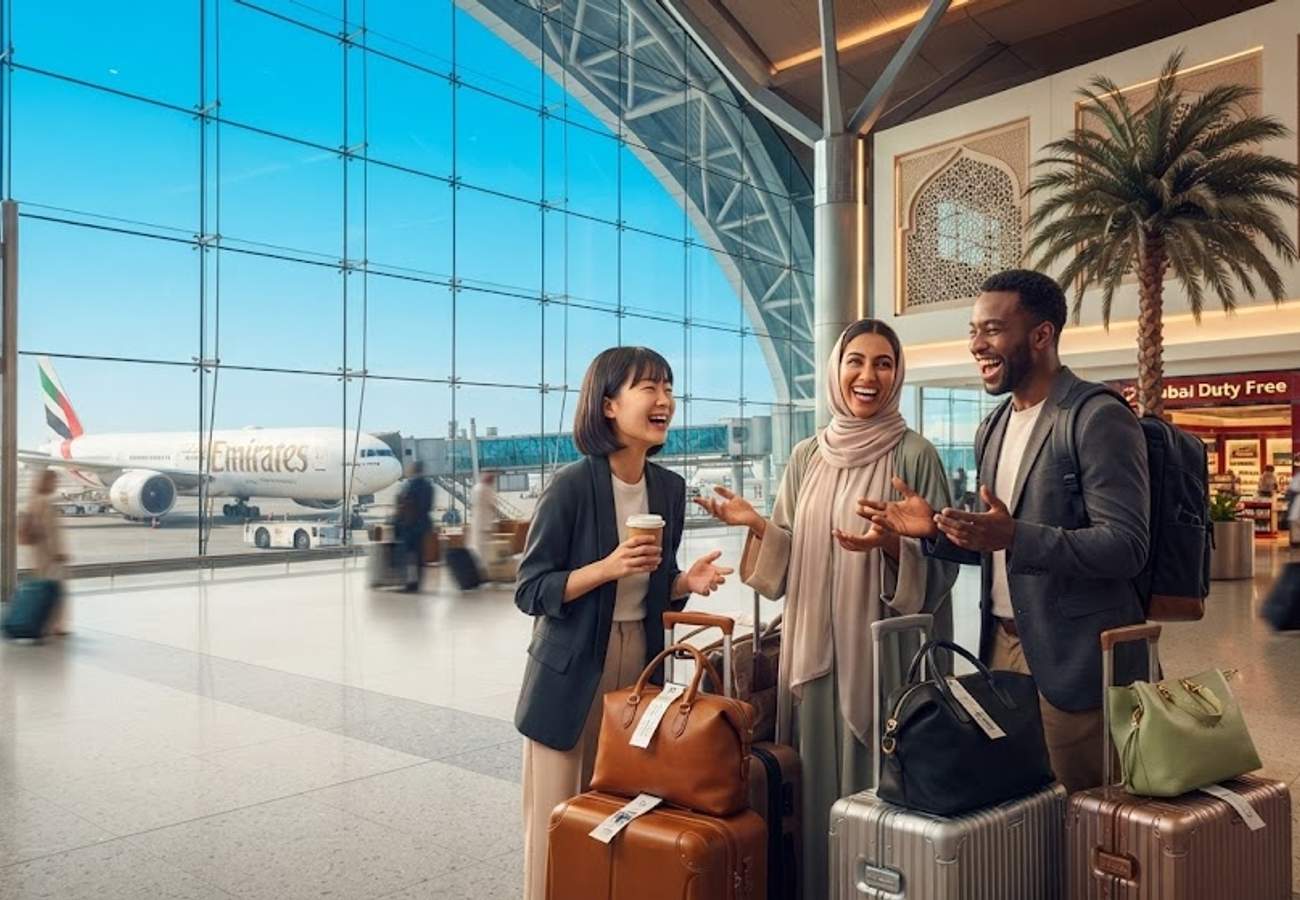
Image generated by AI
The skies above the Middle East are finally filling up again. After months of turbulence—both literal and geopolitical—major international carriers have orchestrated a coordinated return to the Gulf region that signals far more than just operational recovery. This is a statement about confidence, connectivity, and the unstoppable momentum of global travel demand.
The Coalition of Carriers: Who's Flying Back to the Gulf
In a coordinated push that began gathering momentum in late February, some of the world's most powerful airlines are simultaneously restoring critical routes to the United Arab Emirates, Qatar, Oman, Bahrain, Saudi Arabia, and beyond. Cathay Pacific, Lufthansa Group, Delta Air Lines, Air France, and Air Astana are leading this charge—each carrier reclaiming a strategic foothold in one of the world's most lucrative aviation markets.
This isn't random timing. As airspace corridors stabilized and geopolitical conditions improved, airlines recognized the window. And they're moving fast.
Cathay Pacific: Hong Kong's Gateway Reopens to the Gulf
Cathay Pacific has emerged as the unexpected hero of Asia's return to Middle East aviation. The Hong Kong-based carrier is methodically restoring long-haul operations to Dubai and Riyadh—two cities that represent completely different travel markets yet equally critical to global connectivity.
Dubai functions as the world's most efficient airport for transferring passengers between Asia, Europe, and Africa. Riyadh, meanwhile, is booming. Saudi Arabia's Vision 2030 economic transformation has turned the capital into a magnet for business travelers, investors, and increasingly, tourists seeking cultural experiences and luxury hospitality.
Cathay Pacific's redeployment of modern, fuel-efficient long-range aircraft signals something crucial: the airline expects sustained demand, not a temporary spike. That's money talking.
Lufthansa Group's European-Gulf Bridge
Lufthansa and its network of subsidiaries are executing an equally aggressive strategy, restoring connectivity between Frankfurt, Munich, Zurich, and Brussels to Gulf powerhouses including Dubai, Abu Dhabi, Riyadh, and Doha.
For European business travelers, this matters enormously. The disruption that began in late February froze corporate travel pipelines. Now, with routes reopening, executives can actually move between continents again. German manufacturing companies, Swiss financiers, and European tech firms all depend on these corridors for deals, partnerships, and operations.
Reddit: "Finally can get back to my client meetings in Riyadh without routing through obscure African hubs. Lufthansa's return is a game-changer for anyone doing business in the Kingdom." — r/businesstravel
Delta Air Lines: America's Transatlantic Link to the Middle East
Delta Air Lines is taking a measured but strategic approach, focusing on premium segments while gradually restoring U.S. connectivity to the Gulf. The Atlanta-based carrier is particularly focused on Tel Aviv and selected Gulf destinations, leveraging network partnerships to bridge North America with the Middle East.
Delta's strategy reveals something important: airlines understand that not all routes are equal. High-value passengers—government officials, luxury travelers, corporate executives—generate disproportionate revenue. Delta is prioritizing these segments first, then scaling volume as confidence builds.
Air France and the European Luxury Tourism Angle
Air France is restoring operations to Dubai and Riyadh with a specific focus: European luxury travelers. The French carrier recognizes that the Gulf region has positioned itself as a destination for high-net-worth individuals, international events, and exclusive tourism experiences.
With Paris and Amsterdam functioning as feeder hubs again, wealthy European clients can now access Gulf destinations without the logistical nightmares that plagued them since late February.
Air Astana: Central Asia's Emerging Corridor
Often overlooked in Western coverage, Air Astana of Kazakhstan is playing a crucial role in regional recovery. The carrier is expanding Central Asia–Middle East connectivity, supporting labor mobility, pilgrimage travel, and tourism exchanges between Kazakhstan and Gulf destinations.
This matters because Central Asia represents an enormous, underutilized feeder market into Gulf tourism. As Air Astana strengthens these routes, we're watching secondary aviation markets reshape global connectivity patterns.
Gulf Carriers Seize Dominance During Recovery Phase
Meanwhile, Middle Eastern carriers—Emirates, Qatar Airways, and Etihad Airways—have aggressively restored near-complete global operations, reinforcing Dubai, Doha, and Abu Dhabi as the world's most dominant transit hubs.
These carriers' rapid recovery is directly accelerating tourism inflows. Stopover travel through Dubai is booming again. Doha's position as a global connector is strengthening. According to recent aviation data, Gulf carriers are now processing passenger volumes approaching pre-disruption levels.
The Secondary City Strategy: Regional Recovery Deepens
International carriers aren't just focusing on major hubs anymore. European airlines are deliberately restoring routes to secondary cities including Beirut (Lebanon), Amman (Jordan), Tel Aviv (Israel), and Erbil (Iraq).
This diversification serves two purposes: it restores regional accessibility and captures diaspora travel—migrants and expatriates traveling home—which represents massive volume during peak seasons.
How Air Networks Are Driving Tourism Revival
The return of these airlines is directly fueling tourism recovery across the Gulf. Tourism boards in the UAE, Qatar, Oman, and Saudi Arabia are already capitalizing on restored connectivity.
More flights mean:
- Higher hotel occupancy rates across luxury and mid-range properties
- Increased cruise terminal activity in Dubai and Abu Dhabi
- More business conference and events tourism
- Stronger leisure travel to emerging destinations like Oman
According to UNWTO tourism data, Gulf destinations that recovered flight connectivity fastest are already seeing 70-85% occupancy rates in premium accommodations.
The Real Story: Confidence Returns to Global Aviation
What matters most about this coordinated airline return isn't operational complexity—airlines are excellent at logistics. What matters is the signal. When Cathay Pacific, Lufthansa, Delta, and Air France simultaneously bet capital on Middle East routes, they're declaring: the crisis is over, demand is real, and the future is now.
That signal reverberates through hotel construction projects, cruise line investments, and tourism marketing budgets across the entire region.
The Middle East aviation recovery of 2026 represents something larger than typical cyclical demand. It's the aviation industry's vote of confidence that global travel—despite regional turbulence—remains fundamentally resilient and profitable.
The skies above the Gulf weren't just reopened this summer. They were reclaimed.
Related Travel Guides
Disclaimer
This article is for informational and educational purposes only. It does not constitute legal, financial, or professional advice. While we strive to provide accurate and up-to-date information, travel policies, regulations, and conditions change rapidly. Always verify information with official sources before making travel decisions. Nomad Lawyer makes no representations about the accuracy, reliability, completeness, or suitability of the information provided. Readers should consult qualified professionals for advice specific to their circumstances. The views expressed in this article are those of the author and do not necessarily reflect the views of Nomad Lawyer.
Raushan Kumar
Founder & Lead Developer
Full-stack developer with 11+ years of experience and a passionate traveller. Raushan built Nomad Lawyer from the ground up with a vision to create the best travel and law experience on the web.
Learn more about our team →