
Why Mahan Air of Iran Still Flies Into India Despite Heavy Western Sanctions

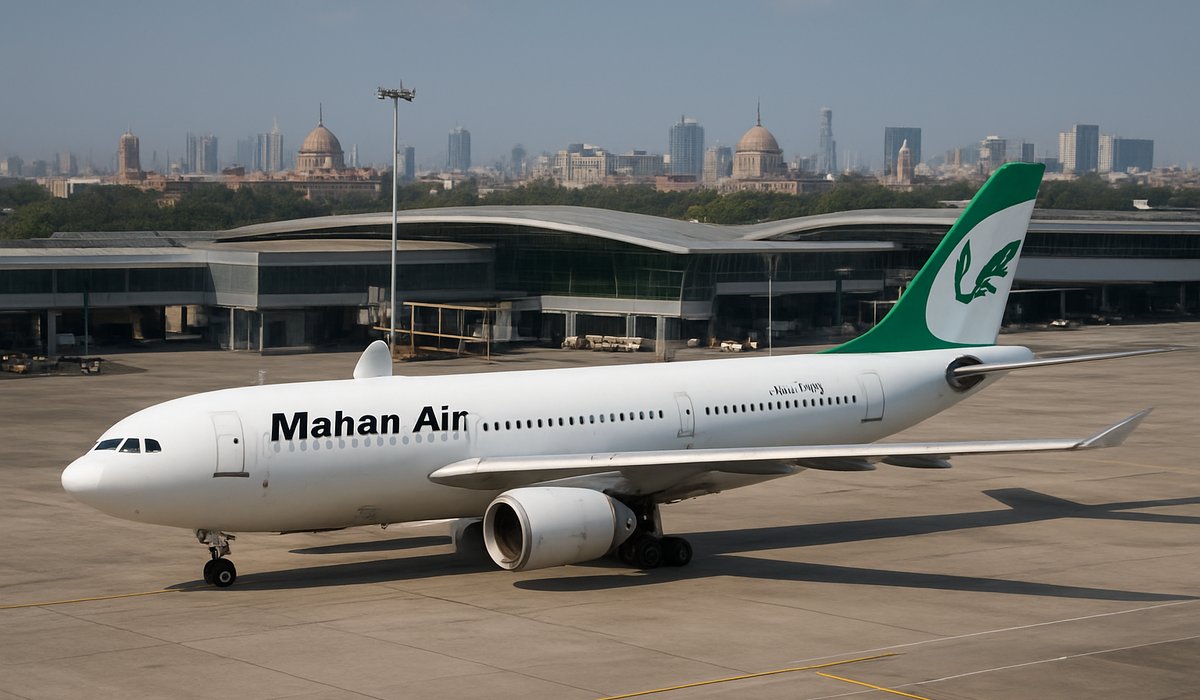
Image generated with AI
**> Quick Summary
- Iran's Mahan Air, founded in 1991, is the subject of sweeping US Treasury sanctions
- The airline is accused of transporting IRGC-Quds Force personnel, weapons, and finances
- European nations including Germany, France, and Italy have revoked Mahan Air's landing rights
- Despite Western pressure, India continues to allow regular Tehran–Delhi and Tehran–Mumbai flights
- India's stance is rooted in strategic energy and connectivity priorities, including the Chabahar Port**
Few aviation stories are as geopolitically charged as the continued operation of Mahan Air in India. While the United States and several major European nations have slammed the door shut on Iran's largest private airline, the carrier continues to arrive and depart from Indian airports on a regular basis. The question of why — and whether it will remain so — sits at the intersection of international sanctions law, bilateral diplomacy, energy security, and aviation sovereignty.
The Rise of Mahan Air and the Weight of Sanctions
Mahan Air was established in 1991 as the first privately founded airline in the Islamic Republic of Iran. Starting with a modest fleet, it grew rapidly to become one of the dominant carriers in the Middle Eastern aviation market, establishing routes across Europe, Asia, and beyond.
However, the airline's trajectory was fundamentally altered by mounting accusations from the United States government. Washington alleged that Mahan Air had provided essential transportation services for the Islamic Revolutionary Guard Corps-Quds Force (IRGC-QF) — including the movement of personnel, weapons, and financial transfers to support various regional conflicts across the Middle East.
Based on these allegations, the airline was formally blacklisted by the Office of Foreign Assets Control (OFAC), the US Treasury's financial intelligence and enforcement agency. In the years that followed, several European nations were persuaded to act in alignment with American policy. Germany, France, and Italy revoked Mahan Air's landing rights. Eventually, London, Paris, and Munich were all placed off-limits to the airline, closing off the bulk of the lucrative European market.
Why India's Skies Remain Open
Despite the heavy and sustained international pressure, Mahan Air continues to operate regular scheduled flights between Tehran and both Delhi and Mumbai. This persistent operation has been a consistent source of diplomatic friction between India and its Western partners, particularly the United States.
India's position rests on several distinct and deeply embedded strategic calculations:
1. Strategic Bilateral Relationship with Iran
India and Iran share a long and complex historical relationship that predates the modern sanctions regime by centuries. The Indian government has consistently maintained that unilateral sanctions imposed by third parties — meaning the United States and its allies — are not automatically binding on Indian foreign policy.
2. Energy Security
Iran has historically been one of India's most significant oil suppliers. While Indian purchases of Iranian oil have fluctuated under US pressure and sanction waivers, the underlying energy relationship means India has a strong structural incentive to maintain functional diplomatic and logistical links with Tehran.
3. The Chabahar Port Connection
Perhaps the single most strategically significant factor is India's long-term investment in Chabahar Port on Iran's southern coastline. This port is India's critical gateway for trade with Afghanistan and Central Asia, bypassing Pakistan entirely. Maintaining aviation connectivity with Iran is inseparable from protecting this strategic infrastructure investment.
4. Passenger and Trade Dependency
Practical needs also play a role. Thousands of Indian passengers — including students enrolled in Iranian universities, business travelers, traders, and pharmaceutical importers — rely on the Tehran-India air link. The broader bilateral trade in goods including pharmaceuticals and agricultural products depends in part on the cargo capacity these flights provide.
Safety Oversight: India's Position
The Directorate General of Civil Aviation (DGCA) of India has maintained that all foreign carriers operating into Indian airports — including those from Iran — must strictly adhere to India's requirements for aviation safety and airworthiness certification.
Mahan Air's fleet, operating largely on Airbus aircraft, has been the subject of international scrutiny for how the airline sources parts and maintains its planes given the broad embargo restrictions. Aviation analysts note that a complex network of intermediaries appears to have been used to maintain the fleet's airworthiness despite the embargo, a practice that Western governments argue is a deliberate means of circumventing the spirit of the sanctions regime.
International Reactions and Diplomatic Friction
The gap between Western policy and India's practice has been a recurring irritant in diplomatic exchanges between Washington and New Delhi. Critics of India's position argue that permitting Mahan Air to operate undermines the collective efficacy of the global sanctions architecture. Proponents counter that commercial aviation should not be weaponized as a political tool unless a direct, demonstrable safety violation is documented.
Economic Impact of the European Ban on Mahan Air
The loss of profitable European routes has had a measurable impact on Mahan Air's financial health. London, Paris, and Munich routes — once among the most commercially valuable — are now entirely closed to the carrier. In response, the airline has strategically pivoted its network eastward, toward markets in South Asia, East Asia, and Africa, where the geopolitical climate is more accommodating.
The Indian market now represents a significant and growing share of Mahan Air's remaining international revenue, a reality that makes India an even more strategically important operating partner for the airline.
What the Future Holds
Mahan Air's international standing will remain directly tied to the broader state of US-Iran relations. As long as those tensions persist, the airline will continue seeking to expand its presence across Asia and Africa to compensate for locked-out Western markets.
For India, the calculus remains straightforward: the airline's continued operation serves multiple concurrent strategic interests — energy, trade, and regional connectivity — that consistently outweigh the allied diplomatic pressure to align with Western sanctions policy.
Source: Travel And Tour World
Related Travel Guides
- Republic Airways Flight RPA4619 Diverts to Pittsburgh
- Aviation Updates: How British Airways' 32-Seat A318 Blueprint Could Cure 2026 Transatlantic Travel Chaos
- American Airlines Unleashes Massive Fall 2026 Football Schedule: 23,000 Extra Seats Across 50+ Stadium Routes to Avoid Travel Chaos and Airport Disruptions
Disclaimer
This article is for informational and educational purposes only. It does not constitute legal, financial, or professional advice. While we strive to provide accurate and up-to-date information, travel policies, regulations, and conditions change rapidly. Always verify information with official sources before making travel decisions. Nomad Lawyer makes no representations about the accuracy, reliability, completeness, or suitability of the information provided. Readers should consult qualified professionals for advice specific to their circumstances. The views expressed in this article are those of the author and do not necessarily reflect the views of Nomad Lawyer.
Kunal K Choudhary
Co-Founder & Contributor
A passionate traveller and tech enthusiast. Kunal contributes to the vision and growth of Nomad Lawyer, bringing fresh perspectives and driving the community forward.
Learn more about our team →