
The Death of Generic Luxury: How Global Hotels Are Shifting to Hyper-Personalized, Heritage-Led Guest Experiences
From Vietnam and Japan to the US and India, luxury hospitality abandons one-size-fits-all five-star stays in favor of sleep wellness, AI, and heritage.

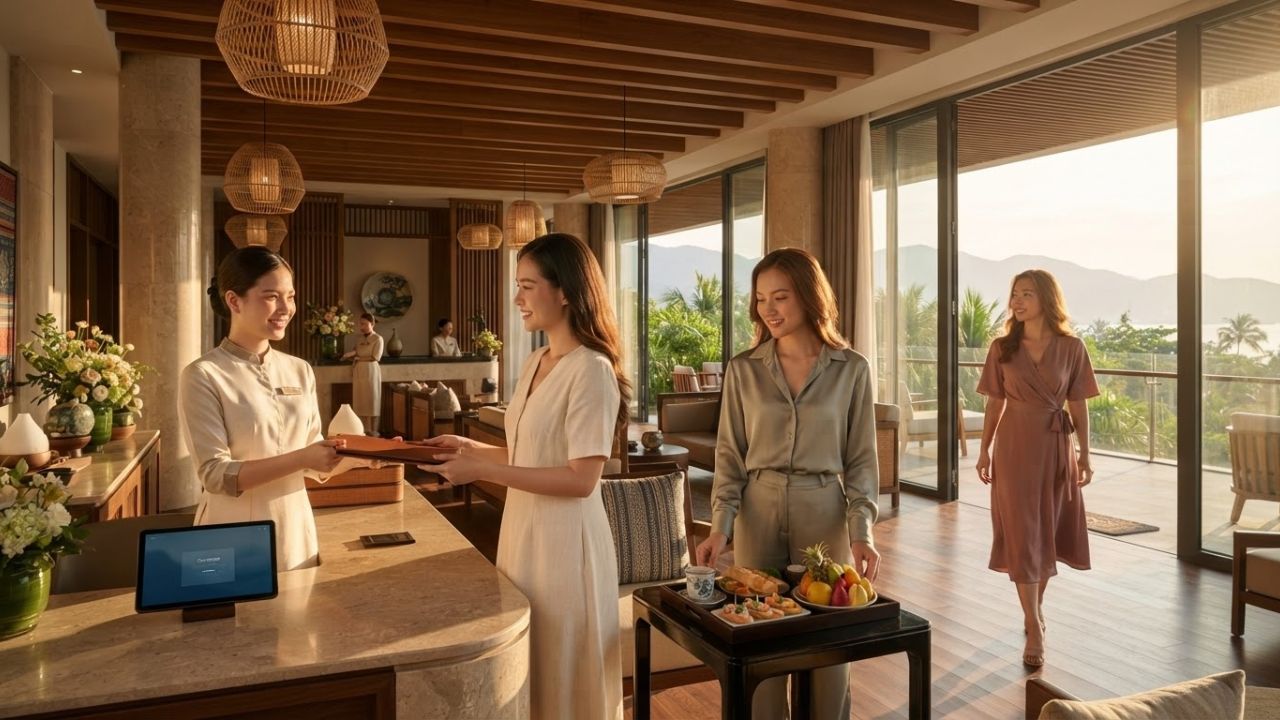
Image generated by AI
Rejecting standardized five-star marble lobbies and repetitive room amenities, luxury hotels worldwide are undergoing an intellectual renaissance—deploying predictive artificial intelligence behind the scenes, pioneering sleep-centric wellness, and embedding guests into living local culture.
The Post-Generic Luxury Horizon
For decades, international luxury hospitality relied on a predictable formula: expansive square footage, polished marble bathrooms, familiar corporate brand standards, and formal white-glove service.
Today, that template has grown obsolete. Affluent travelers already possess premium furnishings and high-end conveniences at home; what they seek when venturing abroad is authentic connection, mental quiet, emotional relevance, and journeys tailored intimately to their passions.
Speaking live at HORECFEX Vietnam, Tracie May-Wagner, Managing Director of Not Just agency and an industry consultant based in Da Nang for six and a half years, highlighted that hospitality has pivoted from merely attracting visitor headcounts to actively understanding, nurturing, and retaining guests:
"I don’t want a robot helping me at a front desk. I want a person. Hospitality ultimately depends on human contact and interaction."
Her insight captures the delicate balance defining modern luxury: utilizing artificial intelligence as an invisible operational engine—managing dynamic pricing, room inventory, and guest sentiment—while freeing human staff to deliver genuine warmth and personalized care.
[The Traditional Luxury Trap]                  [The Modern Experiential Paradigm]
• Standardized 5-star amenities               • Pre-arrival preference auditing
• Superficial green marketing                  • Sleep-restoration & mental quiet
• Rigid corporate service scripts             • Hyper-local farm & ocean sourcing
• Isolation from destination culture          • Deep immersion in living heritage
Global Perspectives: How 10 Nations Are Redefining the Luxury Stay
The evolution beyond generic luxury is manifesting through distinct cultural expressions across the globe:
| Country & Market | Emerging Luxury Signature | Core Guest Value Proposition |
|---|---|---|
| Vietnam | Holistic sleep retreats & hyper-local gastronomy | Pre-arrival itinerary curation & authentic warmth |
| Japan | Master craftsmanship (takumi) & tea culture | Destination-rooted exclusivity in traditional ryokans |
| India | Ayurvedic restorative retreats & royal heritage | Historic palace restorations and regional culinary tours |
| United States | Experiential nature immersion & radical privacy | Frictionless, unhurried boutique wilderness lodges |
| United Kingdom | Country estate restorative wellbeing | Effortless stays removing decision fatigue for travelers |
| UAE & Gulf | High-discretion recognition & bespoke butlering | Hyper-tailored private escapes rather than sheer opulence |
| Thailand | Community-embedded wellness sanctuaries | Combining regenerative therapies with village encounters |
| Bali (Indonesia) | Nature-immersed private pool sanctuaries | Intimate spiritual connections and organic architecture |
| Singapore | High-tech curated heritage & culinary walks | AI-driven neighborhood itineraries backed by luxury suites |
| Turkey | Bespoke Aegean and Bosphorus estates | Private yacht access, artisanal dining, and private historians |
Inside Vietnam’s Hospitality Transformation
Vietnam stands out as one of Asia's most compelling luxury laboratories. The nation has successfully synthesized Western comforts—such as high-speed fiber-optic connectivity, ergonomic beds, and precision climate control—with its rich maritime and agricultural traditions.
May-Wagner cited her personal retreat at Nami Riverside as a model of contemporary personalization:
"The property researched my preferences beforehand and shaped an experience that allowed me to slow down without having to make every decision myself."
Rather than funneling travelers exclusively into dense metropolitan hubs like Ho Chi Minh City or Hanoi, bespoke hospitality is flourishing in regional sanctuaries:
- Da Lat: Nestled at 1,500 meters in the Central Highlands, drawing travelers seeking pine-scented mountain air, restored 1920s French colonial villas, and quiet sleep-restoration escapes.
- Sapa: Offering cliffside eco-lodges perched above mist-shrouded rice terraces in the Hoang Lien Son mountains, incorporating herbal hydrotherapy traditions preserved by the Red Dao community.
- Da Nang & Hoi An: Merging pristine coastal beaches with private access to UNESCO World Heritage architecture, ancient Cham sculpture, and organic farm-to-table dining.
From Superficial Spas to Sleep Tourism and Mental Decompression
A fundamental pillar of this hospitality transformation is the complete reinvention of hotel wellness. The conventional menu of generic 60-minute Swedish massages is giving way to restorative sleep tourism and neuro-acoustic decompression.
Luxury travelers facing chronic digital fatigue increasingly seek properties that protect their cognitive bandwidth. Hotels are introducing circadian lighting cycles, soundproof acoustic architecture, customized pillow menus with localized botanical infusions, and guided meditation rituals designed to induce deep restorative sleep.
Concurrently, culinary operations are abandoning imported luxury ingredients in favor of hyper-local provenance. In coastal Da Nang, leading resorts reject frozen imported seafood, partnering directly with local artisanal fishermen to procure line-caught mackerel, sweet squid, and sea bass landed hours before dinner.
Menus now cater seamlessly to diverse lifestyle requirements, incorporating plant-based, gluten-free, and alcohol-free pairings without sacrificing regional soul.
Addressing Practical Friction Points for International Travelers
Despite extraordinary hospitality innovation, May-Wagner underscored practical hurdles that destinations must resolve to deliver a seamless luxury journey:
- The Airport Arrival Choke Point: Transitioning through international arrivals remains intimidating when foreign travelers are confronted by unauthorized taxi operators and aggressive transportation touts. Premium resorts must provide curated curbside greeting services and pre-arranged private transfers.
- Fintech & Cashless Payments: While local QR-code payment ecosystems (such as VietQR) are ubiquitous among domestic residents, foreign visitors often find their international credit cards incompatible or subject to unexpected merchant surcharges. Bridging the gap between foreign digital banking and local merchant apps is essential for seamless travel.
Local Insider Guidance for Travelers Seeking Personal Luxury in Vietnam
To bypass commercial tourist circuits and experience Vietnam’s emerging personalized luxury firsthand, apply these specialist insights:
- Prioritize Direct Communication Before Arrival: When reserving a luxury boutique property, take 5 minutes to complete the pre-arrival guest profile. Share specific dietary preferences (e.g., requesting traditional chay vegetarian preparations), sleep habits, and interests. High-tier boutique teams use these details to curate personalized fruit platters, pillow scents, and daily excursions.
- Streamline Airport Arrivals with Ride-Hailing Apps: Upon landing at Da Nang (DAD), Hanoi (HAN), or Ho Chi Minh City (SGN), connect to the free airport Wi-Fi and use the Grab app linked to an international credit card. This guarantees fixed-rate, air-conditioned transport and eliminates currency confusion at terminal curbsides.
- Experience Hyper-Local Gastronomy:
- Da Nang’s Mì Quảng: In Da Nang, skip hotel buffet eggs and request an authentic bowl of Mì Quảng—wide turmeric-tinted rice noodles tossed with a shallow broth of simmered pork, river shrimp, fresh mint, coriander, toasted peanuts, and crunchy sesame rice crackers (bánh tráng).
- Cau Dat Arabica in Da Lat: When visiting the highlands, visit family-run coffee estates in Cau Dat to taste sweet, fruity pour-overs of bourbon and typica Arabica cultivated in volcanic mountain soils.
- Engage with Practical Eco-Tourism: Choose properties that eliminate single-use plastic water bottles in favor of glass bottling systems, support community-managed nature reserves, and feature open-air architecture that minimizes air-conditioning consumption through natural sea-breeze ventilation.
Long-Term Outlook: Personalization as the Ultimate Currency
As travelers become more discerning, the future of luxury travel belongs to properties that master emotional intelligence.
By combining cutting-edge back-of-house technology with genuine human empathy and cultural authenticity, hotels can transform passive overnight stays into indelible, life-affirming memories—proving that true luxury is never mass-produced, but carefully crafted, one guest at a time.
Frequently Asked Questions: The Shift in Luxury Hospitality
What is the primary difference between generic luxury and personalized luxury? Generic luxury relies on standardized amenities, large rooms, and formulaic five-star brand standards. Personalized luxury curates the stay around the traveler's individual interests, prioritizing sleep wellness, local culture, hyper-local gastronomy, and thoughtful privacy.
How is artificial intelligence being used in modern luxury hotels? AI is deployed primarily behind the scenes for occupancy forecasting, dynamic pricing, and guest preference analysis, taking care of administrative tasks so human staff can focus on empathetic, personal guest interactions.
What is sleep tourism in luxury travel? Sleep tourism focuses on restorative physical and mental quiet, featuring acoustic soundproofing, circadian lighting, tailored bedding, and relaxation programs that help travelers recover from chronic digital fatigue.
Why is hyper-local sourcing important in modern luxury dining? Rather than importing expensive luxury ingredients from overseas, leading resorts source fresh produce and seafood directly from local farmers and coastal fishermen, reducing carbon emissions and celebrating indigenous culinary heritage.
Related Travel Guides
Disclaimer
This article is for informational and educational purposes only. It does not constitute legal, financial, or professional advice. While we strive to provide accurate and up-to-date information, travel policies, regulations, and conditions change rapidly. Always verify information with official sources before making travel decisions. Nomad Lawyer makes no representations about the accuracy, reliability, completeness, or suitability of the information provided. Readers should consult qualified professionals for advice specific to their circumstances. The views expressed in this article are those of the author and do not necessarily reflect the views of Nomad Lawyer.
Preeti Gunjan
Contributor & Community Manager
A passionate traveller and community builder. Preeti helps grow the Nomad Lawyer community, fostering engagement and bringing the reader experience to life.
Learn more about our team →