
Lufthansa's 48-Hour Pilot Strike Grounds Hundreds of Flights at Frankfurt and Munich: EU Passenger Rights and Compensation Explained
Lufthansa pilots strike April 13-14, 2026 cancels hundreds of flights at Frankfurt and Munich. EU261 compensation up to €600 applies. Here's what travelers need to know.

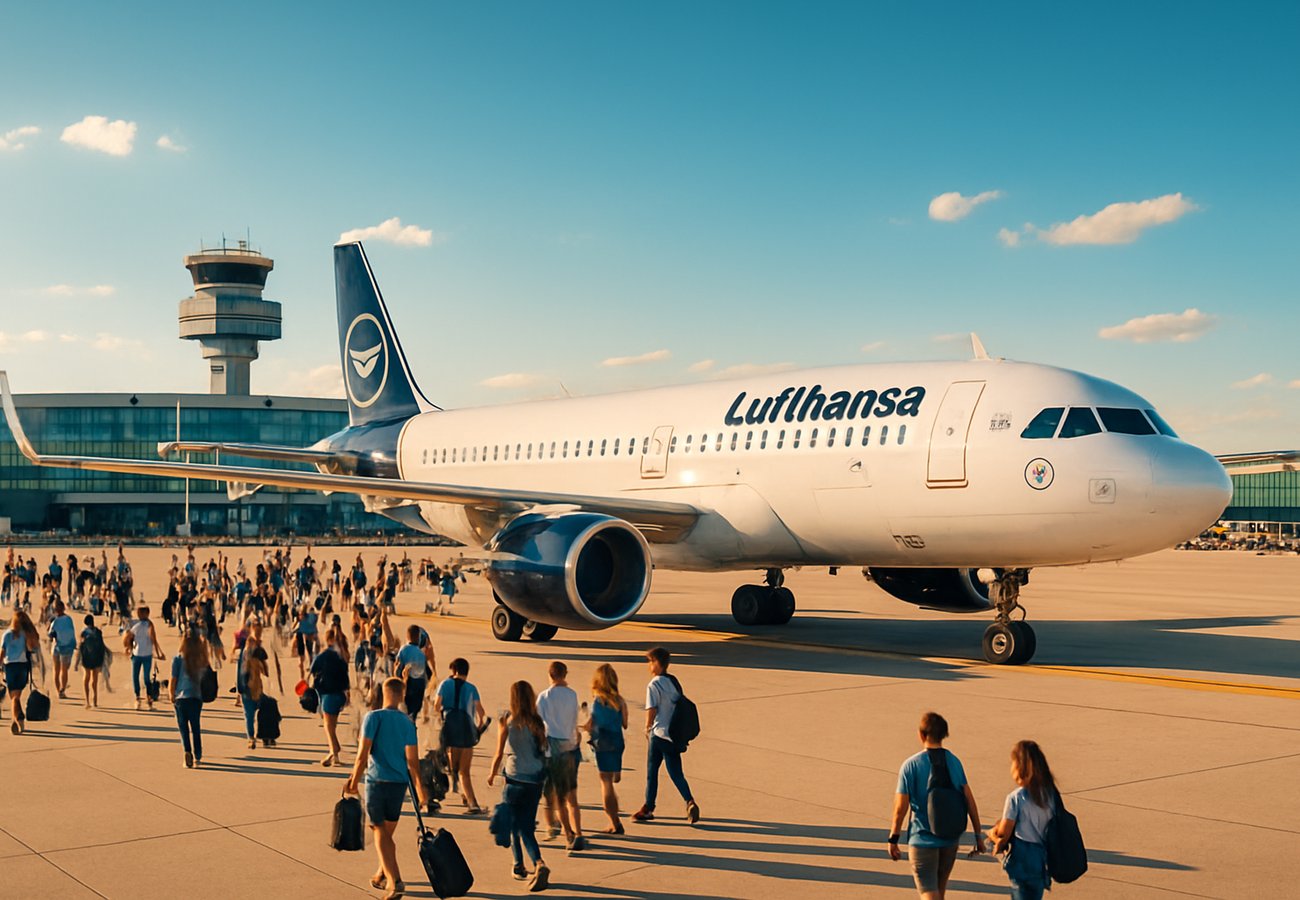
Image generated by AI
Lufthansa's Massive Pilot Walkout Paralyzes Europe's Critical Aviation Hub
The global aviation sector faces unprecedented disruption as Lufthansa pilots launched a devastating 48-hour strike beginning April 13, 2026, crippling operations at two of Europe's busiest international gateways. The Vereinigung Cockpit (VC) union's coordinated labor action has already grounded hundreds of flights across short-haul and long-haul networks, stranding thousands of passengers and triggering cascading delays throughout the continent's interconnected air travel system.
This industrial action represents the third major pilot strike at Lufthansa in 2026 alone, signaling deepening labor tensions within Europe's largest airline group. The walkout targets the carrier's flagship hubs at Frankfurt (FRA) and Munich (MUC), which collectively serve as critical connection points for transatlantic, Asian, and Middle Eastern routes. Passengers bound for destinations including London, Berlin, New York, and beyond face systematic cancellations, with rebooking options severely constrained as the airline operates at minimal capacity.
Labor Dispute Escalates: Pension Cuts and Working Conditions at Center of Conflict
The Vereinigung Cockpit union's strike action stems from protracted negotiations over pilot compensation, pension contributions, and operational scheduling. Union representatives contend that Lufthansa's proposals would substantially reduce retirement benefits while intensifying workload pressures—conditions pilots argue are incompatible with aviation safety standards and quality-of-life expectations. The airline's management has resisted union demands, creating an impasse that triggered this coordinated walkout during peak spring travel season.
Compounding the crisis, cabin crew unions have announced parallel strike actions, further fragmenting Lufthansa's already-depleted workforce. This multi-union coordination represents a significant escalation in labor organizing across the global aviation industry, where workforce compensation disputes increasingly disrupt international travel networks. The timing proves particularly damaging, as European carriers typically experience surge demand during April's Easter holiday period and spring break travel window.
Cascading Impact Across Global Aviation Networks
The Frankfurt and Munich disruptions reverberate through interconnected flight networks spanning Europe, Asia, North America, and the Middle East. Passengers holding connections through these hubs face systematic rebooking onto alternative carriers or multi-day delays, creating bottlenecks at competing airports including Paris Charles de Gaulle (CDG), Amsterdam Schiphol (AMS), and London Heathrow (LHR). According to industry tracking platforms like FlightAware, the strike has generated over 400 confirmed cancellations within the first 24 hours, with additional delays affecting 1,200+ additional flights.
Tourism operators report significant economic consequences, particularly affecting visitor flows to Munich and Bavaria during the critical spring season. Germany attracts approximately 40 million international visitors annually, with Lufthansa and its subsidiary carriers controlling roughly 35% of inbound capacity. The disruption threatens hotel bookings, tour operator revenues, and hospitality sector employment across major German cities.
EU Regulation 261/2004: Passenger Compensation Framework Explained
Travelers affected by Lufthansa's strike cancellations and delays qualify for compensation under EU Regulation 261/2004 (EC 261), which mandates airline liability for operational disruptions. Eligible passengers can claim up to €600 depending on flight distance and delay duration, with compensation tiers structured as follows:
- €250 for flights up to 1,500 kilometers
- €400 for intra-EU flights exceeding 1,500 kilometers and other flights between 1,500–3,500 kilometers
- €600 for flights exceeding 3,500 kilometers
Beyond monetary compensation, EC 261 entitles stranded passengers to meal vouchers, accommodation, ground transportation, and communication services (phone calls, emails) while awaiting rebooking. However, this protection applies exclusively to flights departing from EU airports, meaning passengers boarding from Frankfurt or Munich receive full protections, while those originating from non-EU points may face reduced entitlements.
Critically, the regulation includes a "extraordinary circumstances" exemption that historically exempts strikes from compensation requirements—though recent European court decisions have narrowed this loophole, increasingly holding airlines liable even during labor actions. Affected passengers should document all expenses and retain booking confirmations, as compensation claims typically require formal submission to airline customer service or third-party claims processors.
Immediate Passenger Response: Rebooking, Refunds, and Alternative Transportation
Lufthansa has activated emergency rebooking protocols, offering affected passengers three primary options: rebooking on alternative Lufthansa Group flights (including Swiss International Air Lines, Austrian Airlines, and Brussels Airlines), rebooking on competing carriers, or full refunds to original payment methods. However, rebooking capacity remains severely constrained, with many passengers facing multi-day delays before seat availability emerges.
Passengers should immediately contact Lufthansa customer service through official channels—the airline's website, mobile application, or airport service desks—rather than relying on third-party booking platforms. Deutsche Bahn, Germany's national rail operator, has activated emergency transportation protocols for domestic passengers, offering discounted rail fares as alternative connectivity for Frankfurt-Munich, Frankfurt-Berlin, and Munich-Berlin routes.
For international passengers, alternative carriers including Lufthansa's competitors Ryanair, easyJet, Air France-KLM, and British Airways have increased capacity on affected routes, though premium pricing typically applies to last-minute bookings. Passengers should verify baggage policies with rebooking airlines, as baggage transfer procedures often require manual intervention during strike disruptions.
What This Means for Travelers
Passengers with Lufthansa bookings through April 14, 2026 should immediately verify flight status through official airline channels and initiate rebooking requests before capacity exhausts. Those departing from EU airports qualify for EC 261 compensation regardless of strike circumstances, provided they document expenses and submit claims within applicable timeframes (typically 2-3 years depending on jurisdiction). Business travelers should consider alternative routing through Paris, Amsterdam, or London hubs, while leisure passengers may benefit from rebooking flexibility or refund options. Travelers planning future Lufthansa bookings should monitor labor negotiations and consider purchasing comprehensive travel insurance covering airline strike scenarios.
Industry insight: Labor disputes increasingly weaponize peak travel periods, forcing airlines to choose between capitulating to union demands or absorbing massive revenue losses—a dynamic that will likely intensify as pilot shortages persist across global aviation networks.
Forward-Looking Implications for European Aviation
Lufthansa's ongoing labor crisis reflects systemic workforce pressures across European carriers, where pilot compensation expectations have escalated amid post-pandemic capacity constraints and fuel price volatility. The International Air Transport Association (IATA) projects that labor disputes will remain elevated throughout 2026, particularly as carriers attempt to restore profitability while managing inflationary wage pressures. Passengers should anticipate periodic disruptions at major European hubs and build contingency time into spring and summer travel itineraries.
The strike underscores broader vulnerabilities in Europe's air travel infrastructure, where concentrated hub operations at Frankfurt and Munich create systemic risk when labor actions occur. Regulatory bodies including the European Union Aviation Safety Agency (EASA) and national aviation authorities may respond by implementing strike-contingency protocols or capacity diversification requirements. For travelers, the immediate lesson remains clear: flexibility, early rebooking action, and awareness of passenger rights represent essential survival strategies in an increasingly volatile global aviation environment.
Related Travel Guides
Disclaimer
This article is for informational and educational purposes only. It does not constitute legal, financial, or professional advice. While we strive to provide accurate and up-to-date information, travel policies, regulations, and conditions change rapidly. Always verify information with official sources before making travel decisions. Nomad Lawyer makes no representations about the accuracy, reliability, completeness, or suitability of the information provided. Readers should consult qualified professionals for advice specific to their circumstances. The views expressed in this article are those of the author and do not necessarily reflect the views of Nomad Lawyer.
Kunal K Choudhary
Co-Founder & Contributor
A passionate traveller and tech enthusiast. Kunal contributes to the vision and growth of Nomad Lawyer, bringing fresh perspectives and driving the community forward.
Learn more about our team →