
Lufthansa City Airlines to Deploy 40 Airbus A220-300 Aircraft Starting Late 2026
Lufthansa City Airlines will introduce the Airbus A220-300 in Q4 2026 to modernize its regional fleet and optimize capacity on European routes.

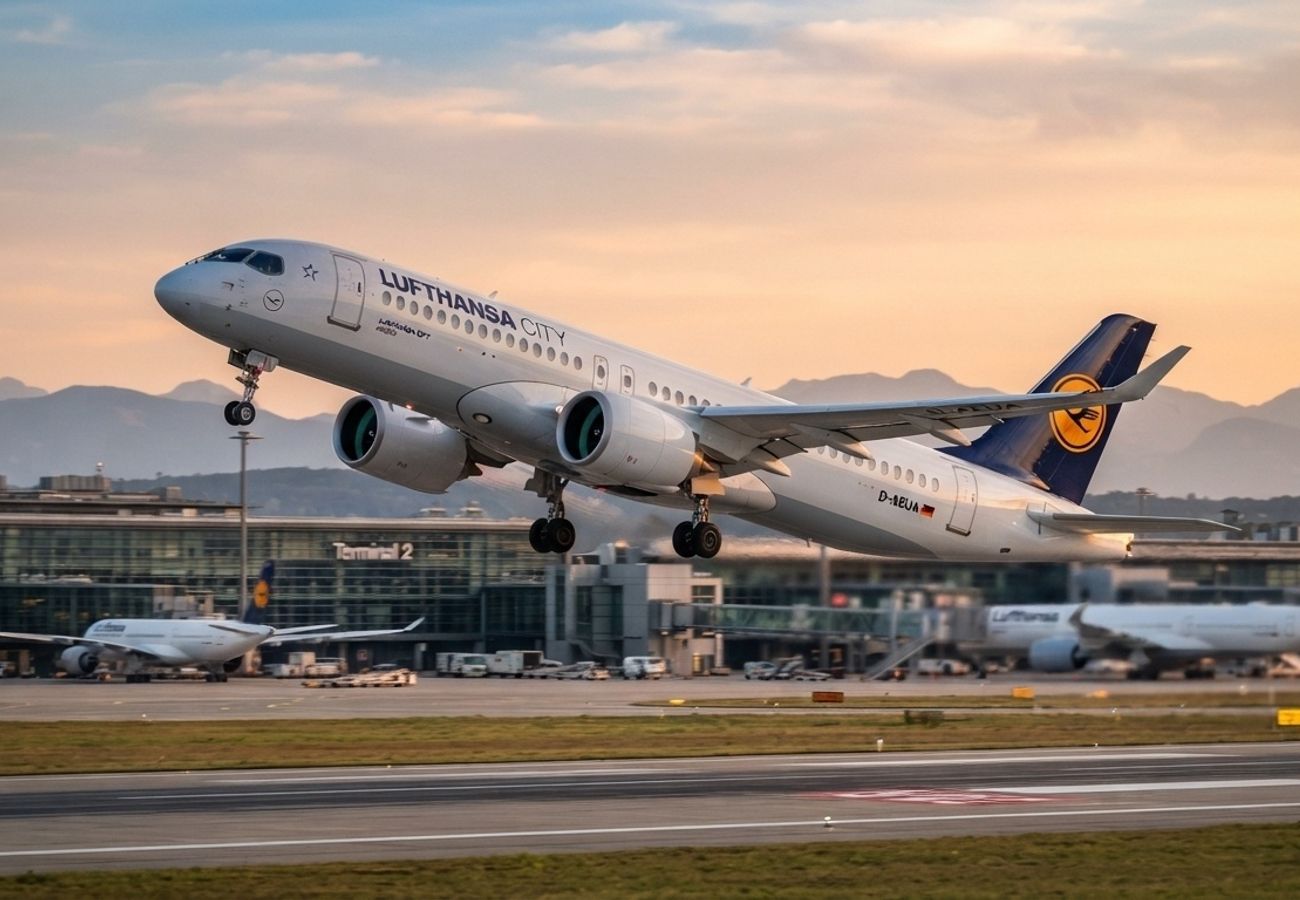
Image generated by AI
Lufthansa City Airlines is scheduled to integrate the Airbus A220-300 into its fleet starting in the second half of the fourth quarter of 2026. This move signals a strategic shift toward high-efficiency, smaller-gauge aircraft to optimize regional connectivity across Europe.
Regional Fleet Modernization Strategy
Lufthansa City Airlines, the regional arm operating out of Munich and Frankfurt, is transitioning to a mixed-fleet operation. Following the 2025 introduction of factory-fresh Airbus A320neo aircraft, the carrier is now preparing for the arrival of the A220-300.
Flight planning documents and investor materials confirm that Lufthansa City Airlines has 40 firm orders for the A220-300, with an additional 20 options. The delivery window is slated to run from late 2026 through 2031.
The integration process will be gradual. Recruitment and training schedules indicate a ramp-up phase beginning in the final weeks of 2026, with a more aggressive delivery cadence expected throughout 2027.
Flight and Airport Impact Breakdown
The deployment of the A220-300 is designed to refine how Lufthansa Group manages its short- and medium-haul network.
- Primary Hubs: Operations will be centered at Munich (MUC) and Frankfurt (FRA), serving as feeders for long-haul departures.
- Route Optimization: The A220-300 (130 to 150 seats) will replace larger narrowbodies on "thinner" routes where the A320neo is less economical.
- Airport Access: The aircraft's performance profile allows for increased frequency at airports with strict noise regulations or runway constraints.
- Fleet Composition: By late 2026, the carrier will operate a mix of A319s, approximately 20 A320neos, and the incoming A220-300s.
Passenger Rights and Advisory
For the passenger, the transition to the A220-300 generally means a more modern cabin experience and potentially more frequent flight options on regional routes. However, fleet transitions can lead to temporary scheduling volatility.
Our analysis of passenger rights suggests the following for those traveling on these updated routes:
- Aircraft Swaps: During the 2026-2027 ramp-up, passengers may experience "equipment changes" (e.g., being moved from an A320neo to an A220). Under EU261/2004, a change in aircraft type does not entitle a passenger to compensation unless it results in a significant delay or cancellation.
- Rebooking Rights: If the transition to new aircraft leads to schedule changes of more than 3-5 hours (depending on the airline's contract of carriage), passengers are entitled to a full refund or re-routing to their final destination at no extra cost.
- Compensation Claims: For flights departing from EU airports or arriving in the EU on a European carrier, delays exceeding 3 hours caused by "operational reasons" (excluding extraordinary circumstances) may qualify for compensation ranging from €250 to €600.
Industry Analyst View
The move to the A220-300 is a calculated effort to phase out older regional jets, specifically Embraer and Bombardier types, across the Lufthansa Group subsidiaries. By standardizing on Airbus digital avionics and cabin standards, the group aims to reduce training overhead and maintenance complexity.
This strategy mirrors a wider European trend where network carriers are utilizing the 100-150 seat category to compete with low-cost carriers. The A220's lower fuel burn per seat makes it a critical tool for maintaining profitability on point-to-point European city pairs amidst rising fuel costs and environmental mandates.
The shift toward smaller, more efficient regional jets marks the end of the legacy regional jet era for Germany's flagship carrier.
Related Travel Guides
Disclaimer
This article is for informational and educational purposes only. It does not constitute legal, financial, or professional advice. While we strive to provide accurate and up-to-date information, travel policies, regulations, and conditions change rapidly. Always verify information with official sources before making travel decisions. Nomad Lawyer makes no representations about the accuracy, reliability, completeness, or suitability of the information provided. Readers should consult qualified professionals for advice specific to their circumstances. The views expressed in this article are those of the author and do not necessarily reflect the views of Nomad Lawyer.
Raushan Kumar
Founder & Lead Developer
Full-stack developer with 11+ years of experience and a passionate traveller. Raushan built Nomad Lawyer from the ground up with a vision to create the best travel and law experience on the web.
Learn more about our team →