
Lufthansa Prepares Backup Fleet Strategy as Boeing 777X Faces Continued Delivery Delays Through 2027
Lufthansa activates contingency plans amid Boeing 777X delays, extending Airbus A340-300 service and retiring A340-600 fleet by October 2026 to maintain long-haul capacity and passenger routes.

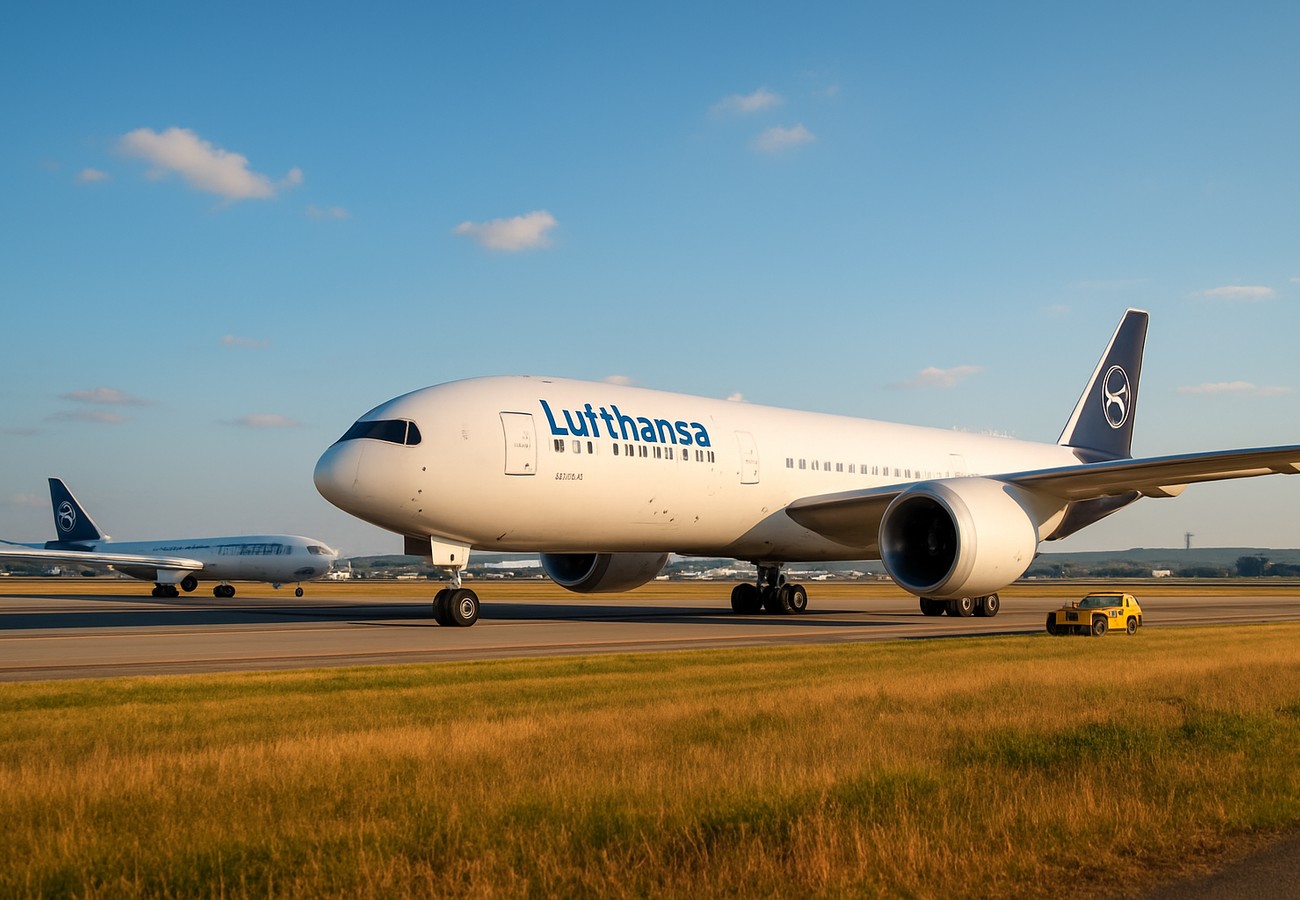
Image generated by AI
Lufthansa Prepares Backup Fleet Strategy as Boeing 777X Faces Continued Delivery Delays Through 2027
Germany's Largest Airline Activates Contingency Plans to Prevent Long-Haul Route Disruptions
FRANKFURT — Lufthansa, Europe's flagship carrier, is quietly preparing a comprehensive backup fleet strategy as the long-delayed Boeing 777X inches closer to its revised 2027 entry-into-service date, with industry sources confirming the airline is no longer betting exclusively on Boeing's updated timeline. The contingency plan reveals a critical reality facing global aviation: aircraft delivery delays can reshape travel experiences, ticket prices, and route availability for millions of passengers worldwide.
What's Happening: The Boeing 777X Delay Crisis and Lufthansa's Response
The Boeing 777X—once promised for 2020, then repeatedly postponed—now sits at the center of a brewing crisis that threatens to ripple across Europe's aviation network. Lufthansa, designated as the launch customer with 20 Boeing 777-9 aircraft on firm order, has taken matters into its own hands by engineering a sophisticated backup strategy that extends the operational life of aging wide-body jets while accelerating retirement of the least efficient aircraft.
The core challenge: If Boeing misses its 2027 target once more, Lufthansa faces a capacity shortfall on premium long-haul routes to Asia, the Americas, and the Middle East—routes that generate disproportionate revenue and demand.
Lufthansa's multi-pronged response includes:
- Extending the Airbus A340-300 fleet beyond originally planned retirement dates to fill capacity gaps
- Retiring the entire Airbus A340-600 fleet by October 2026 to eliminate the least fuel-efficient wide-body aircraft
- Potentially grounding 2-4 Boeing 747-400 aircraft during winter 2026-2027, with final decisions expected by summer 2027
- Receiving 27 new long-haul aircraft during 2026 to offset retirements and boost modernization
This is not merely an internal scheduling matter—it directly impacts passengers booking flights years in advance, airline staffing strategies, fuel costs, and the competitive positioning of European carriers against Middle Eastern and Asian rivals.
Geopolitical and Industry Context: Why Aircraft Delays Matter Beyond the Boardroom
The Boeing 777X program embodies a broader industry crisis: manufacturing delays, certification challenges, and shifting cost-benefit analyses are forcing a reckoning across global aviation.
Timeline of delays:
- Originally scheduled: 2020
- First revision: 2021
- Current target: 2027
- Total delay: 7+ years
For Lufthansa CEO Carsten Spohr, the message is unambiguous—the airline will not rely solely on Boeing's revised schedule. This represents a significant vote of no-confidence in the American aircraft manufacturer's ability to deliver on promises, even after multiple delays.
Why this matters globally: The 777X program delays have cascading effects on airlines across North America, Europe, Asia, and the Middle East. Every month of delay means airlines must extend the service life of four-engine aircraft like the A340 and Boeing 747—both fuel-hungry and environmentally problematic jets that modern aviation seeks to retire. This paradoxically extends the industry's carbon footprint while waiting for more efficient aircraft.
Global Aviation Market Impact: Fuel Costs, Capacity, and Ticket Prices
The ripple effects of Lufthansa's contingency planning extend far beyond German airspace:
Fuel Cost Pressures: Four-engine aircraft like the A340 and 747 consume significantly more fuel than modern twin-engine jets such as the Boeing 787 or Airbus A350. Extended operation of these aircraft increases Lufthansa's operating costs, a burden that airlines historically pass to passengers through higher ticket prices.
Capacity Management: By receiving 27 new long-haul aircraft in 2026 while retiring A340-600 jets, Lufthansa is threading a needle—maintaining seat capacity on key routes without overcapacity that destroys profitability.
Competitive Implications: European carriers like Lufthansa operate in direct competition with Middle Eastern powerhouses (Emirates, Qatar Airways, Etihad) and Asian leaders (Singapore Airlines, Cathay Pacific). Delays in fleet modernization create operational disadvantages that translate into reduced schedule frequency, older cabins, and diminished passenger experience.
Lufthansa's Fleet Restructuring: Aircraft-by-Aircraft Breakdown
Airbus A340-600: Full Retirement by October 2026
The A340-600—an iconic four-engine wide-body that defined international aviation in the 2000s—will exit the Lufthansa fleet entirely by October 2026. These aircraft, while spacious and capable of ultra-long-range flights, are economically unsustainable in an era of volatile fuel prices and environmental pressure.
Impact on routes: Some A340-600 routes will migrate to newer twin-engine aircraft (Airbus A350, Boeing 787) or remain served by A340-300 variants temporarily.
Airbus A340-300: Extended Service Life as Contingency Asset
Unlike the A340-600, the A340-300 will remain in Lufthansa's fleet beyond original retirement timelines. These aircraft provide crucial flexibility—if the 777X is delayed again in 2027, the A340-300 becomes Lufthansa's fallback option to maintain trans-Pacific and transatlantic capacity.
Trade-off for passengers: A340-300 aircraft are older, less fuel-efficient, and offer legacy cabin configurations compared to next-generation aircraft. Passengers may experience longer flights (slightly higher fuel consumption), older seatback entertainment systems, and less spacious business-class products.
Boeing 747-400: Temporary Grounding Likely, Permanent Retirement Uncertain
The iconic "Queen of the Skies" faces potential temporary deactivation of 2-4 aircraft during winter 2026-2027. This is a tactical move—during high-demand summer seasons, Lufthansa needs all available capacity; during slower winter periods, grounding less efficient aircraft reduces fuel burn and operating losses.
Final decision on 747-400 retirement expected: Summer 2027, coinciding with the Boeing 777X's projected entry into service.
Fleet Expansion: 27 New Long-Haul Aircraft in 2026 Alone
Offsetting retirements, Lufthansa expects delivery of 27 new long-haul aircraft during 2026. While specific aircraft types are not detailed in current statements, these deliveries will likely include:
- Airbus A350-900/1000 (fuel-efficient, 250-314 passengers)
- Boeing 787-9/10 (revolutionary efficiency, 242-330 passengers)
- Additional Airbus A220-300 (narrow-body for high-density European routes)
Strategic advantage: A modernized fleet reduces fuel consumption by 20-30% compared to legacy aircraft, directly improving profitability and reducing environmental impact.
Passenger Impact: What Travelers Should Expect in 2026-2027
For the 36+ million annual passengers who fly Lufthansa Group airlines (Lufthansa, SWISS, Austrian, Brussels Airlines, Loganair), fleet changes translate into tangible travel experiences:
Advantages:
✈️ Stable Route Networks: Contingency planning prevents sudden route cancellations due to aircraft unavailability
✈️ Maintained Seat Capacity: Passengers won't face artificial scarcity or sky-high fares due to reduced frequencies
✈️ Gradual Modernization: New aircraft arrivals progressively upgrade the cabin experience
✈️ Operational Reliability: Reduced risk of last-minute disruptions from aircraft shortages
Disadvantages:
✈️ Legacy Aircraft Experiences: Some long-haul flights will operate on 20+ year-old A340-300 jets with aging cabin systems
✈️ Higher Operating Costs → Higher Fares: Extended operation of fuel-inefficient aircraft may increase ticket prices, especially on premium cabins
✈️ Inconsistent Cabin Products: Passengers cannot reliably expect next-generation features (larger windows, advanced IFE systems, higher humidity) until post-2027
✈️ Environmental Concerns: Continued operation of four-engine aircraft extends aviation's carbon footprint
Industry Analysis: Why Boeing's Delays Reshape Global Aviation
Boeing's credibility crisis:
The 777X program represents far more than a single aircraft delay—it symbolizes Boeing's broader manufacturing challenges. The MAX 8 grounding (2019-2020) damaged airline confidence. Repeated 777X delays have forced industry leaders like Lufthansa to treat Boeing's timelines as negotiable rather than definitive.
Airbus advantage:
While Airbus faces its own production constraints, the A350 and A220 are entering service on schedule. European airlines increasingly view Airbus as more reliable for fleet planning purposes.
Industry-wide ripple:
If Lufthansa is preparing contingency plans, so are United Airlines, American Airlines, Japan Airlines, and dozens of others holding 777X orders. The collective impact: fewer 777X aircraft delivered on time means a global oversupply of legacy aircraft operating longer, increased fuel burn across the industry, and delayed environmental improvements in aviation.
What Happens Next: Potential Scenarios for 2027 and Beyond
Scenario 1: Boeing Delivers on 2027 Promise (40% probability)
The 777X enters service as promised. Lufthansa begins retiring A340-300 aircraft systematically. Fleet modernization accelerates. Fuel efficiency improves. Ticket prices stabilize.
Scenario 2: Further Delays (45% probability)
Boeing announces another delay (2028 or later). Lufthansa extends A340-300 operations indefinitely. Airlines worldwide face capacity shortages on premium routes. Business-class and first-class fares climb significantly. Environmental impact worsens.
Scenario 3: Boeing Delivers Partial Fleet (15% probability)
Some 777X aircraft arrive in 2027, but not all 20 Lufthansa units. The airline operates a mixed fleet of old and new aircraft for an extended period, creating logistical complexity and operational inefficiency.
Conclusion: A Metaphor for Global Aviation's Uncertainty
Lufthansa's contingency planning is pragmatic, even cynical—it reflects an airline that has lost faith in traditional supply chain timelines. For passengers, this means years of transitional operations where legacy aircraft and next-generation jets coexist, creating a travel experience marked by unpredictability and inconsistency.
The Boeing 777X remains critical to aviation's future. The aircraft promises quieter cabins, larger windows, superior air quality, and fuel efficiency that would reshape long-haul travel for the better. But every month of delay pushes that future backward, forcing airlines to operate less sustainable aircraft longer and making it harder for the industry to meet climate commitments.
For travelers planning 2026-2027 bookings on Lufthansa long-haul routes, expectations should be tempered. Comfortable, reliable service? Yes. Next-generation comfort and sustainability? That will have to wait until 2027—or later.
Key Takeaways
• Lufthansa abandons sole reliance on Boeing 777X timeline, preparing multi-layered contingency plans to protect long-haul capacity
• Airbus A340-600 retires entirely by October 2026; A340-300 extended beyond original retirement dates as fallback capacity
• Boeing 747-400 aircraft may be temporarily grounded during winter 2026-2027, with final retirement decisions delayed until summer 2027
• 27 new long-haul aircraft arriving in 2026 offset retirements and accelerate fleet modernization across Lufthansa Group
• Passenger impact: mixed experience with legacy aircraft on some routes, potential ticket price increases, stable route networks, and gradual cabin improvements
• Global aviation implications: Extended operation of fuel-inefficient four-engine aircraft increases industry carbon footprint and operating costs across European carriers
• Competitive disadvantage: Delays in fleet modernization weaken European carriers' position against Middle Eastern and Asian competitors operating newer aircraft
• 2027 represents potential turning point for aviation industry, contingent on Boeing finally delivering 777X on schedule
Related Travel Guides
Disclaimer
This article is for informational and educational purposes only. It does not constitute legal, financial, or professional advice. While we strive to provide accurate and up-to-date information, travel policies, regulations, and conditions change rapidly. Always verify information with official sources before making travel decisions. Nomad Lawyer makes no representations about the accuracy, reliability, completeness, or suitability of the information provided. Readers should consult qualified professionals for advice specific to their circumstances. The views expressed in this article are those of the author and do not necessarily reflect the views of Nomad Lawyer.
Kunal K Choudhary
Co-Founder & Contributor
A passionate traveller and tech enthusiast. Kunal contributes to the vision and growth of Nomad Lawyer, bringing fresh perspectives and driving the community forward.
Learn more about our team →