
Airbus A380 Range: How Far Can It Fly Non-Stop in 2026?
The Airbus A380 can fly up to 8,000 nautical miles without refueling. Discover how the double-decker giant's range compares to Boeing 777X and A350 competitors in 2026.

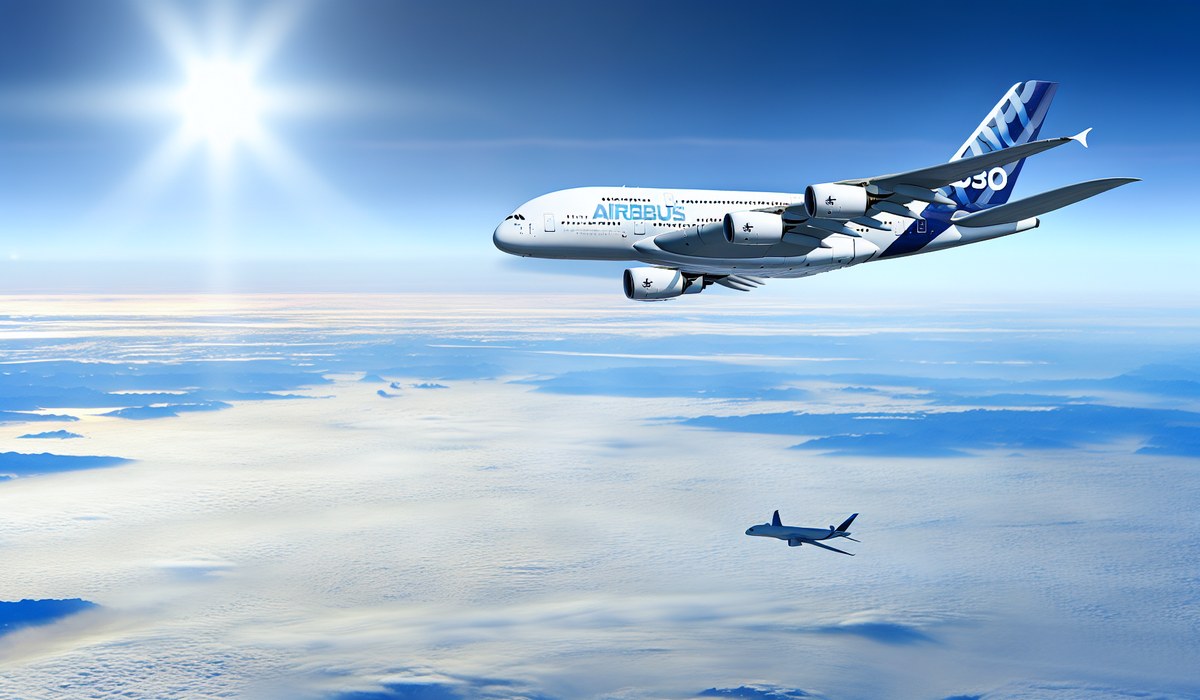
Image generated by AI
Quick Summary
- Airbus A380 Range: Maximum non-stop distance reaches 8,000 nautical miles (14,800 kilometers) without refueling
- Impact: Enables direct connections between major hubs like Singapore and New York for 500+ passengers
- Traveler Action: Book A380 flights for comfort on ultra-long routes through airline direct booking portals
- What's Next: Boeing 777X delivery delays extend A380's role as highest-capacity widebody through 2027
Singapore Airlines operates the longest commercial flight without refueling aboard the Airbus A380, a double-decker aircraft that revolutionized ultra-long-haul travel when it entered service in 2007. Nearly two decades later, the A380's maximum range of 8,000 nautical miles continues to define global connectivity between major aviation hubs in 2026.
Airbus A380 Maximum Range Specifications
The Airbus A380 achieves a maximum range of 8,000 nautical miles (14,800 kilometers or 9,200 statute miles) under optimal conditions. This capability positions the aircraft between the Boeing 787-9 Dreamliner (7,635 nautical miles) and the upcoming Boeing 777-9 (projected 8,730 nautical miles). Airlines configure A380s with 400 to 615 seats across two full passenger decks, creating economy-of-scale advantages on high-demand routes. Emirates, the world's largest A380 operator with 116 aircraft, deploys the type on trunk routes including Dubai-London Heathrow and Dubai-Los Angeles. The aircraft carries 84,600 gallons of fuel in wing and horizontal stabilizer tanks, burning approximately 3,000 gallons hourly during cruise at Mach 0.85.
How A380 Range Compares to Competing Aircraft
Modern widebody aircraft offer varying range-capacity combinations. The Airbus A350-900 flies 8,100 nautical miles with 325 passengers in typical configuration, while the larger A350-1000 reaches 8,700 nautical miles with 366 seats. Boeing's 777X series promises 8,730 nautical miles for the 777-9 variant and 8,690 nautical miles for the smaller 777-8, though certification delays have pushed entry-into-service beyond 2026. The A380's unique advantage lies in passenger volume—no competing aircraft carries more than 420 passengers in standard layouts. Singapore Airlines operates A380s configured for 471 passengers on routes like Singapore-London, while all-economy charters occasionally exceed 600 seats. The aircraft's Rolls-Royce Trent 900 or Engine Alliance GP7200 engines deliver 70,000 pounds of thrust each.
Airlines Operating A380s on Ultra-Long Routes
Ten airlines currently operate the Airbus A380 in 2026, down from a peak of 15 carriers. Emirates maintains the largest fleet and operates the longest A380 route: Dubai-Auckland at 7,648 nautical miles with flight time exceeding 16 hours. Singapore Airlines flies the A380 on 13-hour Singapore-London routes covering 6,750 nautical miles. Qantas connects Sydney-Dallas/Fort Worth (7,454 nautical miles) using A380s before transitioning to A350-1000s. British Airways, Lufthansa, and Korean Air continue A380 service on trans-Atlantic and trans-Pacific routes. Several operators including Air France and Thai Airways have retired their A380 fleets early due to fuel efficiency concerns compared to twin-engine alternatives. The International Air Transport Association projects A380 utilization will decline 15% by 2030 as airlines favor the A350 and 787 for point-to-point networks.
Factors Affecting A380 Operational Range
Actual flight range varies significantly from maximum specifications. Headwinds reduce range by 5-10% on westbound trans-Atlantic crossings, while tailwinds extend eastbound flights. Passenger load, cargo weight, and fuel reserves for alternate airports all decrease available range. The A380 requires 10,000-foot runways and reinforced taxiways, limiting destination options to approximately 140 airports worldwide. Hot-and-high conditions at airports like Denver or Mexico City reduce payload capacity. Modern A380s incorporate winglets (since 2012 production) that improve fuel efficiency by 4%. Airlines must balance range against revenue—operating an A380 at maximum range with reduced passenger loads proves economically inefficient compared to flying shorter, fuller flights. Singapore Airlines' non-stop Singapore-New York service using A350-900ULR demonstrates that smaller aircraft with longer range often provide better economics than A380s on ultra-long routes.
Future of A380 Range and Operations
Airbus ceased A380 production in 2021 after delivering 254 aircraft. The youngest A380s in service will reach 20 years old by 2041, with airframe life extending to 25-30 years for well-maintained examples. Airlines investing in cabin refurbishments signal long-term commitment—Emirates announced $3 billion in A380 upgrades in 2025. Sustainable aviation fuel (SAF) compatibility allows A380s to reduce carbon emissions by up to 80% compared to conventional jet fuel, though SAF availability remains limited in 2026. Engine manufacturer Rolls-Royce offers maintenance programs extending Trent 900 lifespans beyond 30,000 flight hours. Secondary markets emerge as younger A380s transfer from Western carriers to Middle Eastern and Asian operators. The aircraft's operational range will remain fixed at 8,000 nautical miles without major airframe modifications, making it suitable exclusively for hub-to-hub trunk routes with sustained high passenger demand.
Key A380 Range Data Comparison
| Aircraft Type | Maximum Range | Typical Seating | Fuel Capacity | Primary Operators | First Delivery |
|---|---|---|---|---|---|
| Airbus A380 | 8,000 nm | 471-519 | 84,600 gal | Emirates, Singapore Airlines | 2007 |
| Boeing 777-9 | 8,730 nm | 426 | 54,000 gal | Lufthansa, Emirates (on order) | TBD (delayed) |
| Airbus A350-1000 | 8,700 nm | 366 | 41,900 gal | Qatar Airways, Cathay Pacific | 2018 |
| Airbus A350-900 | 8,100 nm | 325 | 37,000 gal | Singapore Airlines, Delta | 2015 |
| Boeing 787-10 | 6,430 nm | 330 | 33,400 gal | United Airlines, Singapore Airlines | 2018 |
| Boeing 747-8 | 7,730 nm | 410 | 63,000 gal | Korean Air, Air China | 2012 |
What This Means for Travelers
Understanding A380 range capabilities helps optimize long-haul bookings:
-
Premium comfort advantage: A380 aircraft offer wider seats, larger windows, and quieter cabins than 777 or A350 competitors—prioritize A380 flights for 10+ hour journeys when available at similar fares.
-
Hub connectivity: A380 operations concentrate at major hubs (Dubai, London, Singapore, Frankfurt, Los Angeles)—travelers flying between these cities gain direct service options avoiding connections.
-
Schedule reliability: Four-engine redundancy provides superior dispatch reliability compared to twin-engine aircraft, with lower mechanical delay rates on ultra-long sectors.
-
Award availability: Airlines offer more premium-cabin award seats on A380s due to higher inventory—members of Emirates Skywards or Singapore KrisFlyer find better first-class redemption options.
-
Limited route expansion: No new A380 routes will launch—travelers seeking unique city pairs should book existing A380 services before airlines retire aircraft from 2028 onward.
Frequently Asked Questions
How far can the Airbus A380 fly without refueling in 2026? The Airbus A380 achieves a maximum range of 8,000 nautical miles (14,800 kilometers) without refueling under optimal conditions. This enables non-stop flights between cities like Dubai and Auckland or Singapore and Los Angeles. Actual range varies based on passenger load, cargo weight, weather conditions, and required fuel reserves.
Which airline operates the longest Airbus A380 flight route? Emirates operates the longest scheduled A380 service between Dubai International Airport (DXB) and Auckland Airport (AKL) in New Zealand. This route covers 7,648 nautical miles with flight times exceeding 16 hours depending on seasonal winds. Singapore Airlines previously operated longer A380 routes before transitioning to A350-900ULR aircraft.
How does the Airbus A380 range compare to Boeing 777X? The Boeing 777-9 offers 8,730 nautical miles of range, exceeding the A380's 8,000 nautical miles by 730 nautical miles. However, the 777-9 carries approximately 426 passengers compared to the A380's typical 471-519 seats. Certification delays have postponed 777X entry-into-service beyond 2026, keeping the A380 as the highest-capacity ultra-long-haul option.
Can the Airbus A380 fly from New York to Singapore non-stop? The distance between New York JFK and Singapore Changi measures approximately 9,000 nautical miles, exceeding the A380's maximum range of 8,000 nautical miles. Singapore Airlines operates this route using the specialized Airbus A350-900ULR, which achieves 9,700 nautical miles through reduced seating capacity and auxiliary fuel tanks. The A380 cannot complete this routing without technical stops.
Related Travel Guides
Emirates A380 Routes and Booking Guide 2026
Disclaimer
This article is for informational and educational purposes only. It does not constitute legal, financial, or professional advice. While we strive to provide accurate and up-to-date information, travel policies, regulations, and conditions change rapidly. Always verify information with official sources before making travel decisions. Nomad Lawyer makes no representations about the accuracy, reliability, completeness, or suitability of the information provided. Readers should consult qualified professionals for advice specific to their circumstances. The views expressed in this article are those of the author and do not necessarily reflect the views of Nomad Lawyer.
Preeti Gunjan
Contributor & Community Manager
A passionate traveller and community builder. Preeti helps grow the Nomad Lawyer community, fostering engagement and bringing the reader experience to life.
Learn more about our team →